Injection Molding Cost: How to Calculate Cost Per Part (Formula, Examples & Ways to Save) (2026)
How to calculate injection molding cost per part: the formula, mold cost drivers, an itemised worked example, a volume price table, hidden costs and DFM savings. Free DFM, quote in 24 hours.
Quick answer: Injection molding cost per part = tooling amortisation + material + machine time + secondary operations. Most custom molds cost $2,000–$30,000; a typical 40 g ABS housing runs about $0.42 per part in production, or $6.92 per part at 1,000 pieces once the $6,500 mold is spread across the run.
Every injection molding quote is really two prices wearing one coat: a one-time mold price, and a per-part price you pay on every order. Buyers get into trouble when they compare quotes on only one of the two — a cheap mold with a slow cycle can cost more over a year than an expensive mold that runs fast. This guide shows you how to calculate injection molding cost per part yourself: the formula, typical ranges for every component, a fully itemised worked example, and the design changes that cut cost fastest. The figures are mid-range industry figures for a China-based factory like ours, not the cheapest or most expensive numbers you will find quoted.
Written by the HAFO Mould engineering team, Dongguan. Last updated: November 2026.
Key Takeaways
- The formula: Cost per part = (tooling ÷ quantity) + material + machine time + secondary operations, with the running costs adjusted upward for scrap.
- Mold cost: Most custom injection molds fall between $2,000 and $30,000. Simple prototype and bridge tools start around $1,500; large, multi-cavity or two-shot tools can reach $50,000–$80,000.
- Per-part cost: Small-to-medium molded parts typically run $0.20–$5.00 per part in production, before tooling amortisation.
- Volume is the biggest lever at low quantities: the same part can cost $6.92 at 1,000 pieces and $0.43 at 1,000,000, purely because the mold is spread thinner.
- Cycle time is the biggest lever at high quantities: once tooling is amortised away, the seconds each cycle takes decide who is cheaper.
- DFM before steel is cut is free leverage: wall thickness, draft, undercuts and cavity count move cost more than any negotiation afterwards.
How Do You Calculate Injection Molding Cost Per Part?
Every calculator, spreadsheet and factory quoting system reduces to the same sum:
Cost per part = (Tooling cost ÷ Total quantity) + Material + Machine time + Secondary operations — with material, machine and secondary costs divided by (1 − scrap rate).
The tooling term is the only one that changes with quantity, which is why per-part cost falls so steeply as volume rises. The other three are the “variable” or running cost of making one more part, and they stay roughly constant whether you order 1,000 or 100,000 pieces. Here is what each component is made of, and the mid-range figures we see on real projects:
| Cost component | How it is calculated | Typical range |
|---|---|---|
| Tooling per part | Mold price ÷ parts you will actually order over the tool’s life | $0.01 – $10.00+ |
| Material per part | (Part weight + runner share, in kg) × resin price per kg | $0.02 – $1.50 |
| Machine time per part | (Press hourly rate × cycle time in seconds ÷ 3,600) ÷ cavities | $0.05 – $1.00 |
| Secondary operations | Degating, drilling, inserts, printing, assembly, packing — summed per part | $0.00 – $1.00 |
| Scrap allowance | Running costs ÷ (1 − scrap rate); 2–5% is typical on a stable process | Adds ~2–5% |
Two details separate an accurate calculation from a fantasy one. First, amortise tooling over the quantity you will actually buy, not the mold’s rated life — at 20,000 parts, a $10,000 mold adds $0.50 to every part, however long the tool could last. Second, include the runner: on a cold-runner tool, the sprue and runner plastic is shot and cooled every cycle, and on small parts it can weigh as much as the part itself.
Resin prices are the input buyers most often get wrong, usually by using a single global average. Mid-range 2026 prices for the resins we run every week on our custom injection molded parts lines:
| Resin | Typical price (USD/kg) | Common uses |
|---|---|---|
| PP | $1.10 – $1.60 | Containers, caps, living hinges, housings |
| ABS | $1.50 – $2.20 | Enclosures, consumer products, automotive trim |
| PMMA (acrylic) | $2.00 – $2.80 | Covers, lenses, display parts |
| POM (acetal) | $2.40 – $3.40 | Gears, clips, sliding parts |
| PC | $2.80 – $3.80 | Transparent covers, electrical housings |
| PA66 (nylon) | $3.00 – $4.20 | Structural clips, brackets, under-bonnet parts |
Glass-filled, flame-retardant and certified medical or food-contact grades sit above these ranges. If your part needs one, put the exact grade in the calculation — “nylon” at $3.00/kg and glass-filled PA66 at $4.50/kg produce very different quotes for the same geometry.
What Does an Injection Mold Cost?
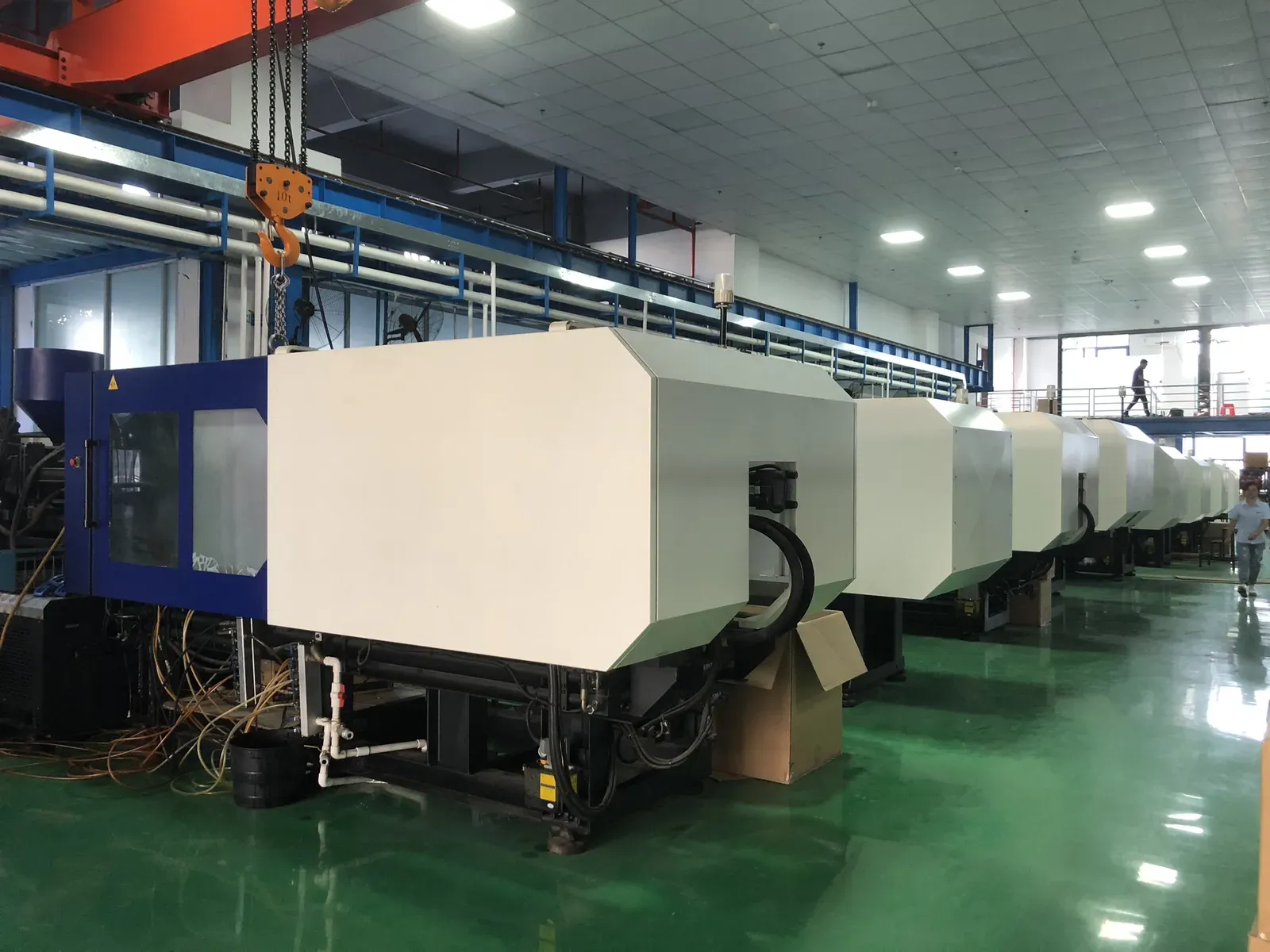
For most of the custom work a factory like HAFO quotes — single- and multi-cavity tools for small-to-medium parts — expect $2,000–$30,000. The full market range is wider, and it helps to know where your project sits in it:
| Mold type | Typical cost (USD) | Typical lead time | Best for |
|---|---|---|---|
| Prototype / bridge tool (aluminium or soft P20, 1 cavity) | $1,500 – $5,000 | 15 – 20 days | Market testing, 500 – 10,000 parts |
| Standard production tool (718H / H13, 1 cavity, cold runner) | $5,000 – $12,000 | 25 – 35 days | 10,000 – 300,000 parts |
| Multi-cavity / hot-runner production tool | $12,000 – $30,000 | 30 – 45 days | 100,000+ parts, lowest unit cost |
| Large, complex or two-shot (2K) tool | $30,000 – $80,000 | 40 – 60 days | Big parts, tight tolerances, dual-material parts |
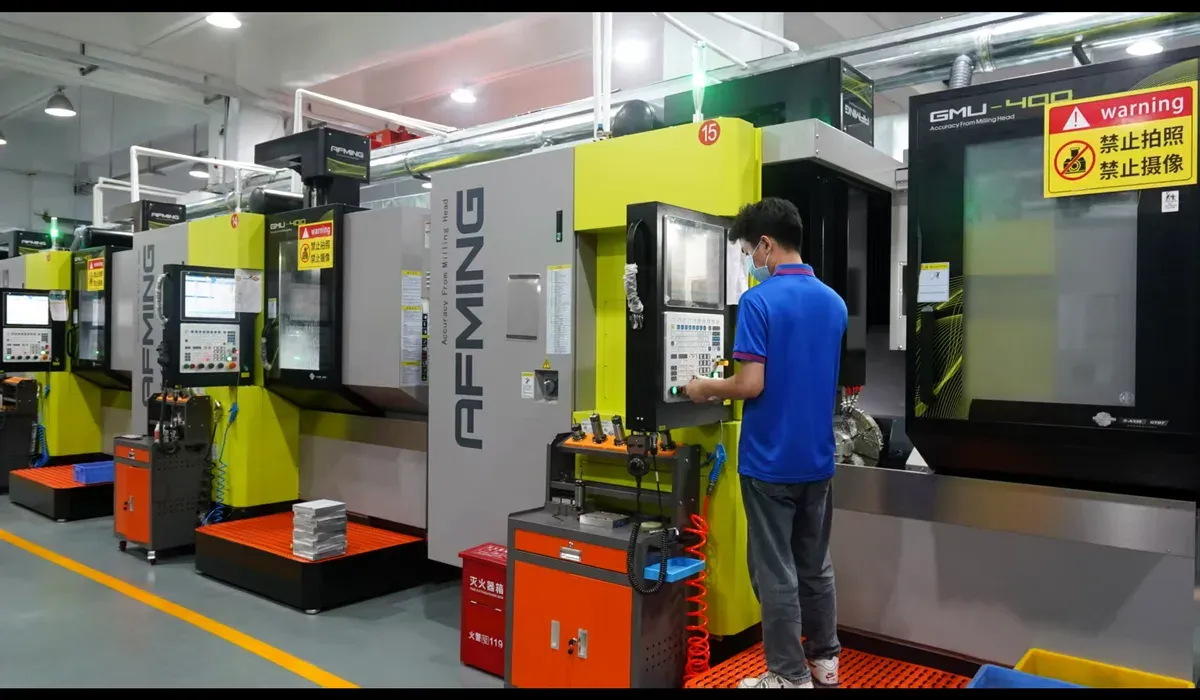
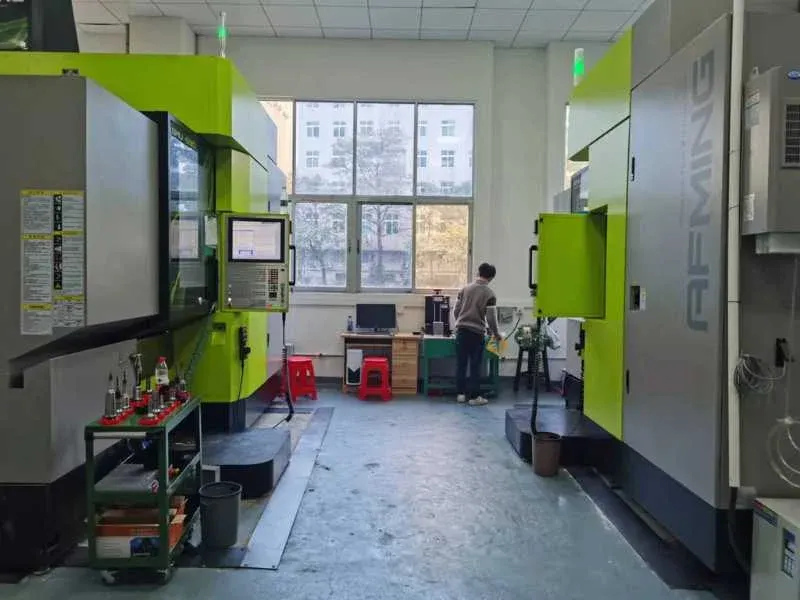
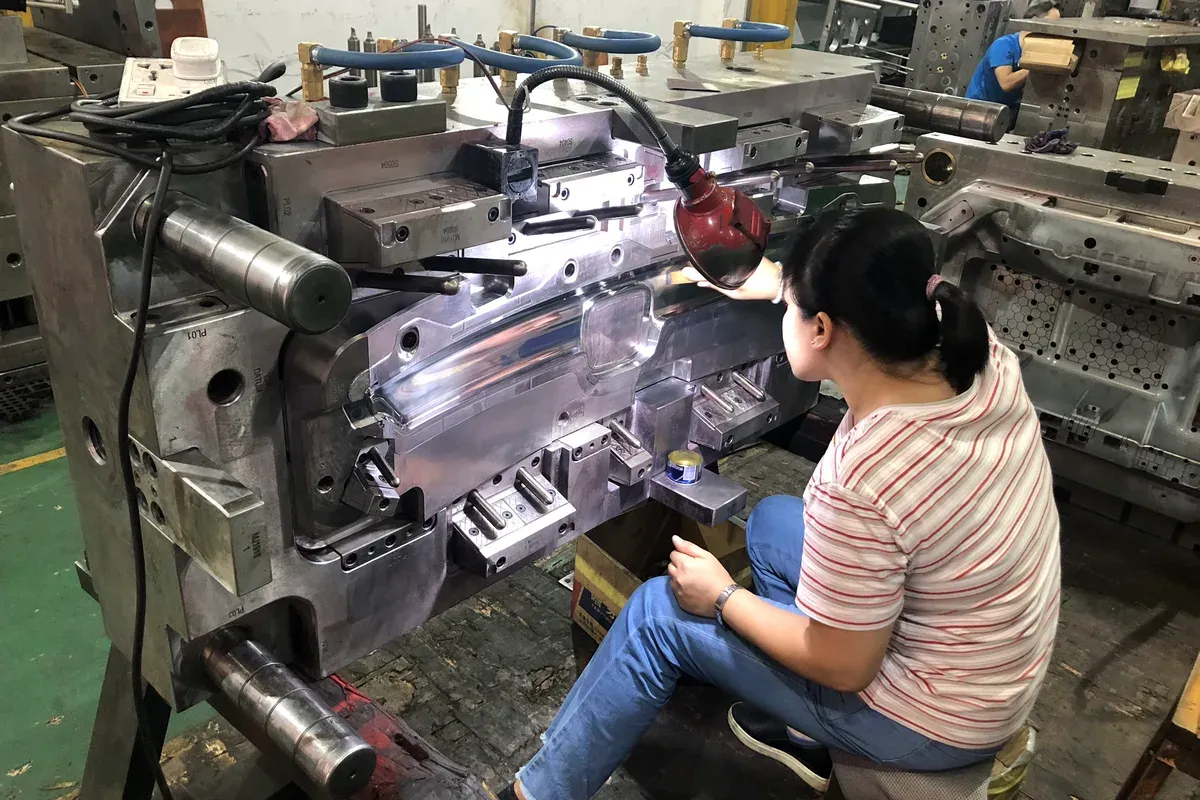
Treat any quote far outside the band for its type as a question, not a bargain: a “production tool” at prototype money is usually soft steel or missing operations that reappear as surcharges, and a simple housing tool quoted at $40,000 is carrying margin you do not need to pay. Our custom plastic injection molds are built in our own Dongguan toolroom — high-speed CNC, EDM and wire-cut in-house — and every project starts with a free DFM review before steel is cut, so the quoted price already reflects the cheapest tool design that will reliably make your part.
What Drives Mold Cost Up or Down?
A mold quote is built from steel, machining hours and complexity features. These are the drivers, in roughly the order they move the price:
Part size and mold size. Bigger parts need bigger mold bases, more steel and larger cutting machines. Size also decides press tonnage later, so an oversized part taxes you twice.
Cavity count. Each additional cavity adds a full set of cavity and core machining, ejection and cooling work. A 4-cavity tool typically costs 2 to 2.5 times a single-cavity tool, not four times — but it is never free, which is why the worked example below compares both routes.
Steel grade. Steel is chosen for the volume and resin you plan to run:
| Steel | Hardness (HRC) | Typical life | Relative cost | Use it when |
|---|---|---|---|---|
| P20 | 28 – 32 | ~100k – 300k shots | Lowest | Prototypes, bridge tools, low volume |
| 718 / 718H | 33 – 38 | ~300k – 500k shots | Low – mid | General production, good polish |
| H13 (SKD61) | 48 – 52 | 500k – 1M+ shots | Mid – high | High volume, abrasive or hot-running resins |
| S136 (stainless) | 48 – 52 | 500k – 1M+ shots | Highest | Optical / mirror finish, corrosive resins such as PVC |
Paying for S136 on a 20,000-part PP project is waste; running 800,000 glass-filled PA parts on P20 is false economy — the tool wears, flash appears, and the “saving” returns as scrap and a mid-project rebuild.
Slides, lifters and undercuts. Every undercut needs a moving mechanism — a slide or a lifter — to release the part. Budget roughly $800–$2,500 per mechanism in tool cost, plus longer build time and more maintenance. A part with four side holes can cost more to tool than a part twice its size with none.
Hot runner vs cold runner. A hot-runner system adds roughly $1,500–$4,000 per drop to the mold price, but eliminates runner material and usually shortens the cycle. Above roughly 100,000 parts a year it commonly pays for itself in resin alone; below that, cold runner is usually right.
Surface finish and texture. A basic machine finish is included in any quote. Each step up — fine polish, SPI A-1 mirror, EDM texture, applied grain — adds handwork hours, and mirror finishes push you into harder, pricier steels.
Tolerances. Standard molding tolerances cost nothing extra. Specifying ±0.02 mm where it is not needed adds machining, inspection and trial iterations to the build. Put tight tolerances only where function demands them.
Two-shot and overmolding. Dual-material tools need a second injection unit, rotating or transfer mechanisms and two sets of cavities. Our two-shot and overmolding molds run on two dedicated 360T two-shot Haitian presses in the same factory, removing the trial-and-transfer loop — but the tool still sits in the upper cost band, and only makes sense when the part genuinely needs a hard/soft or two-colour construction.
Worked Example: What Does a 40 g ABS Housing Really Cost?
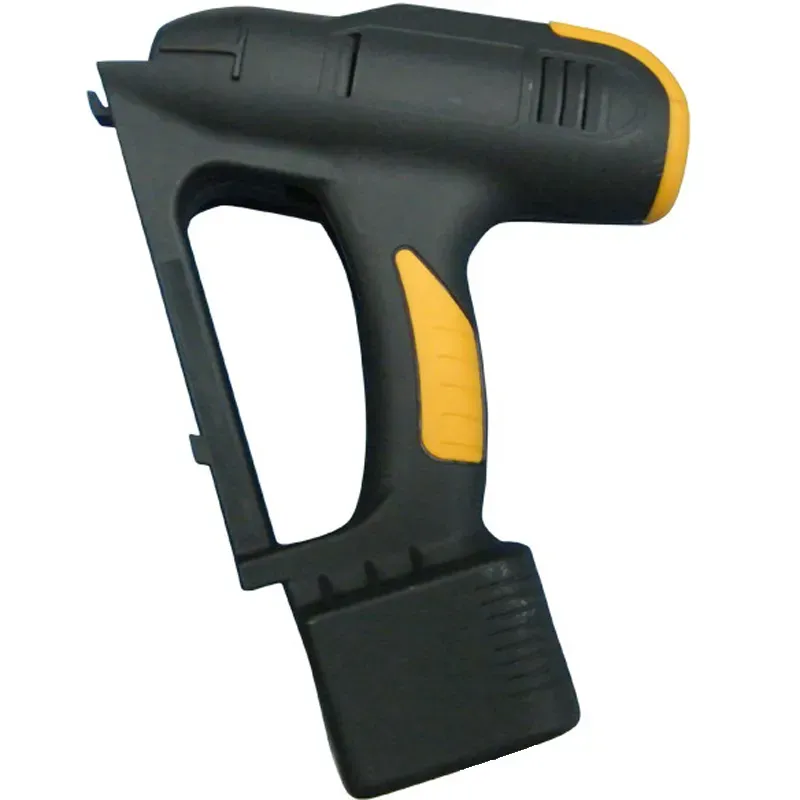
Here is the calculation run end-to-end on a typical project: an electronics enclosure housing, ABS, 120 × 80 × 35 mm, 2 mm nominal wall, part weight 40 g, no undercuts, standard finish.
Route 1 — single-cavity production tool, cold runner
| Item | Figure | How it is derived |
|---|---|---|
| Mold cost | $6,500 | 718H, 1 cavity, cold runner, 25–35 days |
| Material per part | $0.09 | (40 g part + 8 g runner) × $1.80/kg ABS |
| Machine time per part | $0.27 | 180T press at $28/hr, 35 s cycle, 1 cavity |
| Secondary operations | $0.05 | Degating, inspection, packing |
| Scrap adjustment (3%) | ÷ 0.97 | Stable process, mature tool |
| Running cost per part | $0.42 | (0.09 + 0.27 + 0.05) ÷ 0.97 |
| Total at 10,000 parts | $1.07 | $0.42 + ($6,500 ÷ 10,000) |
Route 2 — 4-cavity hot-runner tool
| Item | Figure | How it is derived |
|---|---|---|
| Mold cost | $16,500 | 718H, 4 cavities, hot runner |
| Material per part | $0.07 | 40 g part, no cold runner, × $1.80/kg |
| Machine time per part | $0.09 | 250T press at $35/hr, 38 s cycle, 4 cavities |
| Secondary operations | $0.05 | Same part, same handling |
| Scrap adjustment (3%) | ÷ 0.97 | |
| Running cost per part | $0.22 | (0.07 + 0.09 + 0.05) ÷ 0.97 |
| Total at 100,000 parts | $0.39 | $0.22 + ($16,500 ÷ 100,000) |
The comparison is the lesson. The 4-cavity tool costs $10,000 more but saves about $0.20 on every part, so it breaks even at roughly 50,000 parts ($10,000 ÷ $0.20). Below that volume Route 1 is the cheaper project; above it, Route 2 wins by $0.20 a part, every part. Any supplier who quotes a cavity count without asking your expected volume is guessing with your money — the cheapest mold and the cheapest project are frequently different tools, which is why our free DFM review covers volume before tooling is quoted.
How Does Order Volume Change the Cost Per Part?
Using Route 1 above — the $6,500 single-cavity tool and its $0.42 running cost — here is the whole curve:
| Quantity | Tooling per part | Running cost per part | Total cost per part |
|---|---|---|---|
| 1,000 | $6.50 | $0.42 | $6.92 |
| 10,000 | $0.65 | $0.42 | $1.07 |
| 50,000 | $0.13 | $0.42 | $0.55 |
| 100,000 | $0.07 | $0.42 | $0.49 |
| 1,000,000 | $0.01 | $0.42 | $0.43 |
Three things are worth noticing. First, the steepest drop happens between 1,000 and 10,000 parts — that is where tooling stops dominating. Second, after about 100,000 parts the curve flattens: you are paying almost pure running cost, and further reductions must come from cycle time, cavities or resin, not volume. Third, running cost is a floor set by physics and machine rates — a quote dramatically under it is not efficiency, but a cost moved somewhere you have not seen yet: tooling surcharges, resin substitution, or inspection that quietly disappears.
This is also the correct way to compare a China quote against a local one: tooling against tooling, running cost against running cost, at your quantity. A US or EU molder may be competitive on running cost once freight is added, while the tooling gap — commonly the largest single saving in China — only matters if your volume amortises it.
Why Does Cycle Time Matter So Much?
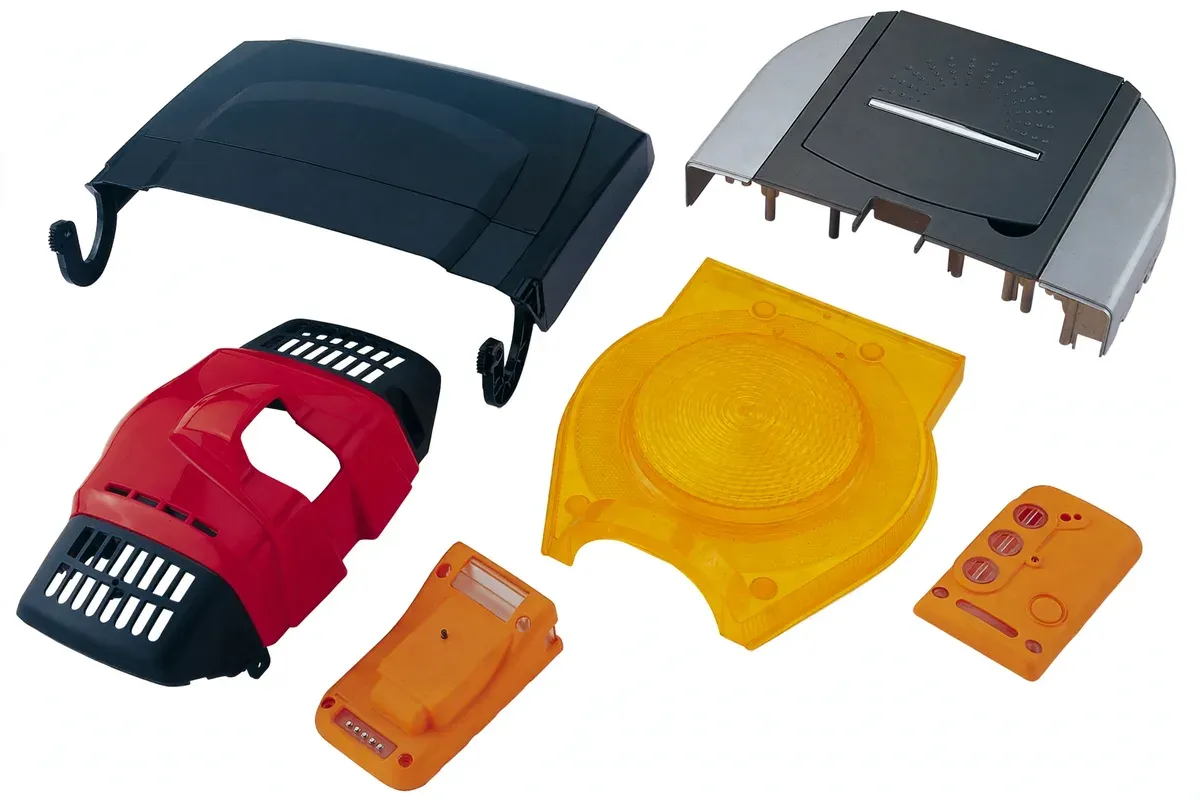
Cycle time is the seconds from mold close to mold open: injection, packing, cooling and ejection. Cooling usually takes 50–70% of the cycle, and cooling time grows roughly with the square of wall thickness — double a wall from 2 mm to 4 mm and cooling time roughly quadruples.
That matters because machine time is priced by the hour and divided by the parts the hour produces. On the worked example, cutting the cycle from 35 s to 28 s — realistic with better cooling layout and a uniform 2 mm wall — drops machine cost from $0.27 to about $0.22 per part; on a 500,000-part program that is roughly $25,000, more than many molds cost. At production volumes, cycle-driven machine time is the largest slice of the running cost, which is why experienced buyers ask for the expected cycle time in the quote, not just the piece price: two quotes at the same piece price with different cycle assumptions are not the same quote.
Cycle time is set mostly by decisions you control: wall thickness, resin choice, geometry around thick sections, and the cooling design in the mold. It is very hard to fix after the steel is cut — one more reason DFM belongs before the tool build, not after the first trial shots.
What Hidden Costs Do Quotes Leave Out?
The piece price is not the landed cost. The items below rarely appear in a headline quote and regularly decide which supplier was actually cheaper:
- Freight and duties. Sea freight typically adds a few cents per part at volume; air freight for urgent launches can add more than the part costs. US buyers must add Section 301 duties where they apply. We ship DDP worldwide, putting freight, clearance and duty into one comparable number — ask any supplier to quote the same way.
- Engineering changes. Moving a hole or adding a rib after steel is cut means re-machining tool steel. Simple changes start at a few hundred dollars; cavity geometry changes can reach several thousand and add one to two weeks. Freeze the design before tooling, or budget honestly for the changes you know are coming.
- Mold trials and sampling rounds. Most quotes include one or two trial rounds (T1, T2). Unsettled designs can burn through more, and extra trials consume press time and engineering hours.
- Scrap and start-up waste. Every run starts with purging and dialling-in shots. On short runs this fixed waste spreads over fewer good parts — a 500-part run carries a visibly higher true cost per part than the steady-state figure.
- Mold maintenance and storage. High-volume tools need scheduled maintenance — cleaning, vent polishing, ejector service. Confirm whether it is included, and who pays for repairs at shot 600,000 of a 1,000,000-shot tool.
- Secondary operations done elsewhere. Printing, ultrasonic welding, insert fitting and assembly are sometimes quoted by a second vendor. Each hand-off adds freight, handling damage and a margin.
- Resin price movement. Resin is a commodity. On long programs, agree how movements are handled — fixed, reviewed quarterly, or passed through — before the first order, not the fifth.
How Can You Reduce Injection Molding Cost?
In approximate order of money saved per hour of effort:
- Keep wall thickness uniform — and thin. Design around a 2–2.5 mm nominal wall for most resins. Uniform walls cool evenly (no sink marks or warpage) and thin walls shorten the cooling-dominated cycle. This is the single highest-value DFM change on most parts.
- Add draft. 1° of draft per side is a minimum; 2–3° on textured surfaces. Draft costs nothing at design time and removes ejection problems, polishing hours and part damage for the life of the tool.
- Design out undercuts. Every slide or lifter you remove saves roughly $800–$2,500 in tooling plus cycle and maintenance cost. Moving a hole to the parting line, or accepting a pass-through opening instead of a side window, is often a five-minute CAD change with a four-figure saving.
- Use radii, not sharp internal corners. Sharp corners concentrate stress, resist filling and force slower, more careful machining of the cavity. A 0.5 mm internal radius is usually free performance.
- Relax tolerances that do not matter. Hold ±0.02 mm only on sealing faces, bearing seats and mating datums. Standard commercial tolerances (±0.1 mm on most dimensions) on everything else cut tool build time, inspection time and trial rounds.
- Match cavity count to real volume. As the worked example shows, the right tool at 10,000 parts is the wrong tool at 500,000. Give your supplier a realistic volume range — including the honest downside case — and let the tooling recommendation follow from it.
- Choose resin for the job, not the brochure. Commodity PP or ABS instead of an over-specified engineering resin can halve material cost per part. The reverse also happens: the cheapest resin that warps or fails in service is the most expensive choice you can make. Send the working environment — temperature, load, chemicals, UV — with your RFQ.
- Consider a family mold for part sets. Left and right housings, or a housing and its cover, can often share one tool with two different cavities, producing a matched set per cycle for much less than two separate tools.
- Freeze the design before steel. The cheapest engineering change is the one made in CAD. Our free DFM review exists for exactly this: send the STEP file before you finalise, and the expensive discoveries happen while they are still free. Our guide to CNC machining cost in China has an RFQ checklist — the same discipline applies to molding RFQs.
Injection Molding vs CNC Machining: Where Is the Break-Even?
For prototypes and very low volumes, CNC machining (or 3D printing) wins because there is no tooling to amortise. For production, molding wins because its running cost is a fraction of machining time. The crossover is found with the same formula:
Break-even quantity = Tooling cost ÷ (CNC cost per part − Molded running cost per part)
For a small machined plastic part at $2.85 per piece, a molded running cost of $0.45 and an $8,000 tool, the break-even is $8,000 ÷ $2.40 ≈ 3,300 parts. Across the parts we quote, the crossover typically lands between a few hundred and about 5,000 units — simple parts with cheap bridge tools cross early; complex parts cross late. Below the crossover, machine it. Above it, mold it. Near it, consider bridge tooling: a $1,500–$5,000 prototype-grade tool that buys production-representative parts while the design settles. The full comparison is in CNC machining vs injection molding.
How Do You Get an Accurate Injection Molding Quote?
A quote is only as good as its inputs. Send these five things and a factory can price your project properly within a day:
- A 3D file (STEP preferred) — plus a 2D drawing for any tolerance, thread or finish that the model does not carry.
- The resin, by grade if you have one — or the working environment so it can be specified for you.
- Expected quantity — first order and estimated annual volume; this decides cavity count and steel.
- Finish and cosmetic requirements — which faces are visible, texture or polish level.
- Target market — so packaging, compliance and shipping are quoted in, not added later.
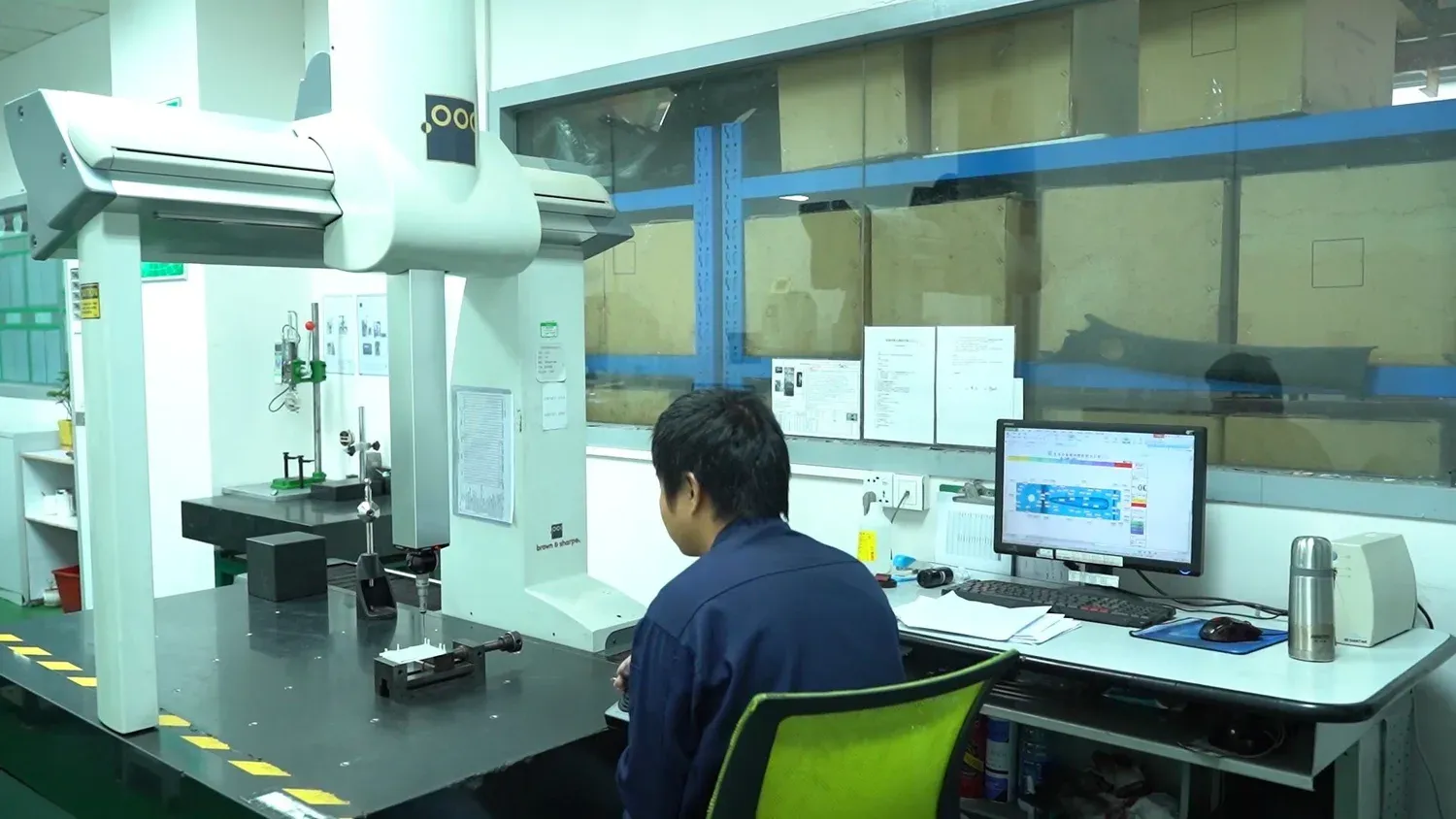
At HAFO, an engineer — not a salesperson — reviews every RFQ. DFM feedback is free and comes before any steel is cut, the quote lands within 24 hours, and trial samples are shipped for your approval before production. Toolroom and presses sit in the same 5,000 m² Dongguan factory (Haitian 90T–470T, including two 360T two-shot machines), under ISO 9001:2015 — the team that quotes your part builds the tool and runs it. See our injection molding services for the full process.
Frequently Asked Questions
How much does an injection mold cost?
Most custom injection molds cost $2,000–$30,000. Prototype and bridge tools in aluminium or soft steel start around $1,500; standard single-cavity production tools run $5,000–$12,000; multi-cavity hot-runner tools $12,000–$30,000; and large or two-shot tools can reach $50,000–$80,000. Size, cavity count, steel grade (P20, 718H, H13, S136), slides and lifters, and surface finish decide where your tool lands.
How much does injection molding cost per part?
Small-to-medium parts typically cost $0.20–$5.00 per part in production, before tooling amortisation. The full cost per part adds the mold spread over your quantity: our worked example, a 40 g ABS housing, totals $6.92 per part at 1,000 pieces, $1.07 at 10,000 and $0.43 at 1,000,000 — the part does not change, only the tooling share does.
How long does it take to make an injection mold?
Prototype and bridge tools take about 15–20 days. Standard production molds take 25–35 days from DFM approval to first trial samples (T1), with complex multi-cavity or two-shot tools at 40–60 days. Add a few days for trial evaluation and any T2 corrections before the tool is released to production.
Why do quotes for the same part differ so much between suppliers?
Because the assumptions differ: steel grade and tool life, cavity count, cycle time, resin grade, included trial rounds, inspection scope, and whether freight and duties are in or out. A quote 40% cheaper usually changed one of these, not the laws of machining. Ask each supplier to state steel, cavities, cycle time and tool life on the quote — the differences become visible immediately.
What is the minimum order quantity for injection molding?
Technically, a mold can run a few hundred parts. Economically, tooling amortisation usually makes molding sensible from roughly 1,000–5,000 parts upward, depending on tool cost and the CNC alternative (see the break-even formula above). For a few hundred parts, ask about bridge tooling or machining instead.
Who owns the mold, and can it be moved?
On a paid tooling project, the mold is your property. At HAFO it can stay in our factory for production, or be crated and shipped to your own molder. Confirm ownership, export packing and release conditions in writing before the tool is built, whichever supplier you choose.
Get a Quote — Free DFM Review, Within 24 Hours
Send us your STEP file, resin (or working environment) and expected quantity, and an engineer will return a DFM review and an itemised quote — tooling and per-part price stated separately, with steel grade, cavity count and cycle assumption on the page, so you can compare it line-by-line against any other quote using this guide’s formula.