CNC Machined Parts
5-Axis CNC Machining Parts
Complex parts machined in a single setup on 18 five-axis centers — curved surfaces, angled features and undercuts held to ±0.025 mm where marked, in aluminum, stainless, titanium and engineering plastics. No MOQ, free DFM and a quote within 24 hours.
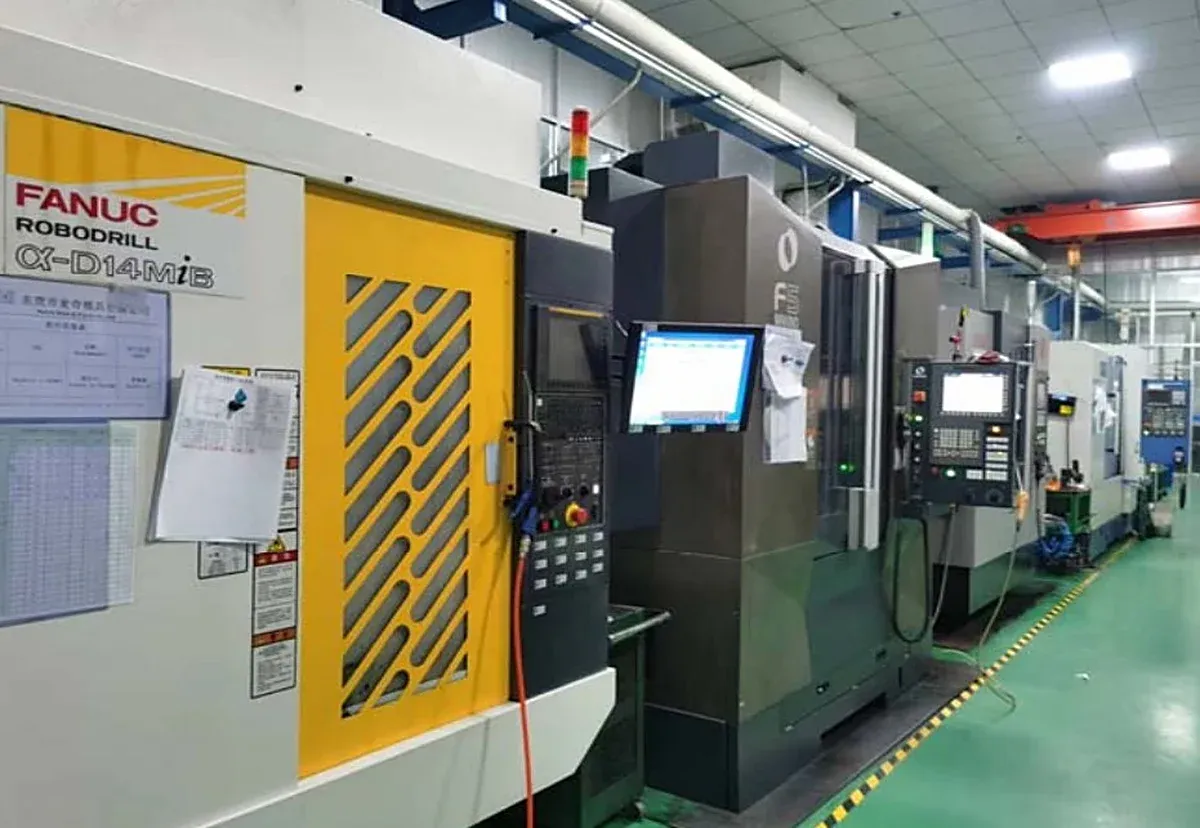
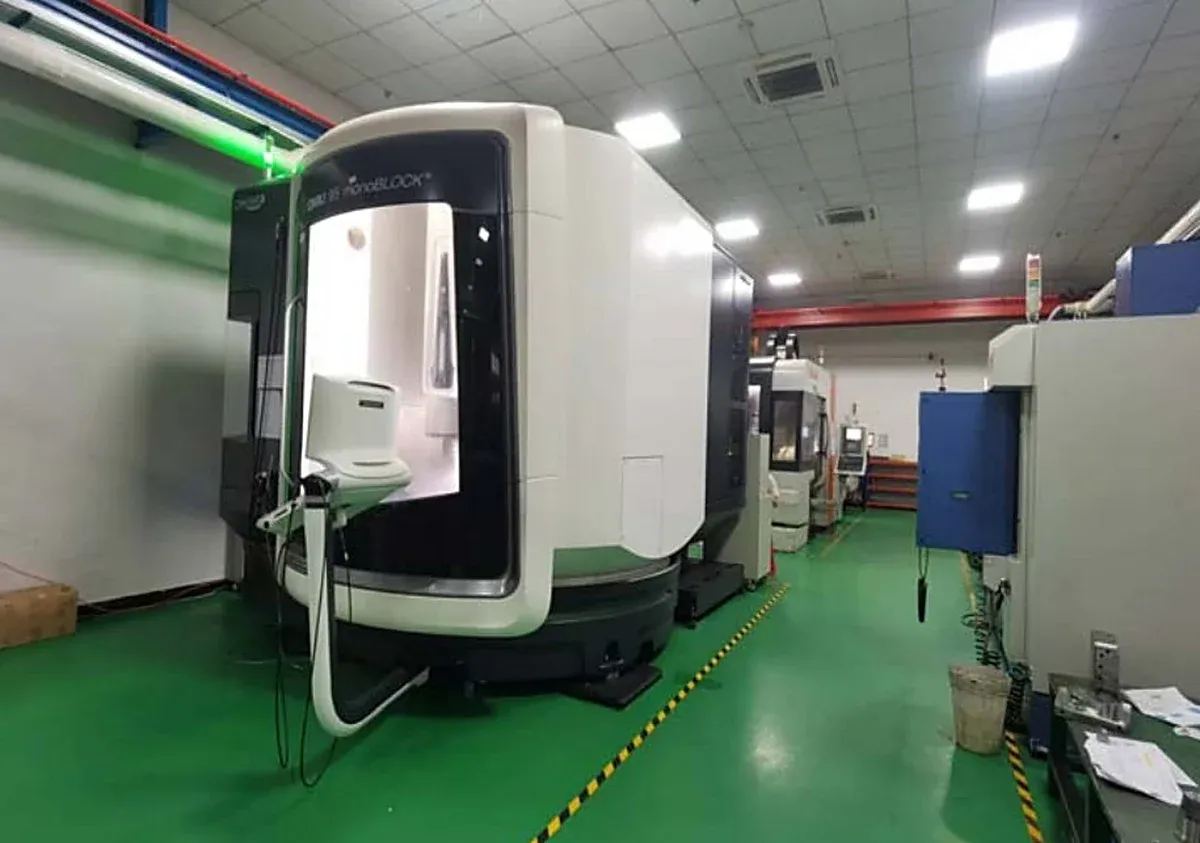
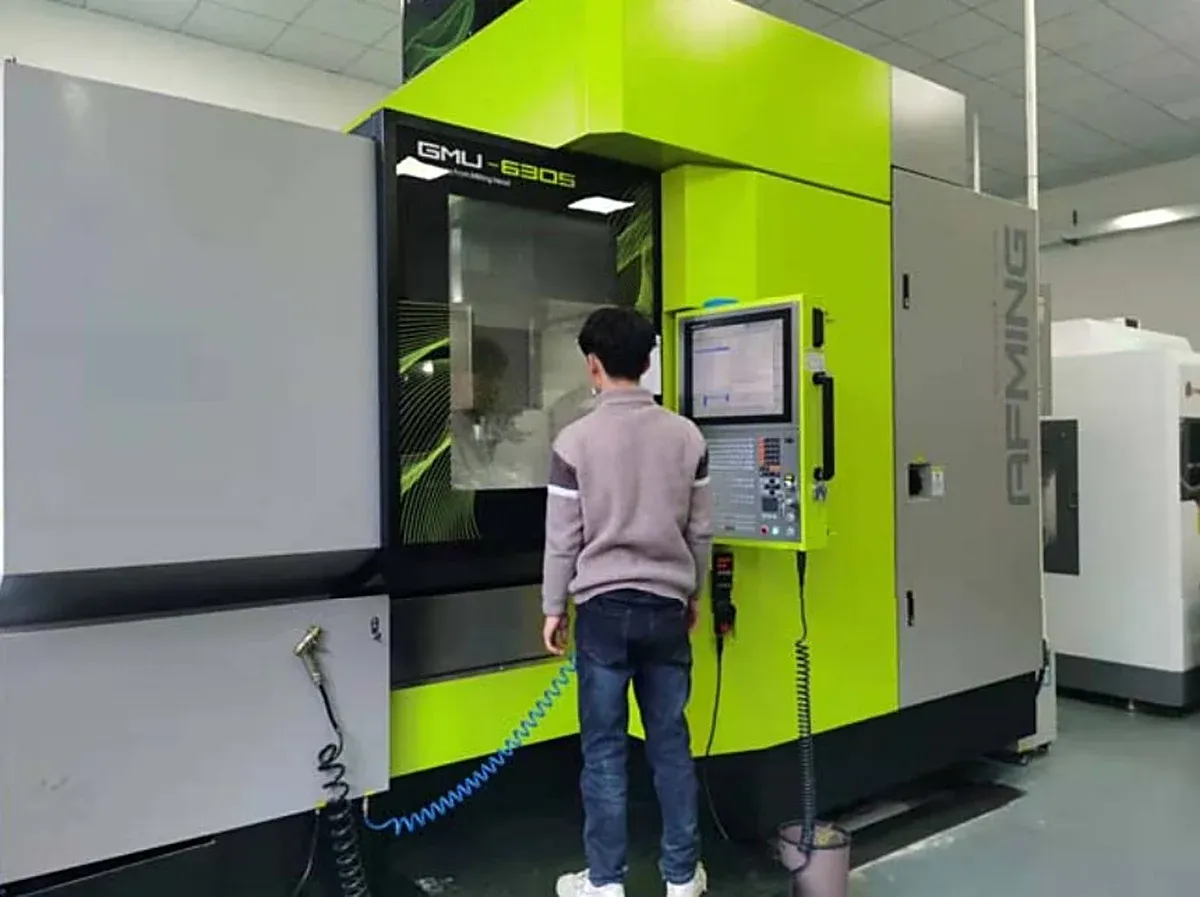
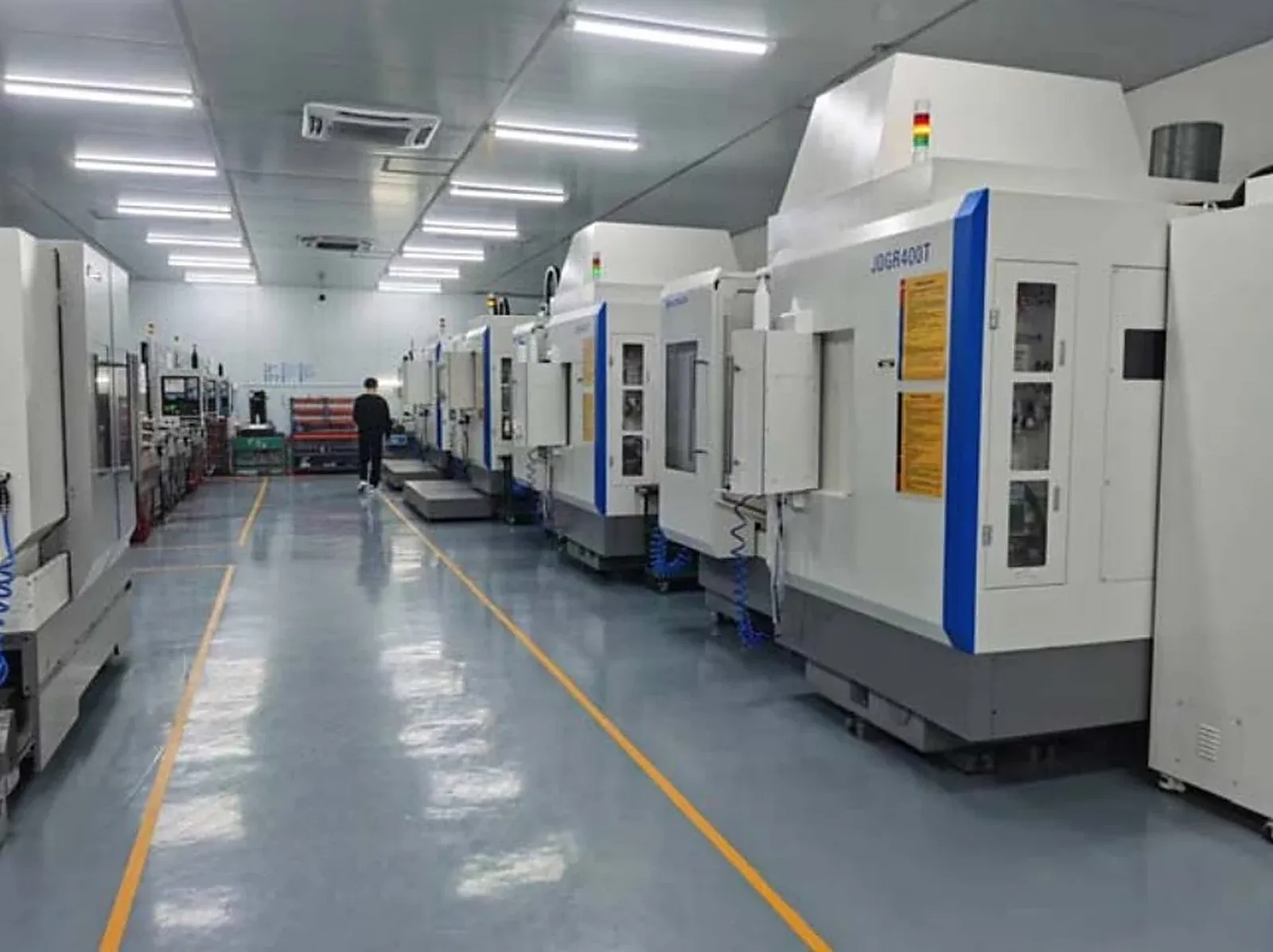
Some parts simply do not fit a 3-axis machine: a housing with ports on five faces, an impeller-style curve, a bracket whose mounting faces all sit at compound angles. On a 3-axis center, every new face means a new setup — and every setup adds handling time, fixture cost and a fresh chance for features to drift out of position relative to each other. HAFO Mould runs 18 five-axis machining centers in its Dongguan factory, so complex parts are cut in one setup, with all features located from a single datum. The factory has machined, inspected and finished parts under one roof since 2007. Send a STEP file and an engineer reviews it free, with a quote back within 24 hours.
Upload Your Drawing — Free DFM + Quote Within 24 Hours. We accept STEP, STP, IGES, STL, X_T and 2D PDF drawings. All files are treated as confidential; NDAs are welcome.
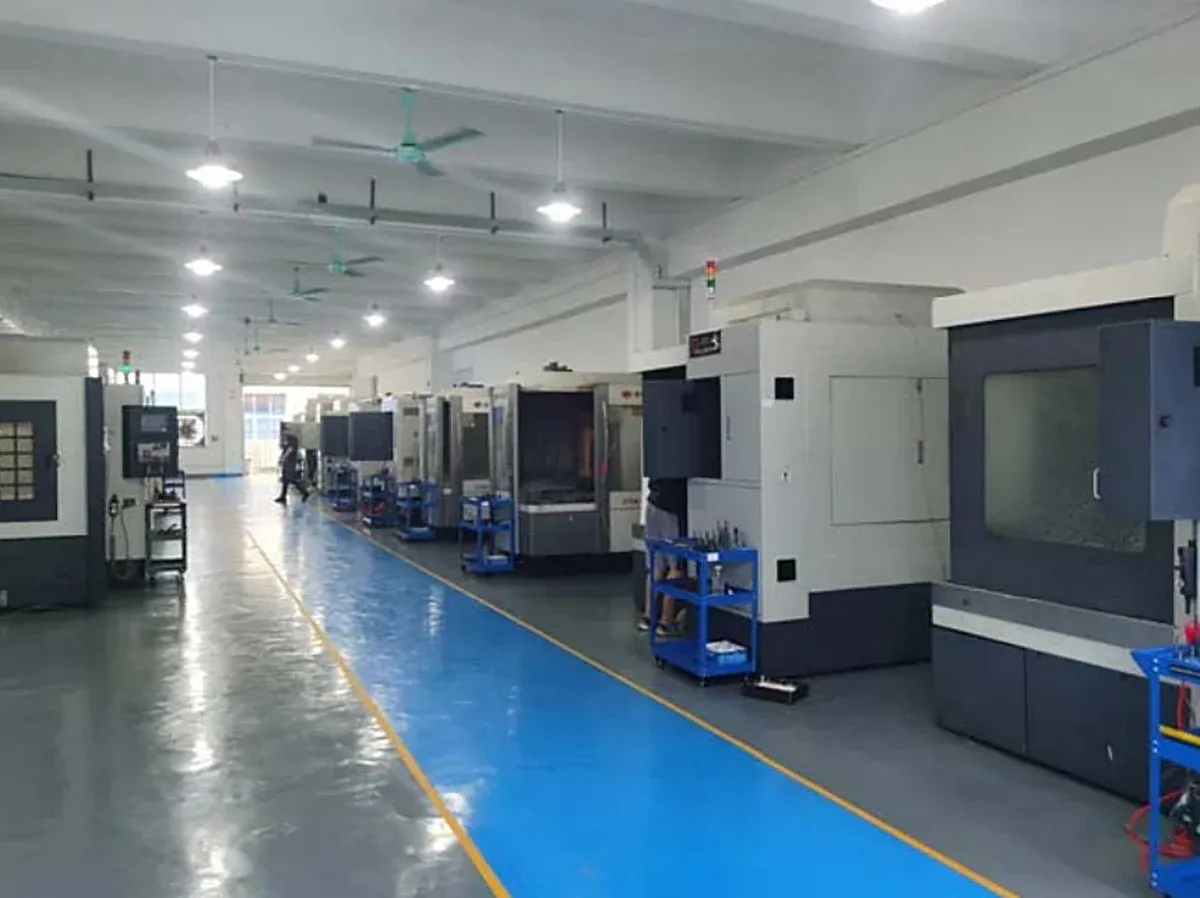
Since 2007 · 5,000 m² factory · 80 staff, 35 engineers · 18 five-axis machining centers (69 CNC centers in total) · Max CNC travel 800 mm · 3 fully automatic CMMs · ISO 9001:2015 certified — scope: Manufacturing of Hardware Molds and Parts · Parts shipped to customers in the US, Germany, France, Portugal, Sweden and Spain.
What We Machine on 5-Axis Centers
- Complex housings and manifolds — ports, bores and sealing faces on multiple sides machined in one setup, so cross-face positions hold as drawn
- Impellers, blisks and curved flow parts — continuous sculptured surfaces finished without witness lines from repositioning
- Aerospace-style brackets and structural parts — pockets and lightening features cut from several directions while the part stays clamped once
- Medical and instrument components — small, intricate parts with angled holes and intersecting features (machined to your drawing; tell us your documentation needs in the RFQ)
- Mold cores, cavities and electrodes — the same 5-axis capability that cuts customer parts also cuts our own tooling Custom Plastic Injection Molds, including deep, polished cavity surfaces
- Prototypes of parts designed for casting or molding — prove the geometry in machined metal or plastic before committing to tooling
Why One Setup Matters
Position accuracy between features is where multi-setup machining quietly fails. A bore machined on Monday's setup and a face machined on Tuesday's can each be "in tolerance" on their own report and still assemble badly, because each was located from a different clamping. Five-axis machining removes most of that risk: the machine reorients the tool around the part instead of an operator re-clamping the part around the machine. In practice that means:
- Tighter true position between faces — all features referenced to one setup datum
- Better surface finish on curves — the tool can be kept at an efficient angle to the surface, shortening tool overhang and reducing chatter marks
- Access to undercuts and angled holes — features a vertical spindle simply cannot reach
- Shorter total cycle time on complex parts — fewer fixtures, fewer load/unload cycles, less queue time between operations
It is not the right answer for everything. A flat plate with vertical holes is cheaper on a 3-axis center, and our DFM review will say so plainly — we quote the process your part actually needs across our 38 three-axis, 13 four-axis and 18 five-axis centers, not the most impressive machine in the building. See the comparison in our guide 5-Axis vs 3-Axis CNC Machining: How to Choose.
Machining Capabilities
Maximum CNC travel is 800 mm (31.5 in), which covers most complex housings, brackets and manifold bodies. Turning and mill-turn capacity sits in the same shop, so a 5-axis part with a turned bore or threaded interface is completed without changing suppliers CNC Turning Parts. Wire EDM and EDM are also in-house for sharp internal corners, narrow slots and hardened-steel features that a rotating cutter cannot produce.
Every job starts with a free DFM review. For 5-axis work the engineer checks tool access to every feature, wall thicknesses beside deep pockets, the datum scheme your tolerances assume, and whether any feature forces a longer tool than the surface finish allows. If a small design change — a bigger blend radius, a relocated datum, a tolerance relaxed on a non-mating face — saves real money or risk, you will see it in writing with your quote, within 24 hours.
Materials We Machine on 5-Axis Centers
Metals:
- Aluminum 6061 / 7075 / 6063 / 6082 — 6061 for general complex parts; 7075 where the part carries structural load; 6063 for smooth anodized enclosures; 6082 for European structural drawings
- Stainless steel 303 / 304 / 316 — 303 for economical turned-and-milled components, 304 general purpose, 316 for marine, chemical and washdown service
- Carbon steel 1018 / 1045 and alloy steel 4140 — brackets, fixtures and machine components
- Brass and copper — fittings, electrical and thermal parts
- Titanium — high strength-to-weight parts; machining parameters and cost confirmed per drawing in the DFM review
- Magnesium — lightweight housings; handling requirements confirmed per project
Engineering plastics:
- ABS, PC, PMMA — housings, covers and transparent or cosmetic parts
- POM and PA (nylon) — gears, bushings and wear components with machined detail
- PP and UHMW — chemical-resistant and low-friction parts
- PEEK and PTFE — high-temperature and chemically aggressive applications
Not sure a feature can be machined in your chosen material? The DFM review answers that before you commit — material behaviour is part of the review, and the broader grade comparison lives in our material notes Materials hub.
Tolerances
We machine to ISO 2768-mK as the default standard when a drawing carries no general tolerance block. Quoted tolerance levels:
Level | Metal | Plastic | Metal (in) | Plastic (in) |
|---|---|---|---|---|
Standard | ±0.13 mm | ±0.25 mm | ±0.005 in | ±0.010 in |
Precision | ±0.025 mm | ±0.05 mm | ±0.001 in | ±0.002 in |
The real 5-axis advantage shows in position tolerances between features on different faces — exactly the dimensions that scatter when a part is re-clamped. Precision callouts are held where you mark them: bearing seats, sealing faces, cross-face bore positions. Holding the tightest grade on every dimension of a complex part is rarely worth its cost; our DFM review maps which dimensions we propose to hold at precision level before you order. Background reading: CNC Machining Tolerances Explained: Standard vs. Precision.
Surface Finishes
- As-machined — visible tool marks, lowest cost, right for internal parts
- Bead blasting — uniform matte finish that levels light tool marks before coating or anodizing
- Anodizing, including hardcoat — clear or colored corrosion protection for aluminum; hardcoat for wear surfaces
- Polishing and brushing — for visible, cosmetic faces
- Painting and powder coating — color-matched protective finishes
- Plating — nickel, chrome or zinc; electroless nickel for even coverage over complex geometry where line-of-sight processes struggle
- Black oxide and passivation — black oxide where specified on steel; passivation to restore stainless corrosion resistance after machining
Finishes that build thickness are allowed for in the machining plan, so finished dimensions arrive as drawn. State the finish on your drawing or RFQ and the DFM review will confirm the allowance approach.
Specifications
Item | Value |
|---|---|
Processes | 5-axis milling (18 centers); also 3/4-axis milling, turning, mill-turn, wire EDM, EDM, drilling & tapping in-house |
Materials | Aluminum 6061/7075/6063/6082, stainless 303/304/316, carbon steel 1018/1045, alloy steel 4140, brass, copper, titanium, magnesium; ABS, POM, PC, PMMA, PA, PP, PEEK, PTFE, UHMW |
Standard tolerance | ±0.13 mm (±0.005 in) metal / ±0.25 mm (±0.010 in) plastic, ISO 2768-mK |
Precision tolerance | ±0.025 mm (±0.001 in) metal / ±0.05 mm (±0.002 in) plastic on marked dimensions |
Max part size | Up to 800 mm (31.5 in) CNC travel |
MOQ | 1 piece |
Inspection | CMM, dimensional and material reports available; FAI on request |
Lead time | Depends on part complexity, quantity and finish — confirmed in your quote; expedited production available on request |
Shipping terms | DDP, EXW or FOB; payment by T/T |
Quality and Inspection
HAFO Mould is ISO 9001:2015 certified (scope: Manufacturing of Hardware Molds and Parts). Complex parts are verified on our fully automatic CMMs — the right tool for checking features that sit on several planes — and our metrology lab runs 3 of them. Available with your order on request:
- CMM inspection report
- Dimensional inspection report
- Material certificate
- Surface finish certificate
- First Article Inspection (FAI) report
- Pre-shipment photos or video of your actual parts
How inspection fits our overall system is set out on the Quality & Inspection page. Mark the dimensions that matter to your assembly on the drawing — they will be measured and reported, not just machined.
How Ordering Works
- Send your files. Upload your STEP/IGES file or 2D drawing with material, quantity and finish. NDAs are welcome — ask and we sign before you share anything sensitive.
- Free DFM + quote within 24 hours. An engineer checks tool access, datum logic and tolerance cost, suggests changes where they genuinely help, and we quote with tolerance approach and lead time confirmed in writing.
- Production. Your parts are machined in our Dongguan factory; progress photos or video available on request.
- Inspection and reports. Parts are measured against the drawing; the reports listed above are supplied when requested.
- Shipping. Packed and shipped on DDP, EXW or FOB terms — we regularly deliver to the US, Germany, France, Portugal, Sweden and Spain. Payment by T/T.
Why Buyers Choose HAFO for 5-Axis Work
- Factory-direct, no middleman. You deal with the factory that programs and runs the machines — no platform markup, no order relayed to an unknown workshop.
- The machine park is real and in one place. 18 five-axis centers inside a 69-center shop, photographed on our Our Factory & Equipment page — not a broker's promise.
- Machining depth behind the headline. Toolroom-grade EDM, wire EDM, turning and inspection sit in the same building, so a complex part never stalls at a subcontractor.
- A route to production. When a machined prototype becomes a molded product, the same factory builds the mold Custom Plastic Injection Molds and runs the molding — one supplier from first article to volume.
FAQ
When does a part actually need 5-axis machining?
When features sit on several faces at angles to each other, when surfaces are continuously curved (impellers, sculptured housings), or when undercuts and angled holes must be reached without re-clamping. If your part can be made just as accurately on 3 axes, our DFM review will tell you and quote the cheaper route.
What is the largest 5-axis part you can machine?
Our maximum CNC travel is 800 mm (31.5 in). Most complex housings and brackets sit well within that. If one dimension exceeds it, send the file anyway — the DFM review will say honestly whether and how the part can be approached.
What tolerances can 5-axis machining hold?
Standard ±0.13 mm (±0.005 in) on metal and ±0.25 mm (±0.010 in) on plastic under ISO 2768-mK; precision ±0.025 mm (±0.001 in) on metal and ±0.05 mm (±0.002 in) on plastic where marked. The biggest gain is positional accuracy between features on different faces, because they are cut in a single setup.
Which materials do you cut on the 5-axis centers?
Aluminum grades 6061, 7075, 6063 and 6082; stainless 303, 304 and 316; carbon and alloy steels; brass, copper, titanium and magnesium; and engineering plastics including PEEK, POM, PC, PA and PTFE. The DFM review confirms the approach for your specific grade.
Can you machine titanium and PEEK, or are they special cases?
Both are regular work for us. They are slower and more tool-intensive than aluminum, which is reflected in the quote — the DFM review explains the cost drivers for your geometry rather than hiding them in a lump sum.
Is there a minimum order quantity?
No. MOQ is 1 piece. One-off complex prototypes are normal work; the per-part price simply reflects setup and programming shared across your quantity.
Does 5-axis machining cost more than 3-axis?
Per machine hour, yes. Per finished part, often no: one setup replaces several fixtures and operations, and scrap risk drops. The honest comparison depends on your geometry, which is why the DFM review quotes the route we actually recommend and explains the choice.
How fast will I get a quote?
Within 24 hours of receiving your files, after a free engineering DFM review. The written quote confirms material, tolerance approach, finish and lead time.
How long is production lead time?
It depends on complexity, quantity and finish, so we confirm it in the quote instead of publishing a generic figure. Working to a hard deadline? Tell us in the RFQ — expedited production is available on request.
What inspection reports can I get with 5-axis parts?
CMM reports (particularly valuable for multi-face geometry), dimensional reports, material certificates, finish certificates and FAI reports on request, plus pre-shipment photos or video before your parts leave.
Can you sign an NDA before I send my model?
Yes. NDAs are welcome, and every file we receive is treated as confidential with or without one. Complex 5-axis parts often carry a customer's core design — we treat them accordingly.
Which file formats do you accept?
STEP, STP, IGES, STL and X_T models, or 2D PDF drawings. A 3D model plus a 2D drawing with tolerances and datum scheme marked gives the fastest, most accurate quote.