Injection Mold Tooling
Custom Plastic Injection Molds
Custom plastic injection molds designed, machined, fitted and trialled in our own Dongguan toolroom — high-speed CNC, EDM and wire-cut in-house, export-standard tools for EU and US customers. Free DFM before any steel is cut; trial samples shipped for your approval before the mold moves.
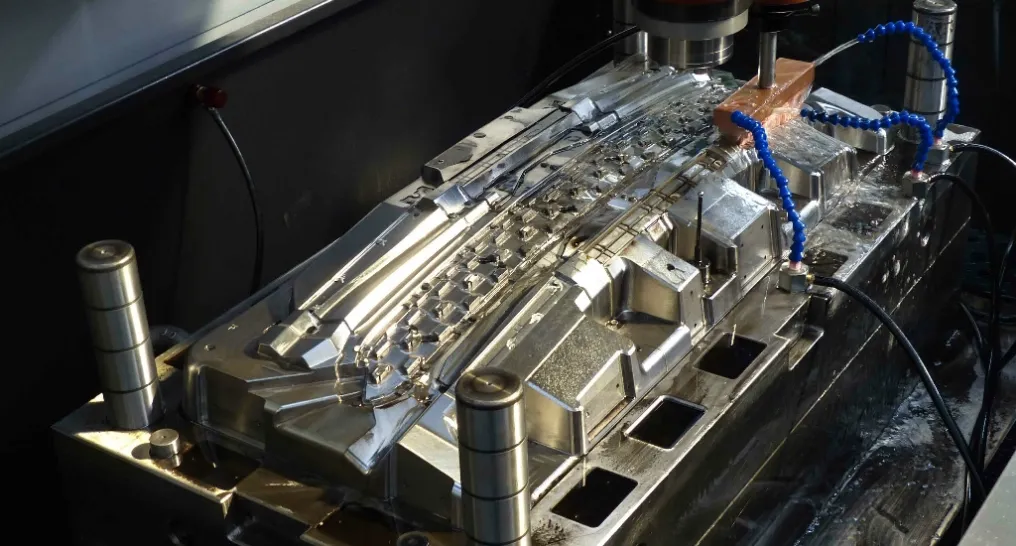
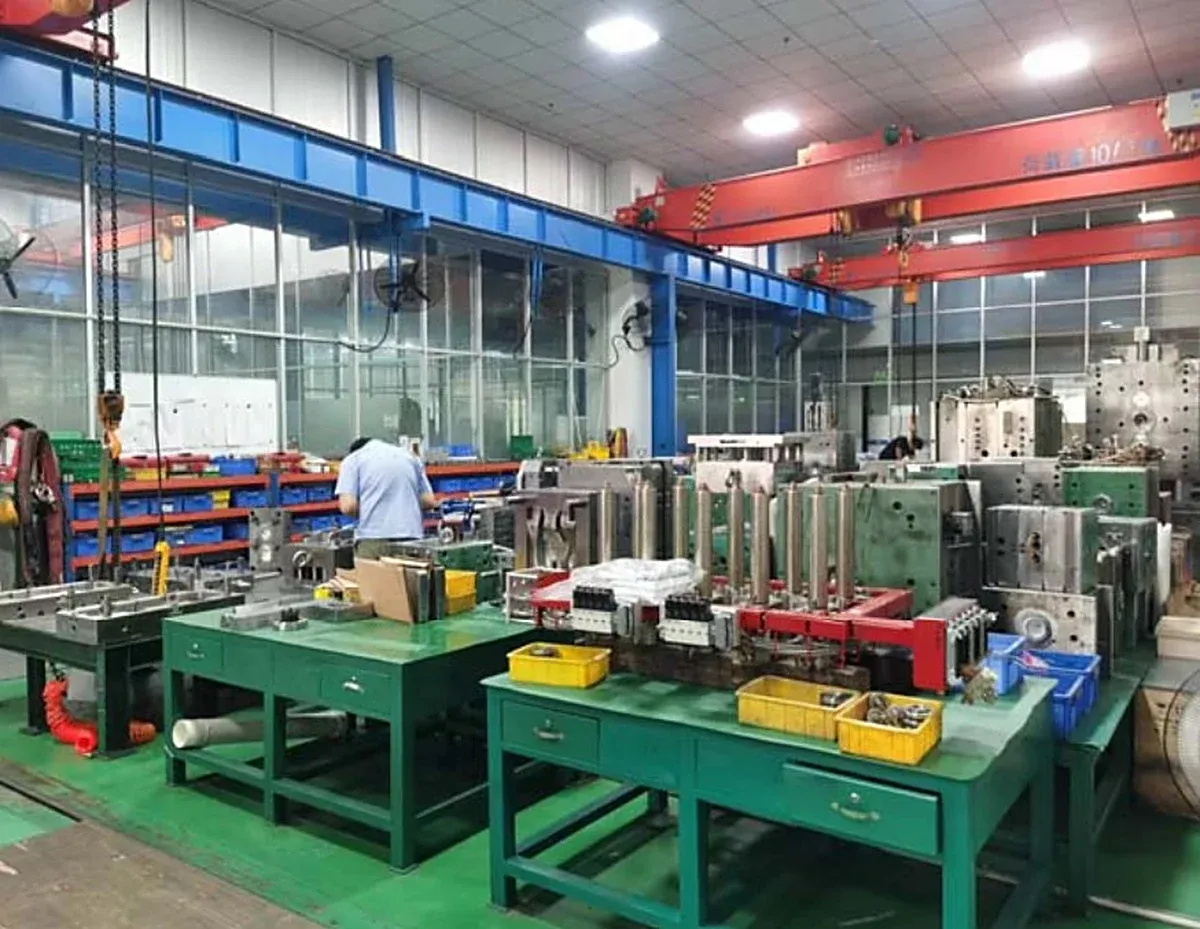
A mold is the most expensive single purchase in most plastic product projects, and the easiest one to regret. Tools built by middlemen get subcontracted to workshops you never see; tolerances slip, trial dates slip, and by the time samples disappoint, your launch window has closed. HAFO Mould designs and builds injection molds in its own 5,000 m² Dongguan toolroom — design, machining, EDM, wire cutting, fitting and trials by the same 35-engineer team, in the same building, since 2007. Your mold is trialled on our own presses before it ships or goes into production, so what you approve is what the tool actually does.
Send Your Part Design — Free DFM Review + Quote Within 24 Hours. STEP, STP, IGES, STL, X_T and 2D PDF accepted. Confidential by default; NDAs welcome.
In-house toolroom since 2007 · 13 high-speed CNC · 8 EDM · 6 wire-cut machines · 3/4/5-axis machining centers (38 / 13 / 18) · 3 fully automatic CMMs · Trial presses: Haitian 90T–470T in the same factory · ISO 9001:2015 certified — scope: Manufacturing of Hardware Molds and Parts.
Toolroom Equipment
- 13 × high-speed CNC machines for cavity and core machining
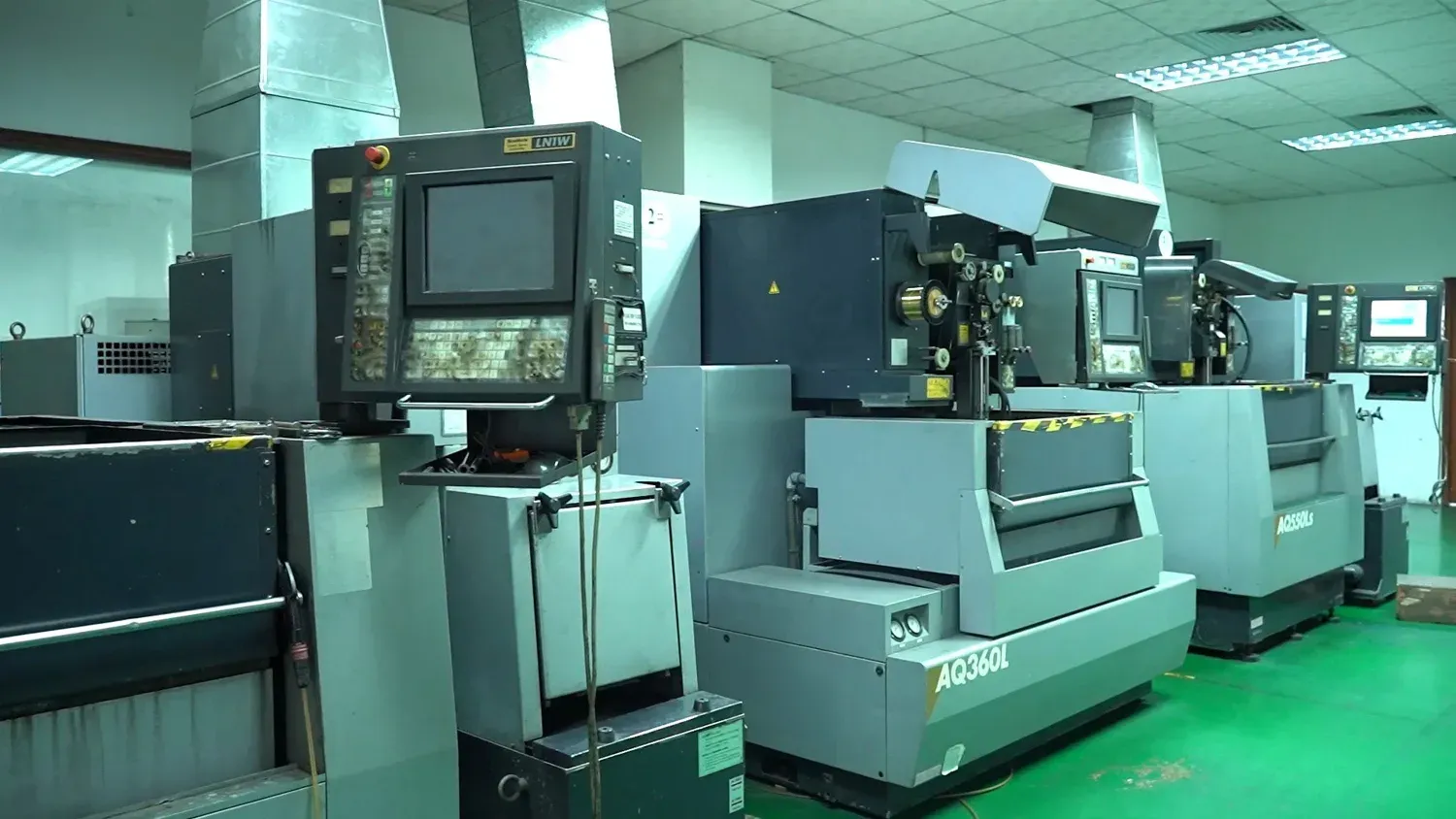
- 8 × EDM machines for deep ribs, sharp corners and fine detail
- 6 × wire-cut machines for precise profiles and inserts
- Machining centers: 3-axis ×38, 4-axis ×13, 5-axis ×18 for mold plates and complex cavities
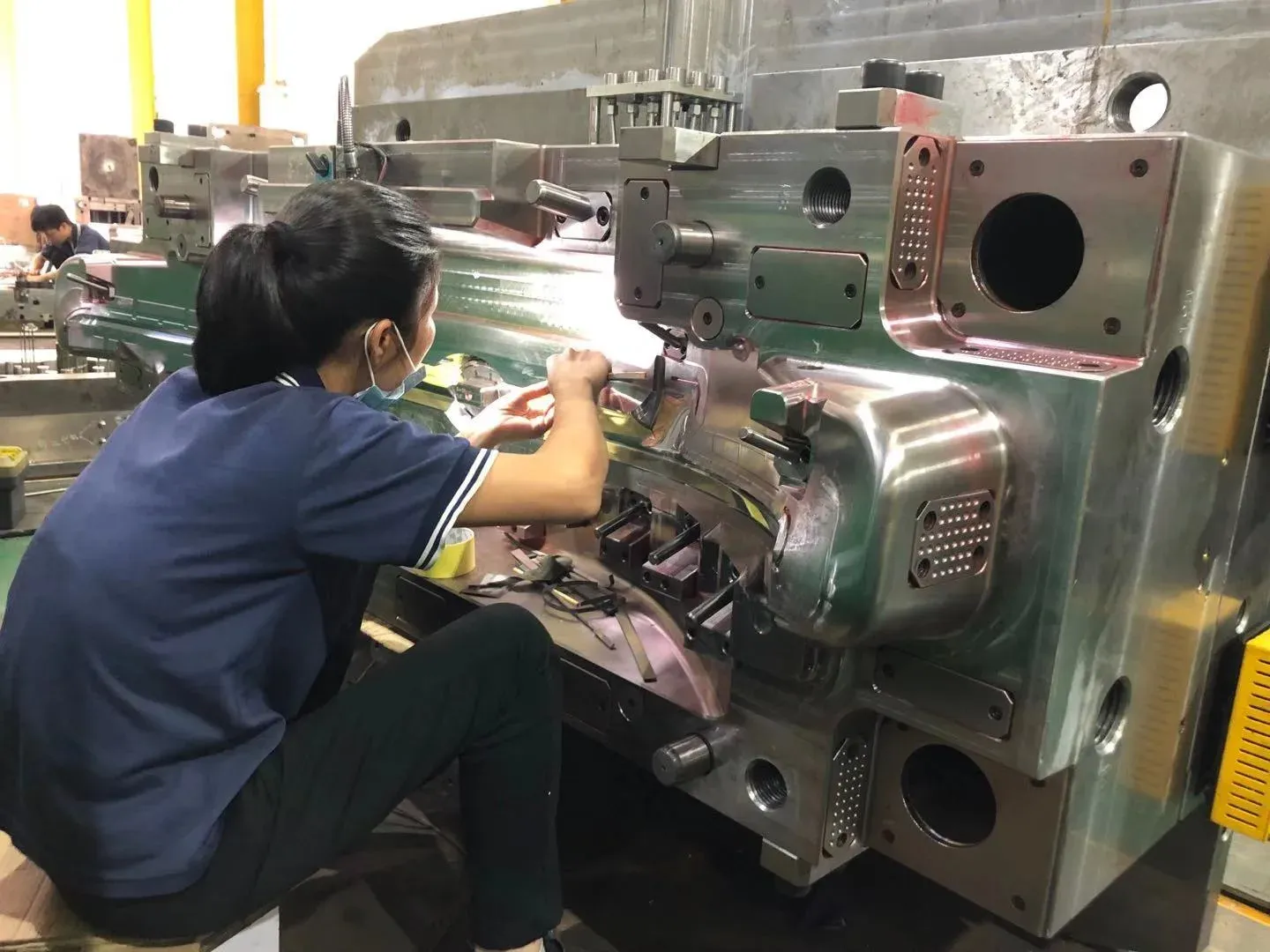
- Fully equipped fitting and polishing benches
- 3 × fully automatic CMMs for mold component inspection
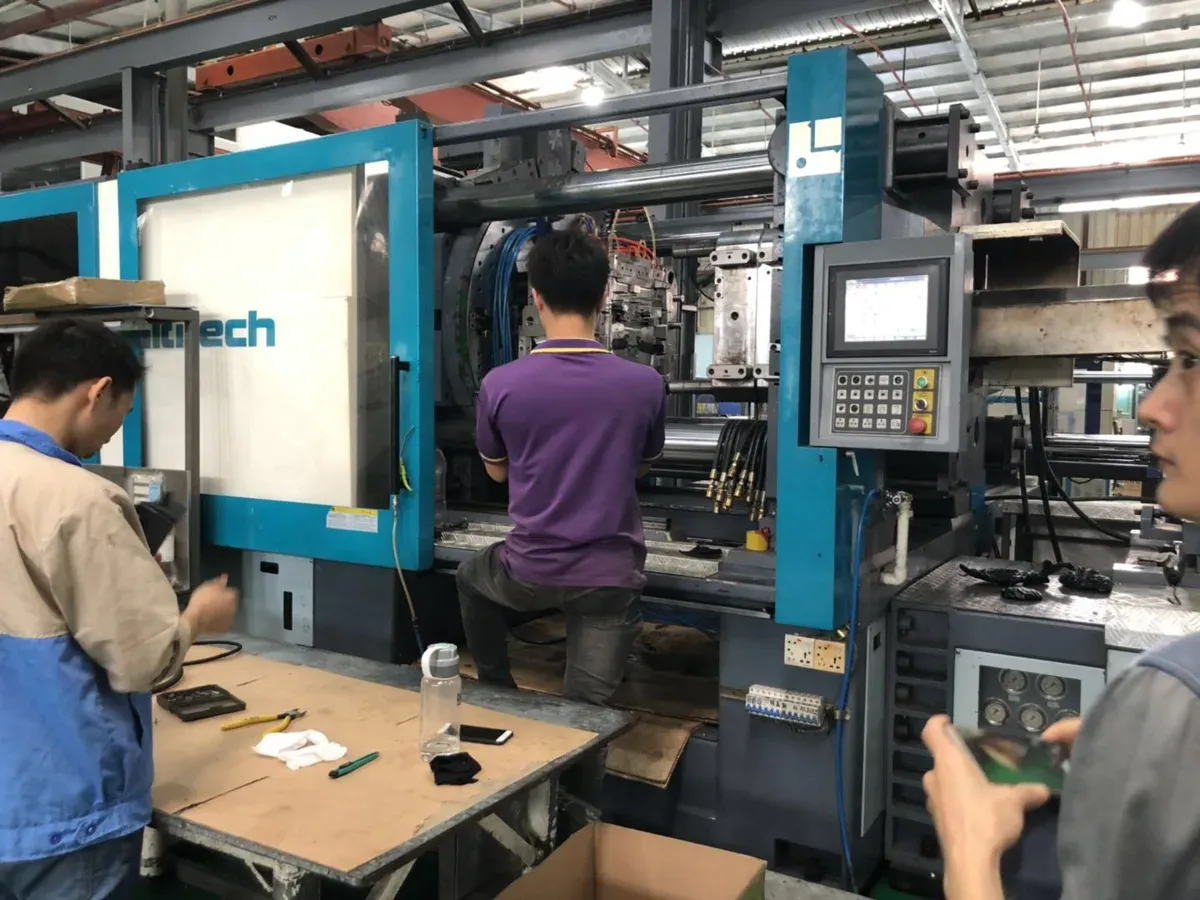
Because the toolroom and the molding shop share one roof, a mold never waits in a queue at an outside trial shop: it goes from the fitting bench to a Haitian press in the same building.
Mold Types We Build
- Single-cavity and multi-cavity molds — from one cavity for market testing to multi-cavity tools for volume production
- Family molds — different parts of one product molded in a single shot, where geometry and volumes suit
- Two-shot (2K) and overmolding tools — see the dedicated page Two-Shot & Overmolding Molds
- Insert molds — for parts molded around metal inserts, bushings or threaded components
- Hot-runner molds — for reduced waste, better surface quality and faster cycles on suitable parts
- Prototype and bridge tools — simpler tools to validate a design and supply early parts before committing to a full production mold
Mold base and cavity/core steel are selected with you during design review, based on your resin, required surface finish and expected production volume, and confirmed in writing in the quotation before any steel is cut. We do not push a standard grade on every project — a soft cosmetic cover and an abrasive glass-filled gear do not belong in the same steel.
The DFM Review Comes First — and It Is Free
Before quoting, our engineers review your part for draft angles, wall thickness transitions, undercuts and the sliders or lifters they require, gate positions, ejection, cooling and the surface finish you actually need versus the one that was copied onto the drawing. You receive the feedback with the quote, within 24 hours. Changes made at this stage cost an email; the same changes after steel is cut cost weeks.
Specifications
Item | Value |
|---|---|
Toolroom | In-house: design, CNC, EDM, wire-cut, fitting, polishing, trials |
Machining capacity for tooling | Max CNC travel 800 mm (31.5 in); 69 machining centers total |
Mold types | Single/multi-cavity, family, two-shot, overmold, insert, hot-runner, prototype/bridge |
Mold steels | P20, 718H, NAK80, H13, S136, 420 stainless and other grades, selected for your part and volumes |
Mold life | Up to 1,000,000 shots — built to the SPI class your production volumes require (Class 101–105) |
Component inspection | 3 × fully automatic CMMs; dimensional reports available |
Trial presses | Haitian injection machines 90T–470T (incl. two 360T two-shot machines) |
Resins for trials/production | ABS, PC, PA, PP, POM and other common engineering plastics |
Mold delivery options | |
Quote | Free DFM + quote within 24 hours |
Terms | Payment by T/T; shipping DDP, EXW or FOB |
Quality and Documentation
HAFO Mould is ISO 9001:2015 certified (scope: Manufacturing of Hardware Molds and Parts). Mold components are checked dimensionally during the build, and trial parts are measured against your drawing before samples are dispatched. On request we provide dimensional and CMM reports for trial parts, material certificates for molded samples, and progress photos throughout the build — most overseas customers follow their tool's progress entirely through the photo and sample reports we send.
How a Mold Project Runs
- Send your part files. 3D file plus quantity expectations, resin and finish requirements. NDAs welcome.
- Free DFM + quote within 24 hours. You receive manufacturability feedback, the proposed mold concept (cavities, runner type, steel selection) and a written quote.
- Mold design approval. The mold design is shared for your approval before steel is cut — gate, parting line and ejection are agreed, not assumed.
- Tool build with progress photos. Machining, EDM, fitting and polishing happen in our toolroom; you see the tool taking shape.
- Trials and samples. Trial shots run on our own presses; samples are shipped for your approval, with measurement reports on request.
- Ship the mold or start production. The tool is crated and shipped to you — or stays in our molding shop and we supply finished parts Custom Injection Molded Parts.
Why Build Your Mold at HAFO
- One factory, design to trial. No subcontracted stages you cannot audit; the people who design the tool machine it and trial it.
- The toolroom feeds our own molding shop. We build molds we would be happy to run ourselves — because often, we do.
- Engineers answer you. Progress, problems and options are discussed with the engineering team, not relayed through traders.
- Export experience. Molds and molded parts ship regularly to customers in the US, Germany, France, Portugal, Sweden and Spain, on DDP, EXW or FOB terms.
Planning a part that will be molded in two materials? Start at Two-Shot & Overmolding Molds. Still deciding between machining and molding for your volumes? Our comparison guide helps Resources: CNC vs Injection Molding.
What Drives Mold Cost — So You Can Compare Quotes Properly
Mold prices vary enormously between suppliers because the tool behind the price varies. When comparing quotes, check that each covers the same ground:
- Cavity count and layout — a 4-cavity tool costs more to build and less per part than a 1-cavity tool; make sure quotes assume the same cavitation.
- Part complexity — undercuts need sliders or lifters; deep ribs need EDM time; cosmetic surfaces need polishing hours. Simple-looking parts with hidden undercuts are the classic source of "cheap tool, expensive surprise."
- Steel selection — harder, more polishable steels cost more and suit longer runs and finer finishes; the quote should name what you are buying.
- Runner system — cold runner tools are cheaper to build; hot runner tools cost more up front and save material and cycle time over long runs.
- Trial and documentation scope — T1 samples, measurement reports and design approval should be inside the scope, not extras discovered later.
Our quotation states the mold concept, cavity count, runner type and steel selection in writing, precisely so an apples-to-apples comparison is possible.
Designing the Part Is Half the Tooling Job
The cheapest mold changes happen in your CAD, before our toolroom starts. The DFM review focuses on: sufficient draft on vertical walls so parts eject cleanly; wall thickness kept as uniform as the design allows, with gradual transitions, to control sink and warpage; ribs instead of solid thick sections for stiffness; radii in internal corners for steel strength and resin flow; and undercuts eliminated or consciously accepted as sliders. A part designed for molding can cut both tool cost and part cost for the entire life of the product — which is why the review is free and why we do it before quoting, not after.
A Staged Approach Many Customers Use
Not every product should start with its final production tool. A common, lower-risk path: build a single-cavity tool first, validate the part in the real market and freeze the design, then invest in the multi-cavity production tool with the lessons from stage one built in. Because our toolroom and molding shop are the same factory, stage-one parts come from the same team that will build the stage-two tool — nothing learned in the first stage is lost in a supplier change. If your volumes are uncertain, tell us; the DFM review will quote the staged route alongside the direct one so you can choose with the numbers in front of you.
FAQ
How much does an injection mold cost?
It depends on part size, cavity count, undercuts (sliders/lifters), runner type and steel selection — which is why we quote each tool individually. Send the part file: the DFM review and quote are free, within 24 hours, and the quote states the mold concept and steel choice in writing so you can compare offers on equal terms.
What steel will my mold be made from?
Steel is selected during design review according to your resin, finish requirements and expected production volume, then confirmed in the quotation before cutting. We will explain the reasoning — paying for hardened steel on a short-run cosmetic part is as wasteful as building a volume tool in soft steel.
How long does a mold take to build?
Build time depends on tool size and complexity and is confirmed in the quotation after DFM. You receive progress photos during the build, and trial dates are agreed once the design is approved — we would rather commit in writing than advertise a generic week count.
Do I own the mold?
Your mold can be shipped to your plant or stored at HAFO for production runs — the arrangement is agreed in the order. Molds we hold are maintained as production tools for your parts.
What are T1 samples, and do I get them?
T1 is the first trial shot from the finished tool. Trial samples are molded on our own presses and shipped to you for approval, with dimensional/CMM reports available on request. Corrections identified at T1 are made before the tool is released.
Can you modify or repair a mold built elsewhere?
Send photos, drawings and a description of the problem. We will assess it in the DFM review and tell you honestly whether modification is practical in our toolroom.
Which resins can the mold be designed for?
Common engineering plastics including ABS, PC, PA, PP and POM. Tell us the resin (and any filler, such as glass fiber) in your RFQ — abrasive resins influence steel selection and gate design, so it matters at quotation stage.
What surface finishes can the mold produce?
From functional matte textures to polished cosmetic surfaces. Specify the finish standard you work to (for example an SPI grade) on the drawing or in your RFQ, and we build and polish the cavity to it — the requirement is confirmed in the quote.
Can the mold run on my existing machine at home?
Tell us your machine's clamping tonnage, tie-bar spacing and ejector pattern in the RFQ; we design the tool to the press it will run on, whether that is one of our Haitian machines (90T–470T) or yours.
Do you build multi-cavity and hot-runner molds?
Yes — multi-cavity, family and hot-runner tools are routine. The DFM review will recommend the configuration that matches your volumes; sometimes a single-cavity tool plus a second tool later is the smarter spend.
Can you sign an NDA?
Yes. NDAs are welcome, and files are treated as confidential by default — your design is the asset the whole project depends on, and we handle it that way.
What happens after the mold is built — can you also mold the parts?
Yes. Our molding shop runs Haitian presses from 90T to 470T, including two 360T two-shot machines Custom Injection Molded Parts. One supplier remains responsible from tool steel to shipped parts.
How long will my mold last?
Mold life is decided at the design stage, by steel grade and tool class. We build everything from prototype-class tools for early volumes up to hardened Class 101 tools rated for 1,000,000 shots and beyond. Tell us your expected lifetime volumes and the quote will specify the steel and class we recommend — and what stepping up or down would cost.