Simultaneous 5-axis CNC machining for complex precision parts — impellers, housings and structural components in aluminum, titanium, stainless steel and engineering plastics, with tolerances to ±0.005 mm and prototypes in 3–5 working days.
Tolerances to ±0.005 mm / ISO 9001:2015 Certified / Prototypes in 3–5 working days
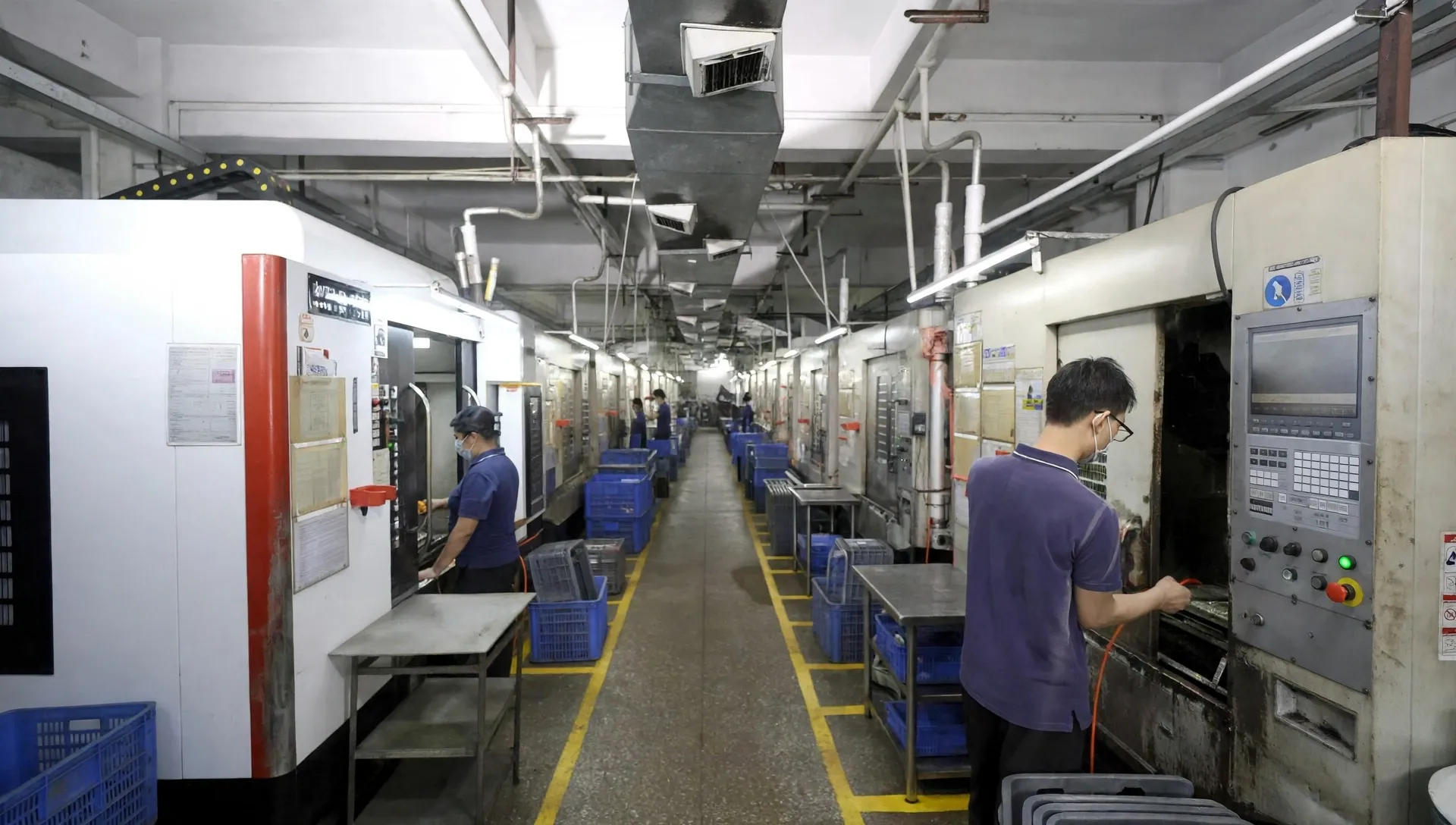
We machine from a single prototype to low-volume production runs.
Why Machine on Five Axes?
Some parts cannot be machined well on a 3-axis mill. Complex geometry often requires four or five setups, where every re-clamping introduces positioning error and long-reach cutters chatter inside deep pockets.
Five-axis machining reduces those errors in a single setup: the part stays clamped, the tool tilts to reach features, and curved surfaces come off the machine cleanly rather than relying on hand blending.
011
Single setup, stronger positional accuracy
Every time a part is unclamped and re-fixtured, part position shifts slightly. Five-axis machining reaches five faces and most angled features in one clamping, holding hole positions and face-to-face relationships more reliably.
022
Shorter cutters, stiffer cuts
Tilting the spindle or head lets short, rigid tools reach deep cavities and undercuts. Shorter reach reduces deflection and chatter, producing cleaner walls in deep pockets and supporting thin walls during cutting.
033
Contoured surfaces in one pass
Impeller blades, turbine wheels and sculpted housings require the cutter to hold a controlled angle across curved geometry. Simultaneous five-axis motion follows those contours continuously for a more consistent finish and less hand polishing.
044
Fewer fixtures, shorter lead time
One setup avoids building a rack of special fixtures and reduces wait time between operations. For prototypes and small batches, that setup savings often outweighs raw cutting speed.
Simultaneous 5-Axis vs. 3+2: Know What You Are Buying
Both methods are often called "5-axis", but they operate differently. In 3+2 (indexed) machining, rotary axes tilt the part to a fixed angle and lock while the cut runs as 3-axis milling, which works well for angled holes and multi-face parts.
01 / 3+21
3+2 (Indexed) Machining
The difference is clear on sculpted geometry such as blades, blisks, ports and freeform housings. A 3+2 setup approximates curved surfaces in stepped passes, whereas simultaneous 5-axis follows the contour directly.
02 / SIMULTANEOUS2
Simultaneous 5-Axis Machining
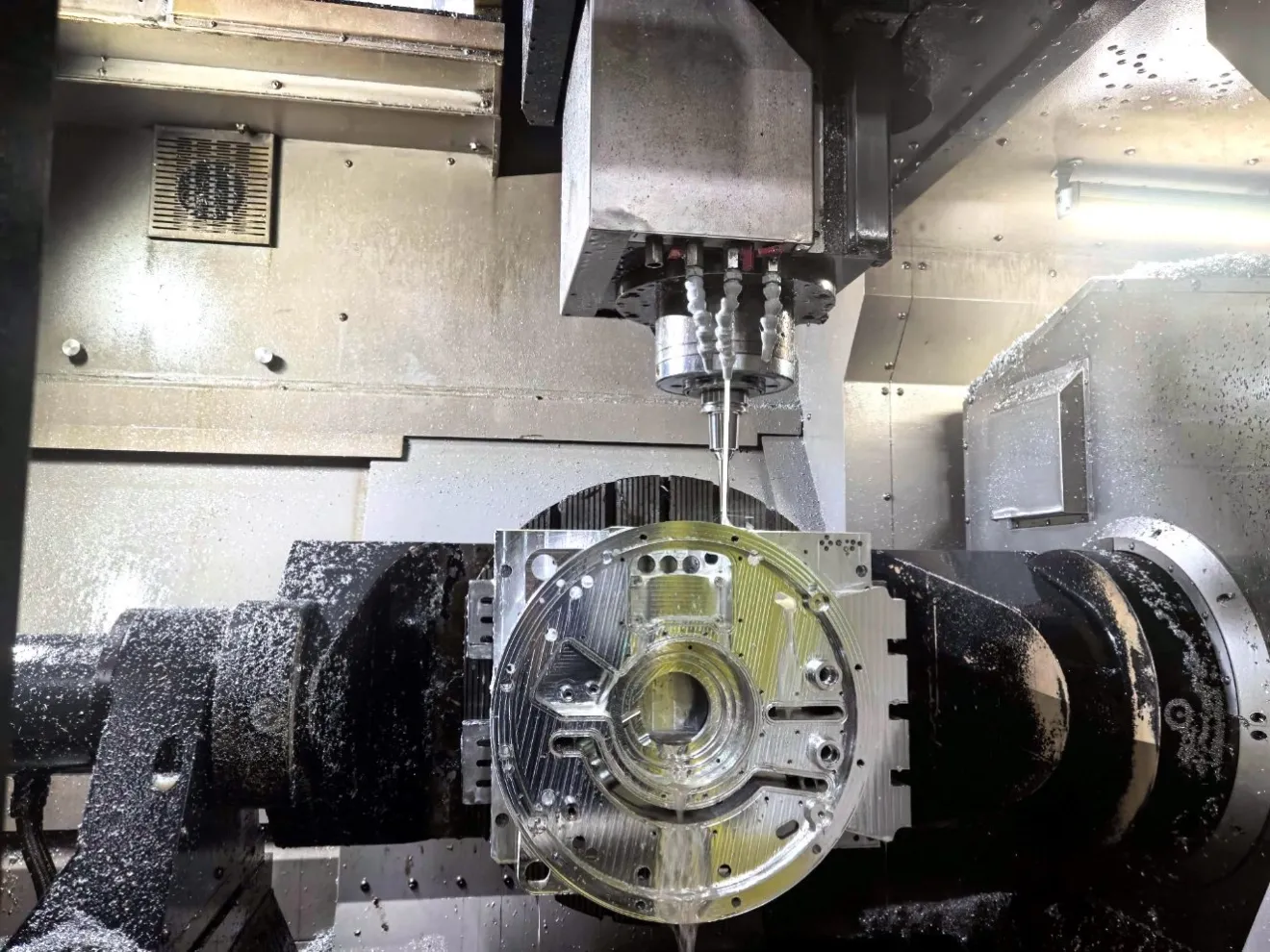
In simultaneous 5-axis machining, all five axes move continuously during the cut so tool orientation changes along a curved path.
03 / VERIFY3
Verify Before You Order
Because some suppliers list 3+2 indexed capability under "5-axis", verify which process your part needs before ordering — if 3+2 or 3-axis fits your geometry, our engineers will flag that lower-cost option.
5-Axis Machining Capabilities
011
Max. part size
680 × 450 × 400 mm
022
Min. part size
6 × 6 × 2 mm
033
Standard tolerance (features without drawing callouts)
±0.127 mm, per ISO 2768-m
044
Precision tolerance — metals
±0.01 mm standard; ±0.005 mm on critical features after engineering review
055
Precision tolerance — engineering plastics
±0.03 to ±0.05 mm depending on feature and material
066
Surface finish
As machined Ra 3.2 µm; smooth Ra 1.6 µm; fine Ra 0.8 µm
077
Min. inside corner radius
R0.15 mm
088
Order quantity
1 pc to 10,000+ pcs, no minimum order
099
Lead time
Prototypes 3–5 working days; standard orders 7–10 working days
1010
Quality system
ISO 9001:2015; CMM inspection, first article report on request
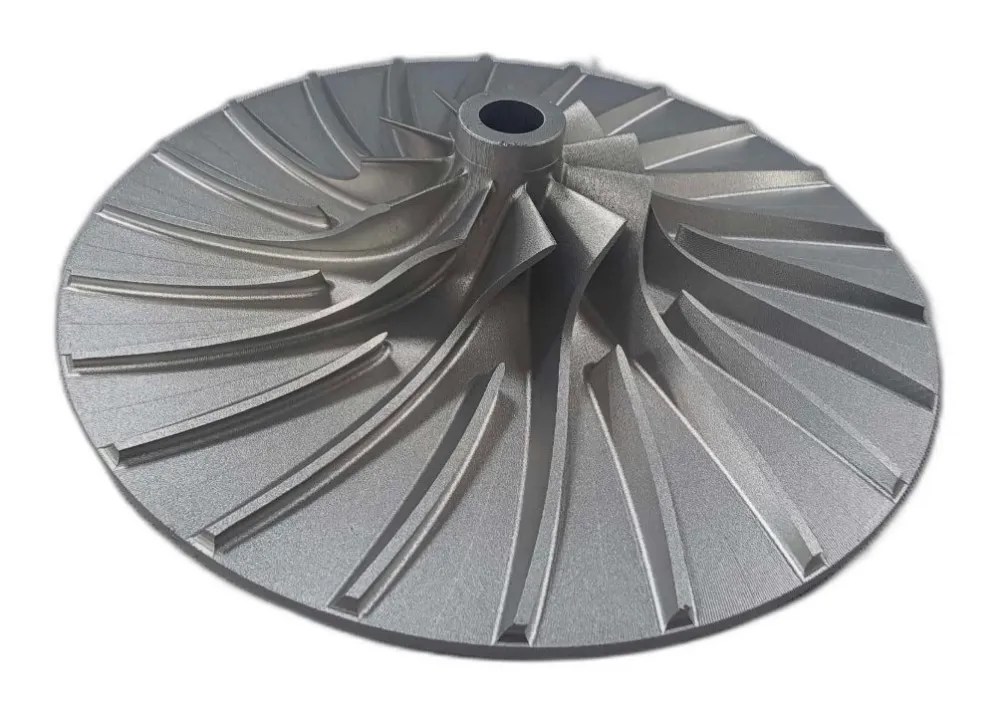
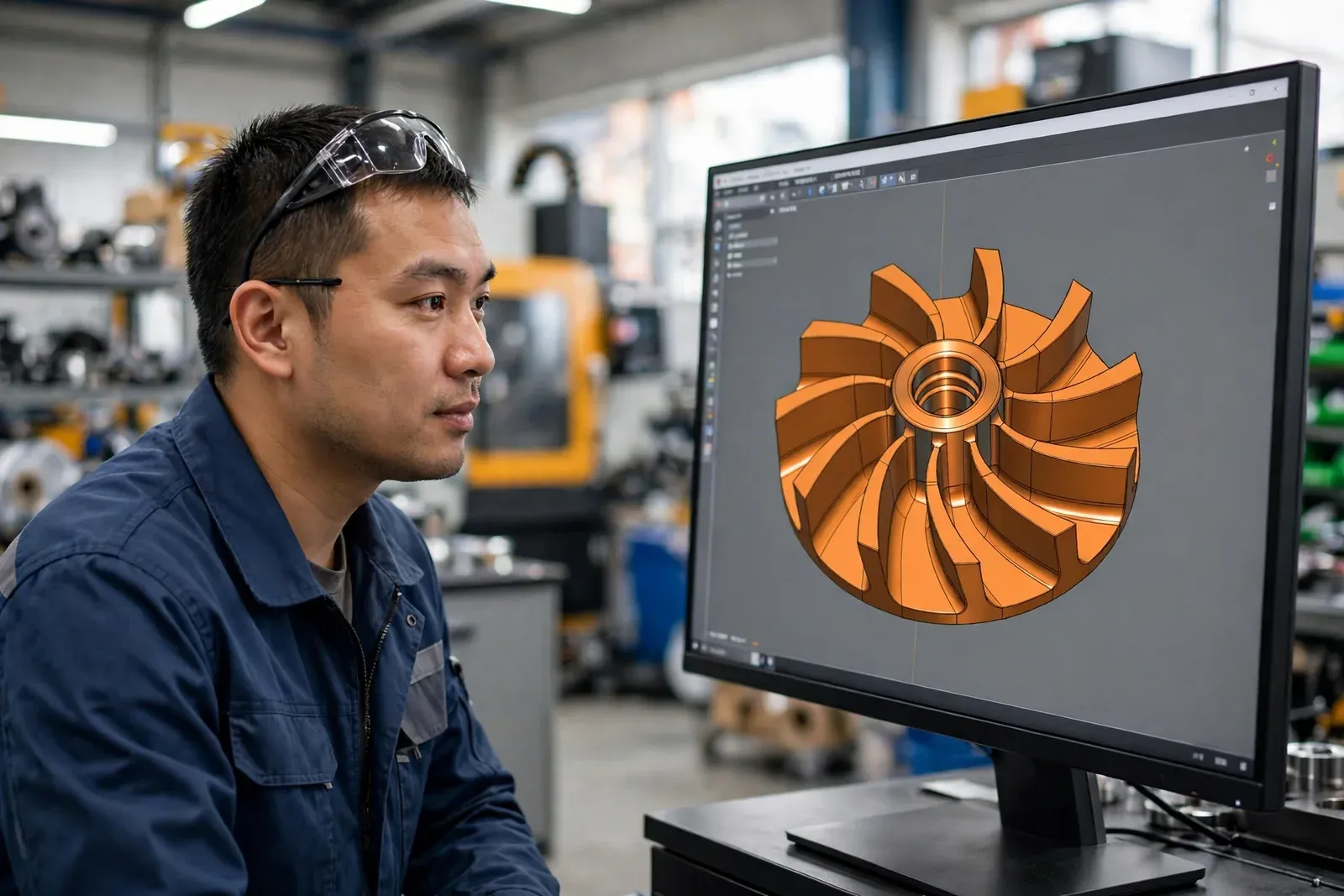
Simultaneous 5-axis machining of an aluminum impeller with curved blades.
Materials We Machine on Five Axes
See our full materials page for additional grades.
011
Aluminum 6061
Common for prototypes, housings and brackets, offering fast machining, solid dimensional stability and clean anodizing. On thin walls, we sequence cuts to keep the wall supported until the final pass.
Higher strength than 6061, widely used for aerospace and motorsport brackets. It is slightly harder on tooling, and hard-anodize color is less uniform — an important check for cosmetic parts.
033
Stainless steel 304 / 316L
Selected for corrosion resistance in medical, food and marine applications. Both grades work-harden, requiring continuous cutting without dwell, with tilted tool paths helping maintain engagement across contoured faces.
044
17-4 PH stainless
Machined in the annealed condition and precipitation-hardened afterward for strength. Well suited to shafts, valve components and structural fittings under load.
055
Titanium Ti-6Al-4V
Used in medical and aerospace parts requiring high strength-to-weight performance. Because titanium concentrates heat at the cutting edge, we rely on short tools, high-pressure coolant and controlled engagement suited to 5-axis setups.
066
Brass C360
Free-cutting alloy with rapid cycle times. Frequently chosen for fittings, connectors and precision parts where conductivity or corrosion resistance matters.
077
Copper C110
High thermal and electrical conductivity, but prone to gumming if cut improperly. Sharp polished cutters and tuned speeds keep edges clean on bus bars, electrodes and RF components.
088
Inconel 718
Nickel alloy for high-temperature service. Slow cutting speeds, heavy tool wear and costly blanks make single-setup machining valuable compared with multi-fixture re-clamping.
099
PEEK
High-temperature engineering plastic used in medical and semiconductor parts. Sharp tooling and controlled heat prevent edge smearing while preserving tight tolerances in demanding environments.
1010
POM (Delrin)
Dimensionally stable and low-friction, holding around ±0.03 mm readily. Common for gears, guides and precision mechanisms when angled or curved geometry goes beyond lathe turning.
1111
PTFE
Soft, low-friction polymer that can shift under clamping pressure. Light cuts and careful fixturing matter more than spindle power for seals, insulators and chemically resistant parts.
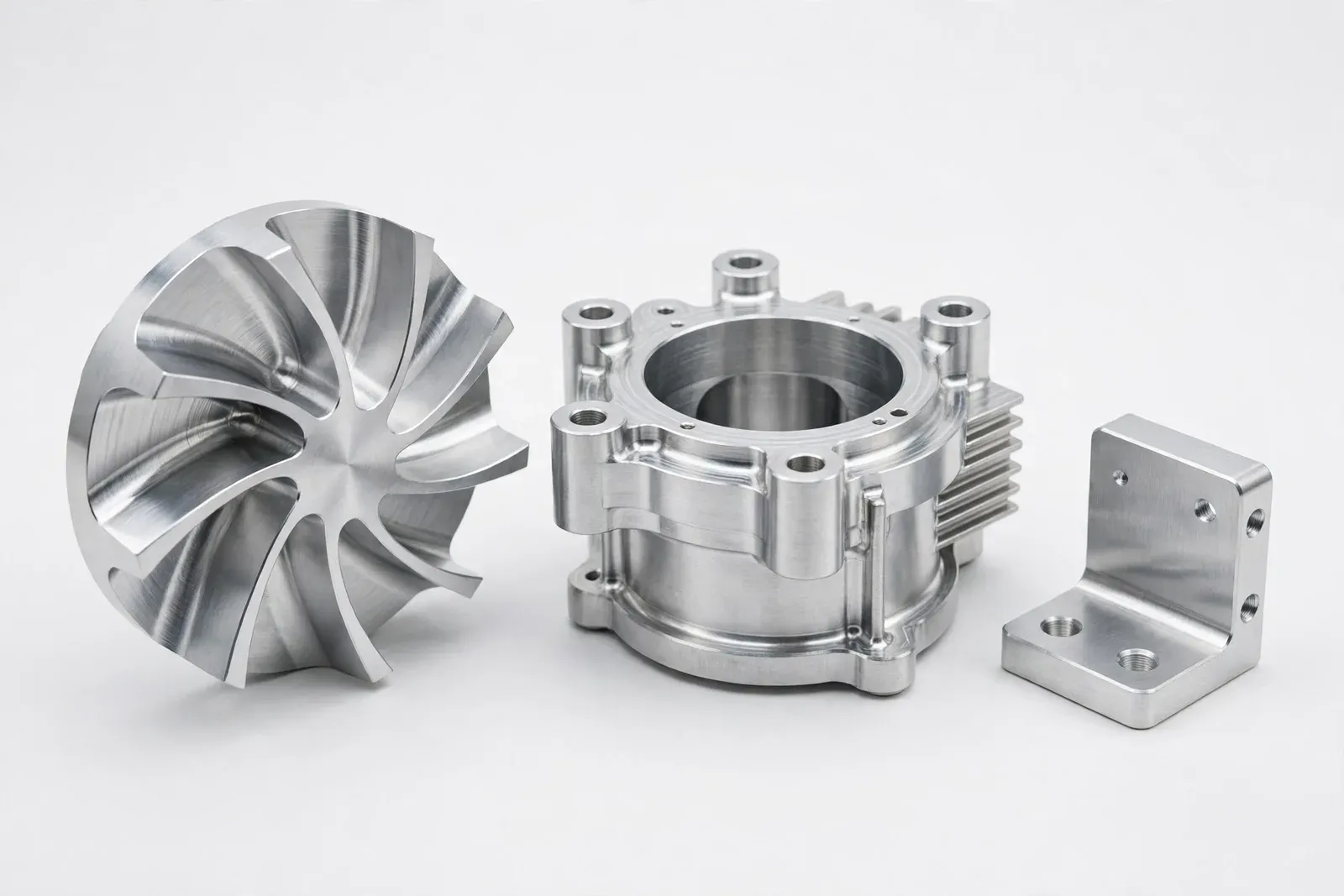
Finished 5-axis machined parts: impeller, housing and bracket in aluminum and titanium.
Designing for 5-Axis Machining: Five Practical Tips
011
Use standard corner radii
Inside corners cannot be sharper than the cutter radius. While we can machine down to R0.15 mm, standard radii cut faster and cost less, so reserve tiny radii for genuine mating needs.
022
Apply tight tolerances only where required
Calling out ±0.005 mm on every dimension can double part cost. Specify tight tolerances on mating interfaces and bearing seats, and keep remaining features at standard tolerance.
033
Provide a datum clamping face
A flat datum surface gives fixtures a reliable reference to hold. Purely sculptural parts without a reference face add setup time on every batch.
044
Review every undercut
Some undercuts can be eliminated with minor design changes, while essential ones can often be reached on five axes — share the model early so we can confirm feasibility.
055
Submit both the 3D model and 2D drawing
The STEP model defines 3D geometry and the PDF drawing specifies tolerances, GD&T and thread callouts; sending both avoids quoting delays.
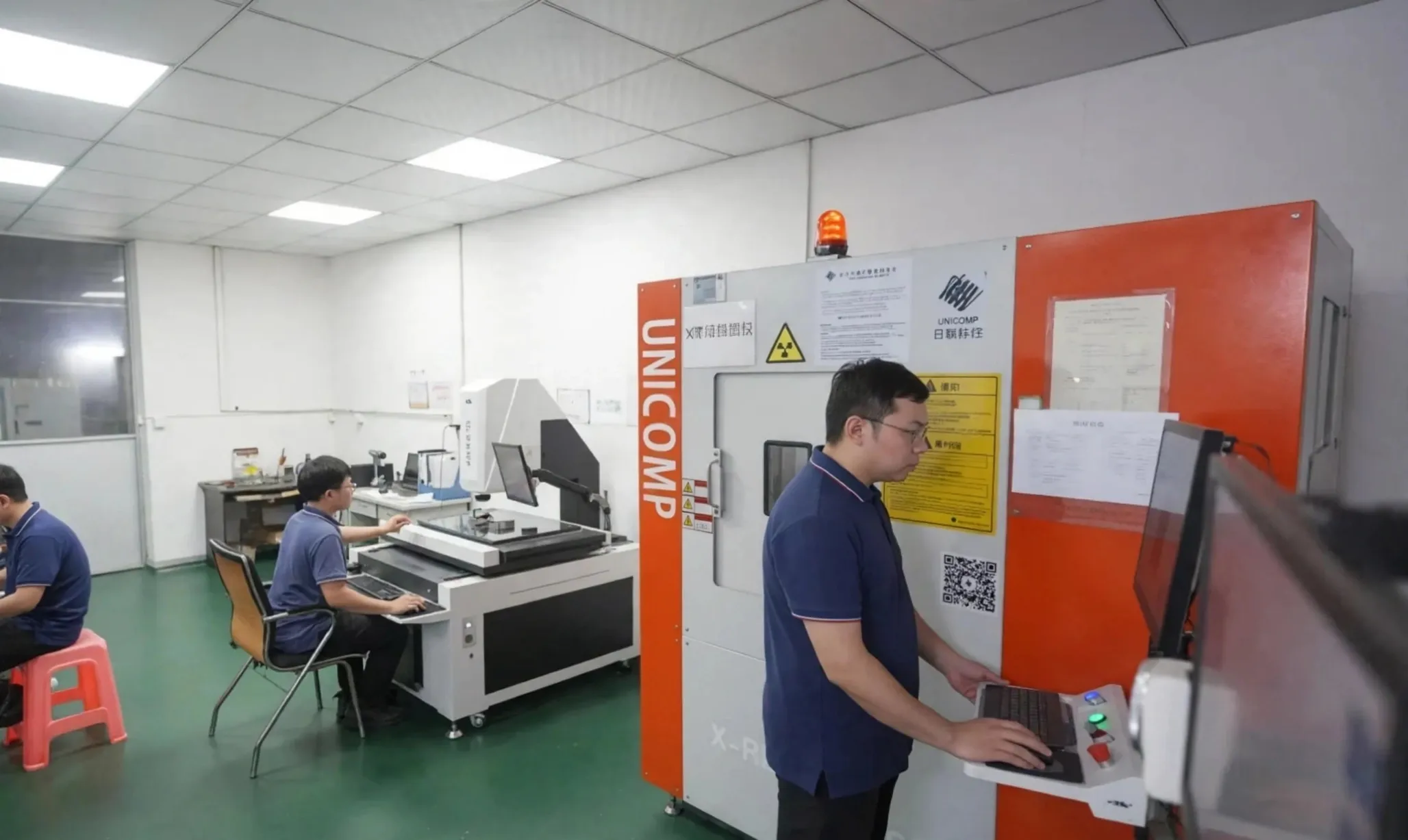
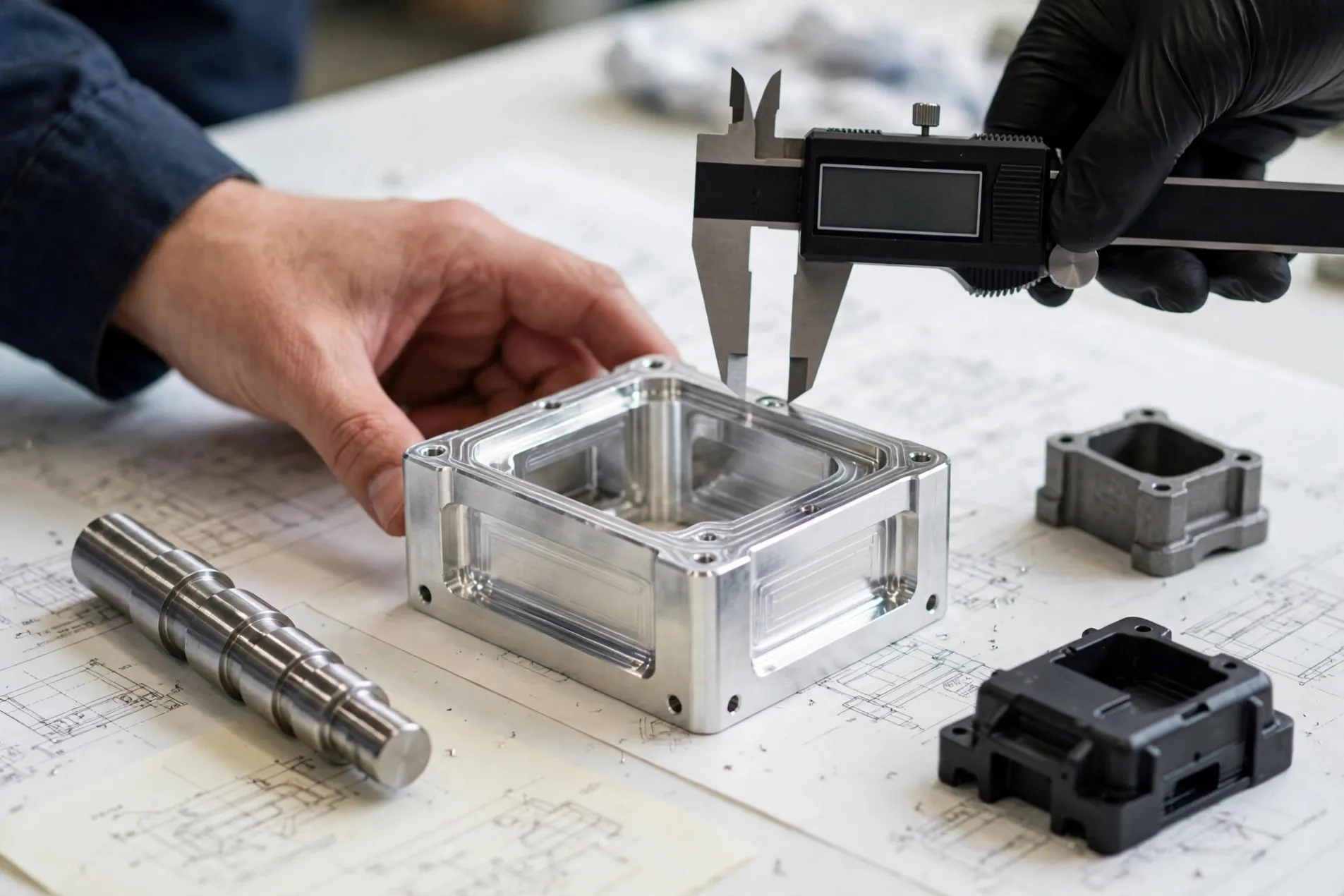
Every 5-axis order runs under our ISO 9001:2015 quality system, with material certificates available on request, in-process checks at each setup and CMM inspection prior to packing.
First article inspection reports can be supplied when requested at quotation.
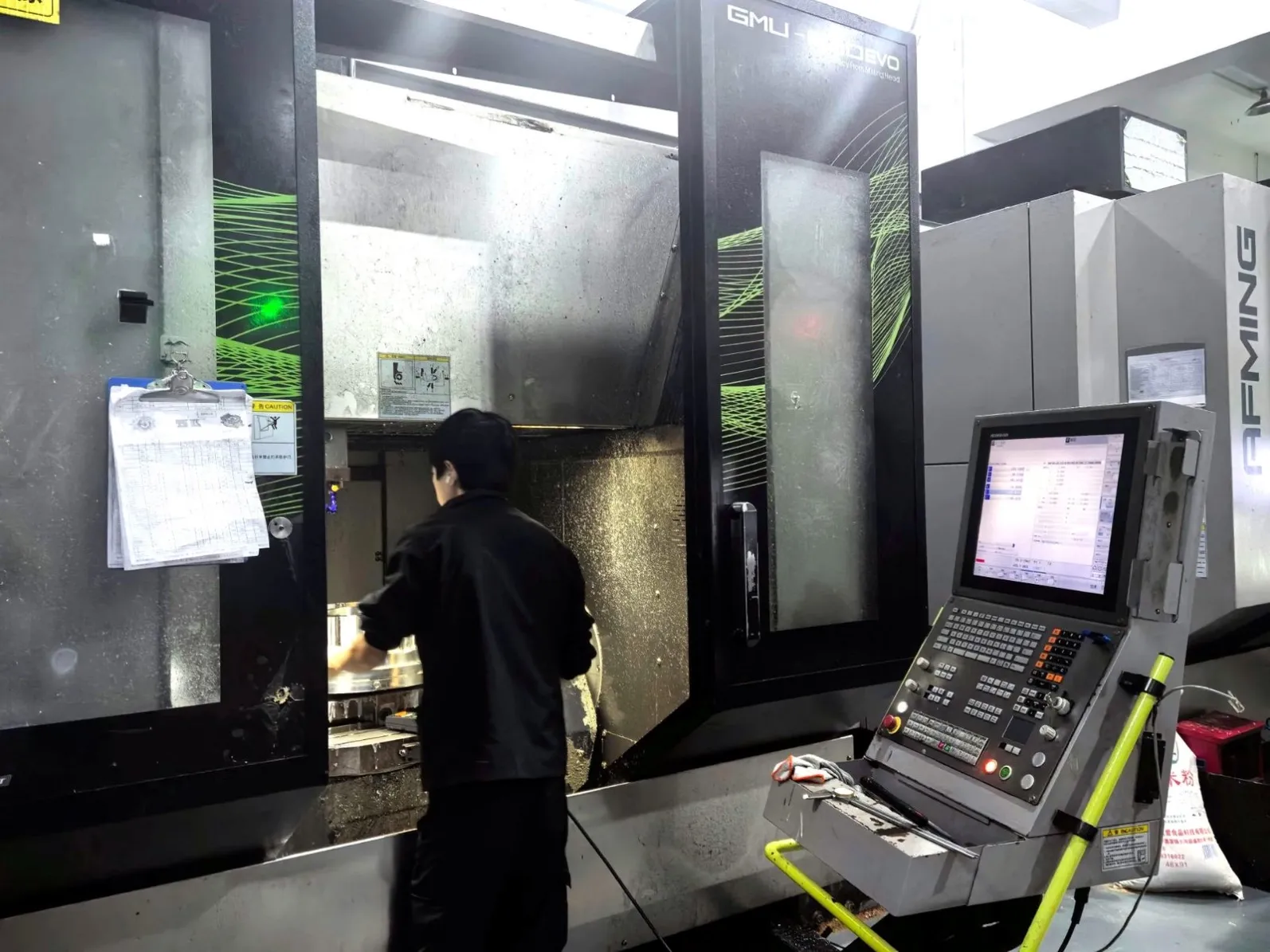
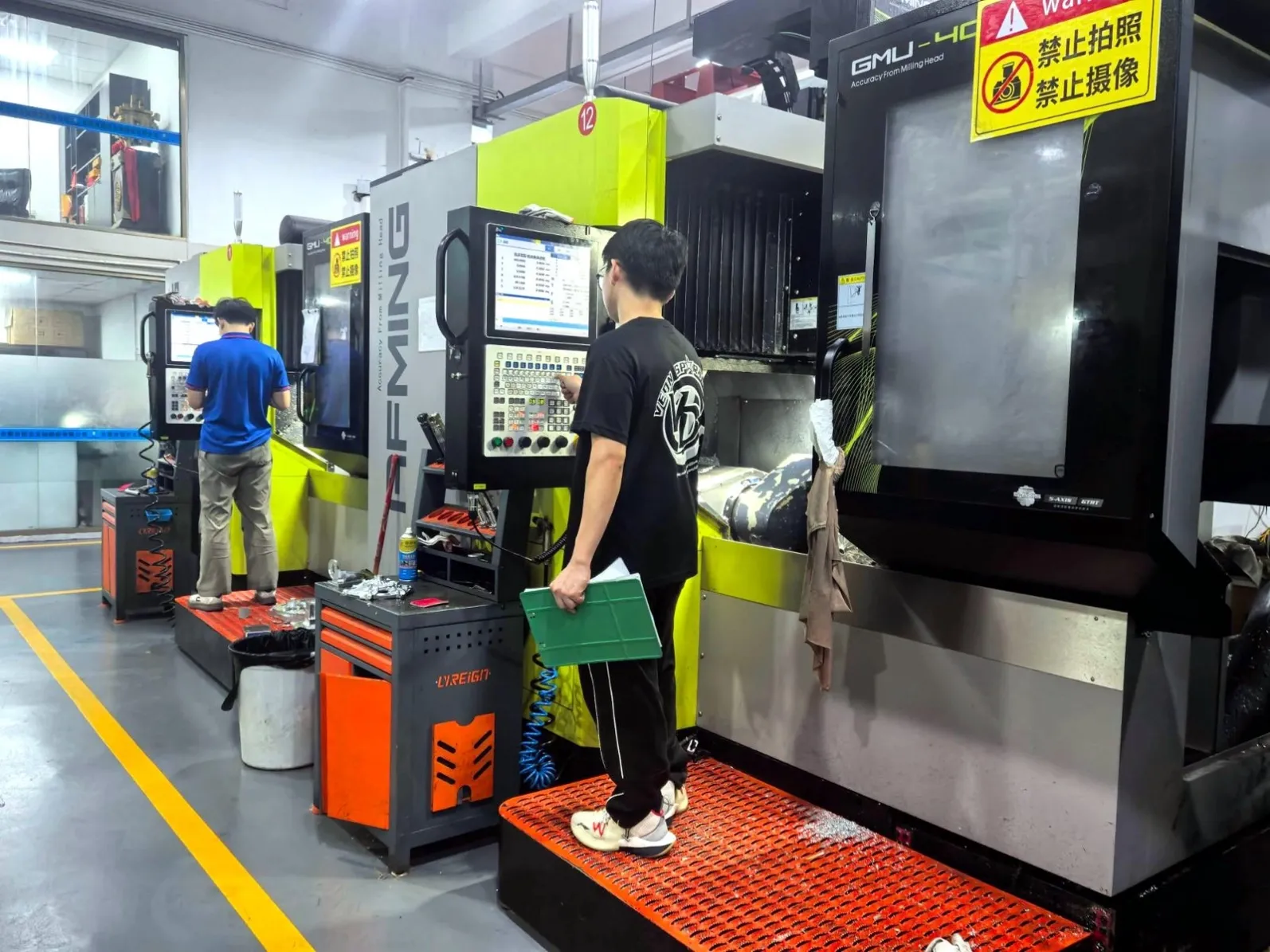
Gauge inspection and machining in the HAFO workshop, with dimension reports available on request.
FAQ
Use 3+2 for angled flat/multi-face features and simultaneous 5-axis for blades, impellers and freeform contours.
GET A QUOTE
Send us the drawing.
Upload your STEP file and 2D drawing for an engineering review that flags cost drivers and returns a quote, typically within one working day. You can check an initial estimate using our cost calculator or submit your files directly on our contact page.
Response time
Within 24 hours on business days
What to send
STEP model and 2D drawing with tolerances, material and finish
HAFO Mould
Dongguan, near Shenzhen, China. Machining and mould making since 2007.