011
Brackets and mounting hardware
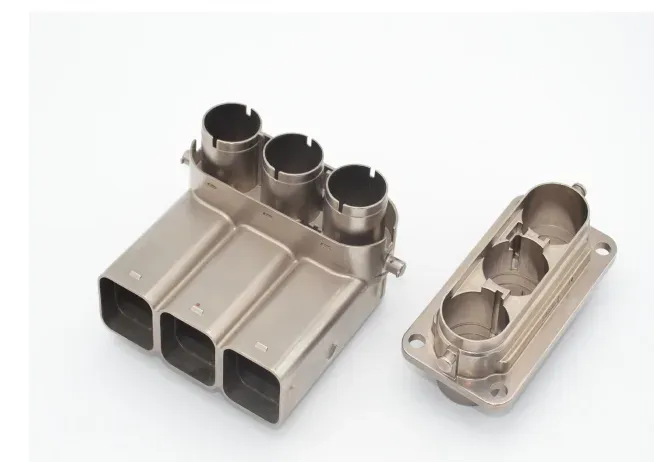
CNC machined in aluminum or steel: sensor brackets, harness brackets, seat and trim mounting brackets, equipment brackets for vehicle conversions
INDUSTRIES
Automotive work rarely fails on an exotic part. It fails on a clip that varies, a housing that warps, a bracket whose holes have drifted since the last batch — and then stops a line that costs far more than the part.
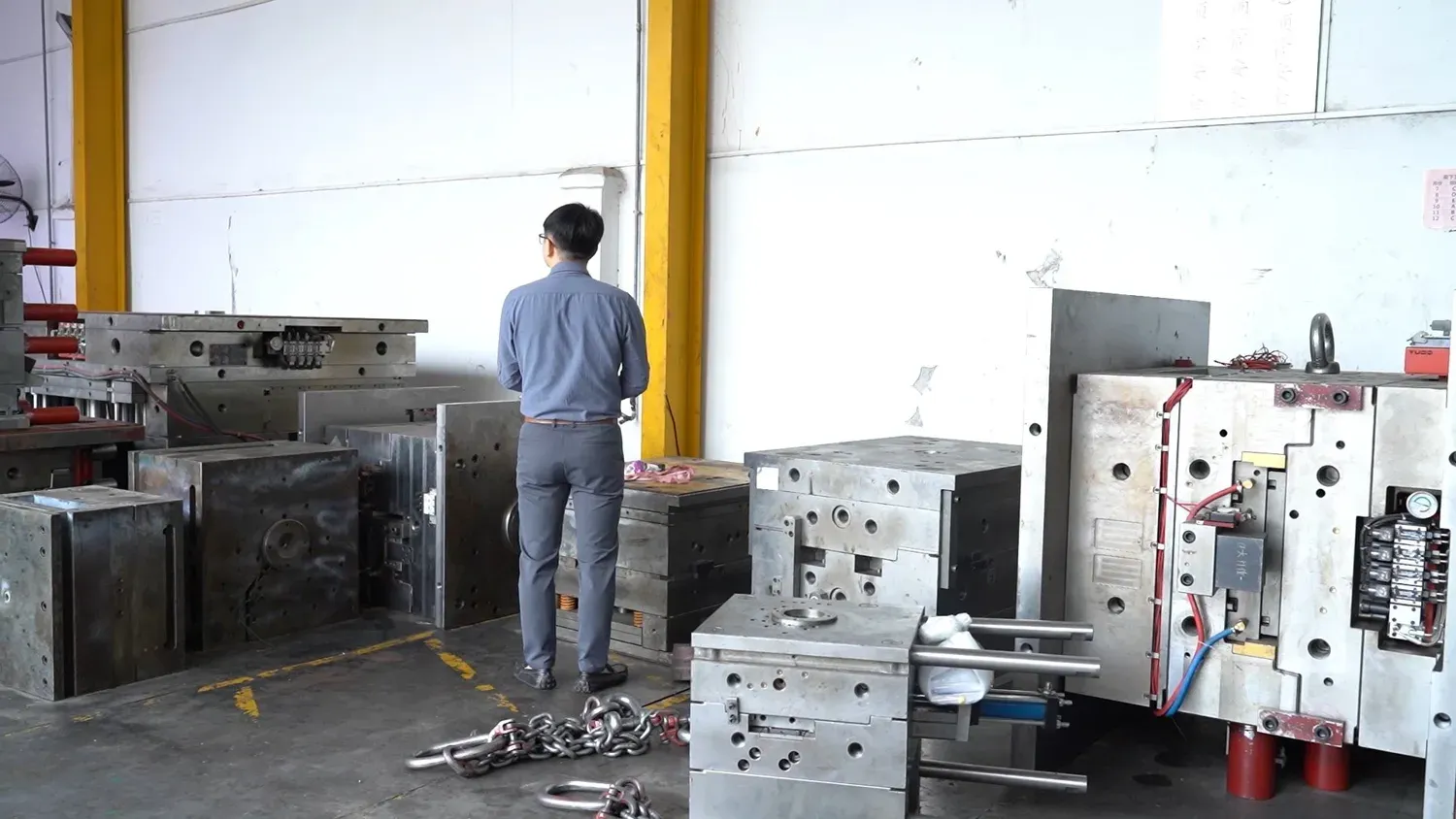
The part has to be identical every time, arrive when it is needed, and come with paperwork that holds up in an audit. HAFO Mould machines and molds automotive-application parts in its own 5,000 m² Dongguan factory:
every batch checked against the drawing before it ships.
If your program has specific quality-system requirements, raise them in the RFQ — that conversation happens at quote stage, not after parts are made.
STEP, STP, IGES, STL, X_T and 2D PDF accepted. Files are confidential; NDAs welcome.
CNC machined in aluminum or steel: sensor brackets, harness brackets, seat and trim mounting brackets, equipment brackets for vehicle conversions
machined or molded housings for sensors, control units and lighting-adjacent assemblies, with sealing faces held flat and true
molded clips and trim retainers where release force and fit have to stay consistent from the first part to the last
molded trim parts, covers, bezels and two-color components where appearance is the specification
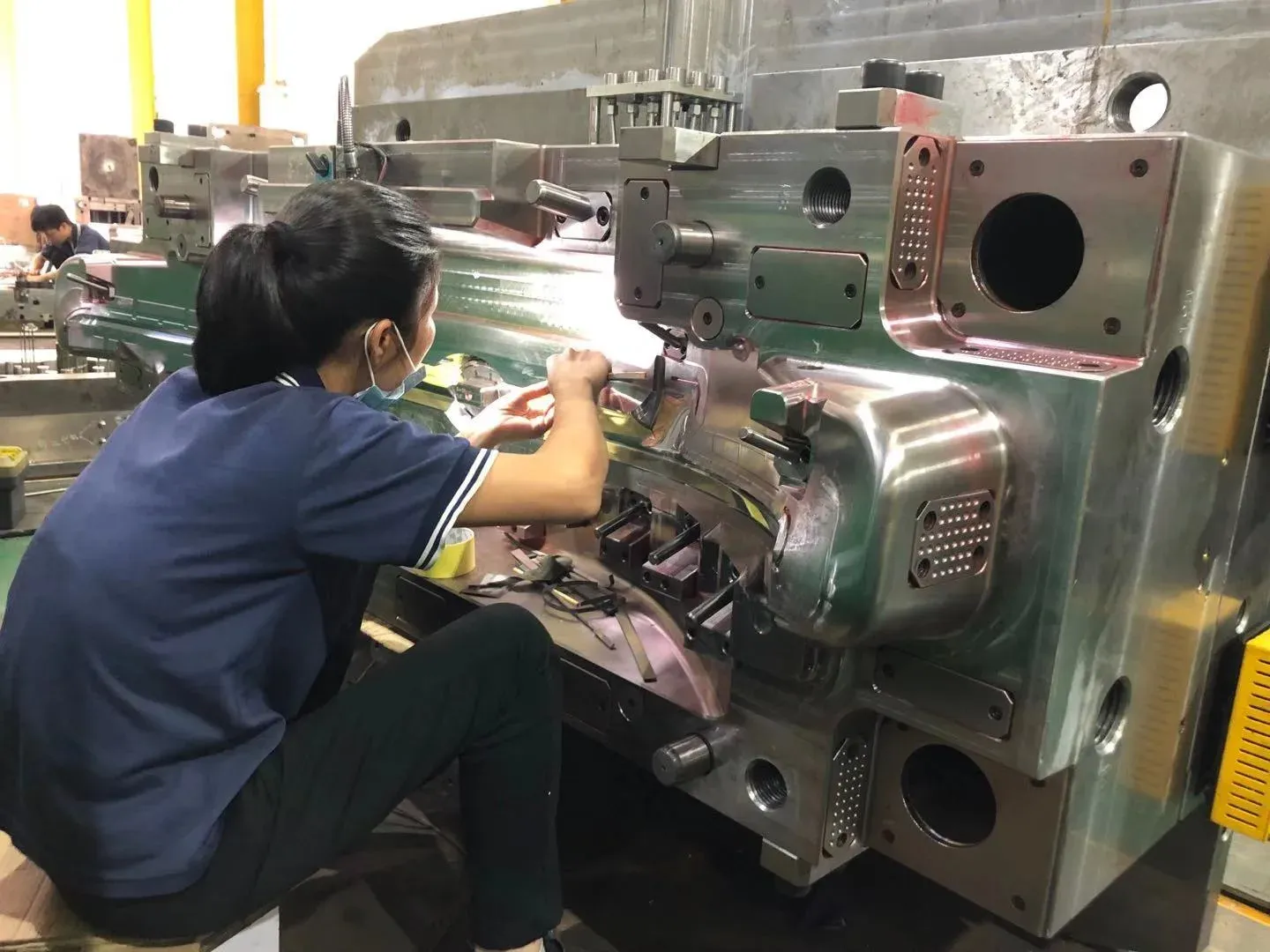
large injection molds for bumper-class parts, built and finished in our own toolroom, including hand polishing of large cavity surfaces
covers, caps, ducts, reservoirs' fittings and brackets that live under the hood but are not safety-critical or pressure-critical parts
braking, steering, structural crash components — we will say so at DFM stage and decline rather than guess. The list above is where we can actually help.
A bracket that fits in March and binds in June is usually a process problem, not a material problem. Machined parts run on the same class of equipment batch after batch. Molded parts run from the same tool, in the same shop.
We check and report critical dimensions per batch — so if something drifts, you hear about it from Dongguan, not from your line.
Wide, flat parts warp when wall thickness and gating are improvised. Here the toolroom and the molding shop are the same factory, so gate design, cooling and part behavior get argued over together at DFM — before steel is cut, not after T1 samples curl.
Interior parts are judged by eye. We build and polish the cavities ourselves and trial them on our own presses. The texture and gloss you approve on samples comes off the same tool, at the same press settings, as production.
Quality teams want evidence, not assurances. CMM reports, dimensional reports, material certificates and First Article Inspection (FAI) reports are available with your order on request.
Ask at RFQ stage, so they are planned in — not chased afterwards.
A large tool bought through a middleman is hard to audit from another continent. You get progress photos during the build.
We trial the tool on our own presses (90T–470T, including two 360T two-shot machines for two-material parts), then ship trial parts with measurement reports before the tool is released.
for brackets, housings and low-to-medium volume metal parts: aluminum 6061/7075/6082 for weight-sensitive brackets, stainless 303/304/316 and steels 1018/1045/4140 (Stainless Steel CNC Turned & Milled Parts) where strength or corrosion resistance leads.
Maximum CNC travel 800 mm (31.5 in); MOQ 1 piece, so pre-production and service parts are practical.
built in-house — single and multi-cavity, family tools, hot-runner tools and large tools for bumper-class parts.
on Haitian presses from 90T to 470T, in ABS, PC, PA, PP, POM and other common engineering plastics.
for trim parts with soft-touch zones, molded-in seals and two-color buttons and covers. (Two-Color & Overmolded Parts)
anodizing (including hardcoat), bead blasting, painting, powder coating, plating and passivation for metal parts; polished and textured cavity finishes for molded parts.
TOLERANCES AND QUALITY CONTROL
±0.13 mm (±0.005 in) standard on metal, ±0.025 mm (±0.001 in) on the dimensions you mark as precision — bracket hole patterns, sealing faces and locating features, usually.
±0.25 mm standard, ±0.05 mm precision on suitable dimensions. We sort this out at DFM, so nobody promises a molded dimension that physics will not hold.
HAFO Mould is ISO 9001:2015 certified (scope: Manufacturing of Hardware Molds and Parts). On request you can have PPAP documentation, CMM reports, dimensional reports, material certificates, surface finish certificates, FAI reports, and pre-shipment photos or video of your actual parts.
those are the ones measured and reported every batch. Full inspection setup: Quality & Inspection. The equipment behind it: Our Factory & Equipment.
3D file plus 2D drawing, material, estimated volumes and which dimensions are critical. NDAs welcome.
an engineer reviews manufacturability and tolerance realism; the quote confirms approach and lead time in writing.
machined parts or T1 molded samples shipped for your approval, with reports on request.
parts checked against the drawing before packing; documentation supplied as agreed.
we regularly ship to the US, Germany, France, Portugal, Sweden and Spain. Payment by T/T.
Custom Injection Molded Parts · Two-Color & Overmolded Parts · Quality & Inspection · Guide: CNC Machining Tolerances Explained: Standard vs. Precision
Send the drawings now — an engineer reviews them free, flags what will drift, warp or fail inspection, and you get a quote within 24 hours. Get a Quote — Contact Us.