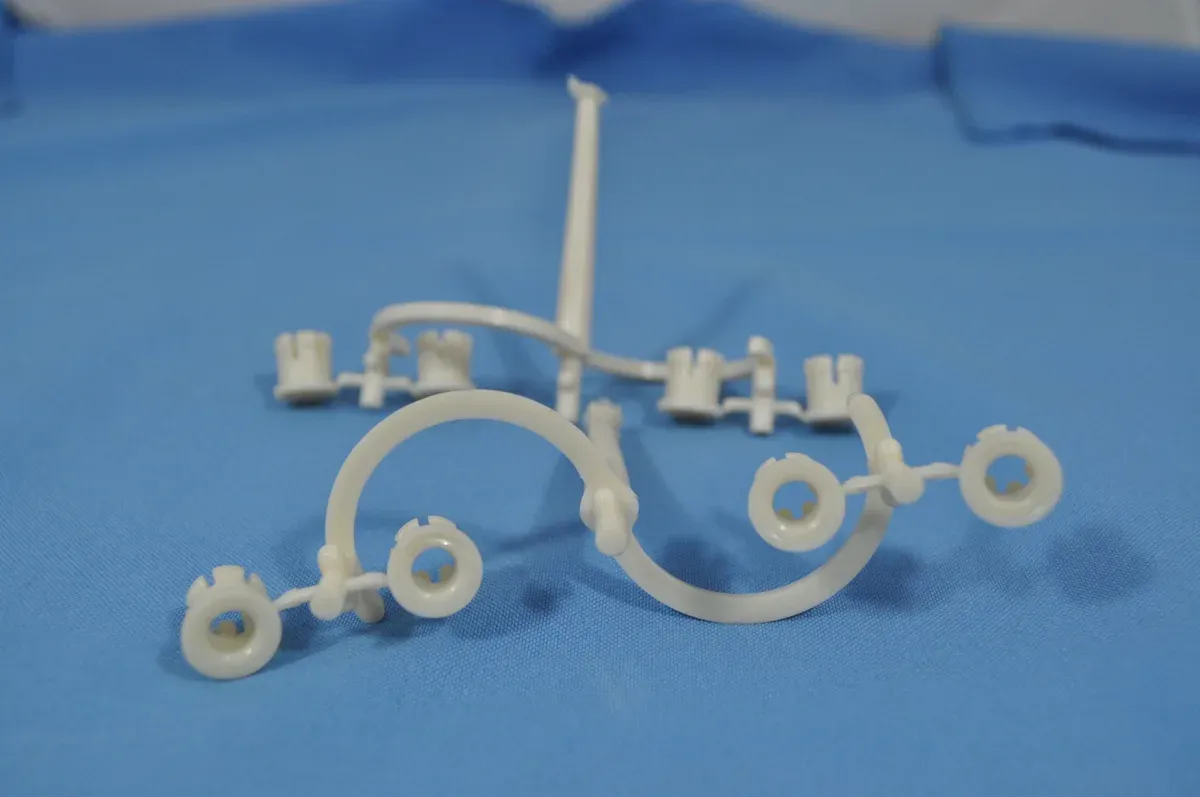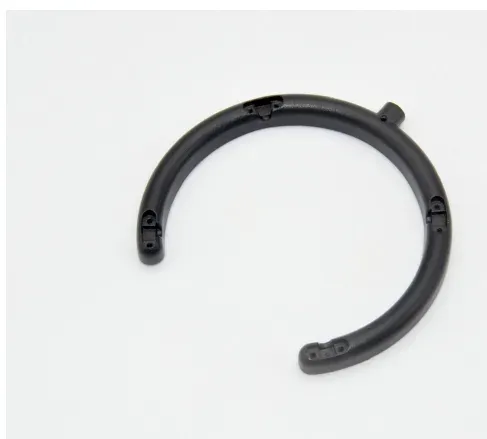
Appliance parts and housings
molded housings, covers, knobs, handles and internal brackets for kitchen, home-care and personal-care appliances
INDUSTRIES
Consumer products get judged twice. In the hand — a grip that feels cheap, a housing seam that does not sit flush, a two-tone cover whose colors shift between runs. And on the spreadsheet, because at volume the part price is the product.
The brands that get both right tend to make one decision early: develop the part with the factory that will also build its tool and mold it, so nothing learned in prototyping gets lost in a supplier change.
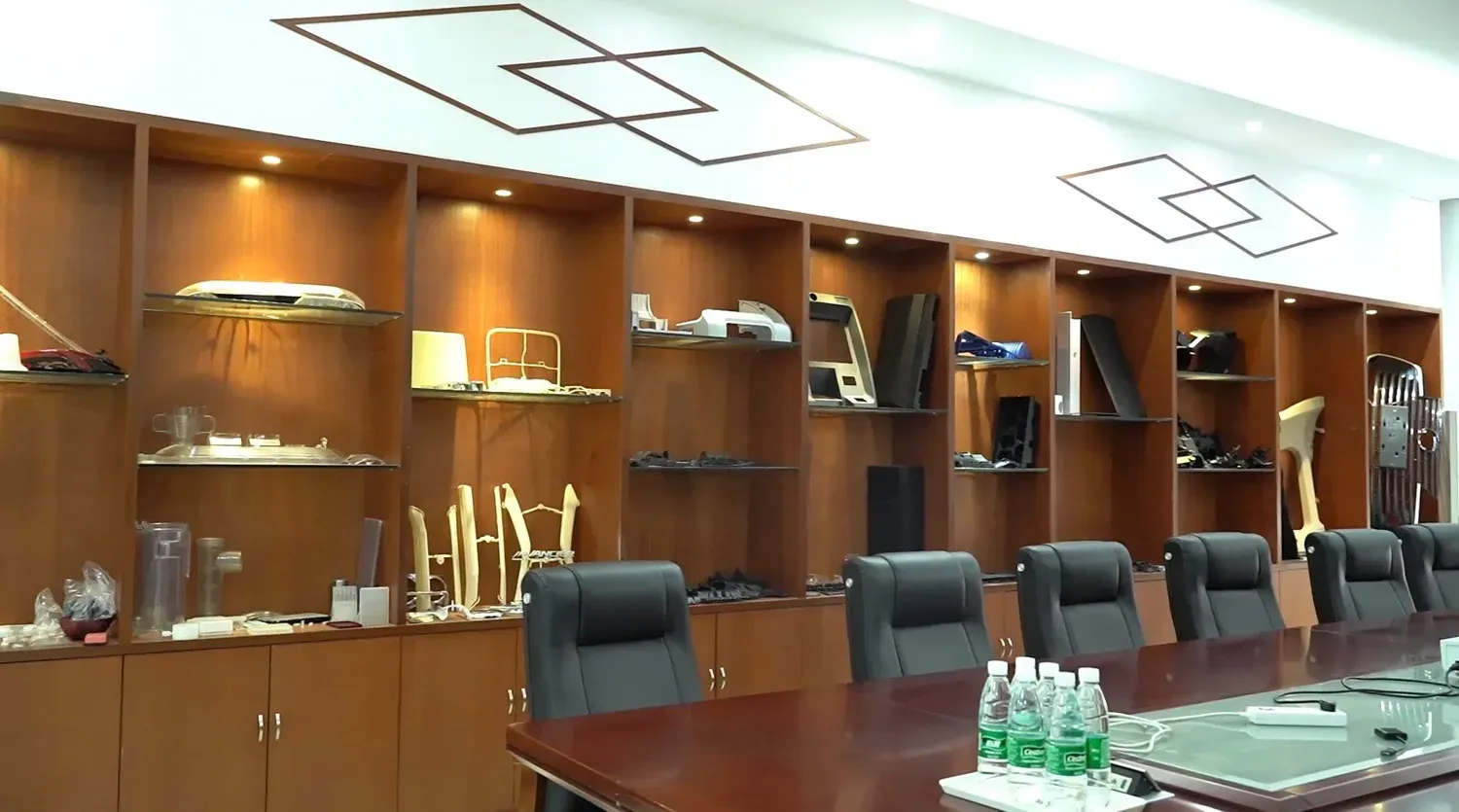
That is how HAFO Mould works: CNC prototyping, in-house mold making and injection molding in one Dongguan building, the same engineers on your product from first sample to production tool.
STEP, STP, IGES, STL, X_T and 2D PDF accepted. Confidential by default; NDAs welcome — consumer designs are launch-sensitive and we treat them that way.
molded housings, covers, knobs, handles and internal brackets for kitchen, home-care and personal-care appliances
overmolded soft-touch grips on rigid cores: tools, appliances, sports and personal-care products
buttons, indicators, covers and housings with molded-in color zones and legends — color that cannot rub off because it is a second material, not a print
consumer electronics housings, remote-control shells, charger and accessory cases in ABS and PC
POM gears, clips, hinges' components, caps and closures, machined for prototypes and molded for production
machined aluminum trims, knobs, brackets and fittings, anodized in the same order they are machined
A part can machine beautifully and still be a bad molding: no draft, uneven walls, undercuts nobody counted. The engineers who machine your prototypes here are the ones who will build the mold, so the DFM conversation starts at the first sample.
Wall thickness, draft and parting lines get flagged while the design is still cheap to change — not after a tool has been quoted.
Committing to a multi-cavity production tool before the market has answered is how budgets die. So we stage it.
A simpler single-cavity or bridge tool validates the product and covers early volumes; the production tool follows once the design is frozen and demand is proven — same toolroom, everything learned in stage one built in
Consumer parts get rejected by eye. We polish and texture cavities in our own toolroom and trial on our own presses, and the samples you approve come off the actual tool that runs production — not a showpiece.
Give us your finish standard (an SPI grade, for example) at RFQ and it is confirmed in the quote.
Overmolded grips fail on material pairing or shut-off design. We build two-shot and overmolding tools and trial them on our own two 360T two-color machines, and material bonding gets reviewed at DFM.
That check happens before steel is cut, not after the first returns.
During a tool build you get progress photos. During molding, pre-shipment photos or video of your actual parts are available on request. From another time zone, that visibility is the difference between managing a launch and hoping for one.
real-material parts for fit, function and investor or market samples, machined to ISO 2768-mK tolerances (±0.13 mm standard, ±0.025 mm on marked metal dimensions).
free DFM converts the proven design into a moldable one: draft, uniform walls, radii, and honest decisions about undercuts.
single-cavity or bridge tooling for validation and early sales volumes, trialled on our presses with samples shipped for approval.
multi-cavity tools when volumes justify them, on Haitian presses from 90T to 470T, including two-shot production for two-material parts.
batch inspection against your drawing, with CMM/dimensional reports and pre-shipment photos available on request; delivery DDP, EXW or FOB to the US, Germany, France, Portugal, Sweden and Spain. Payment by T/T.
If your design is already molding-ready, we start at the tool. If volumes stay small, CNC machining may remain the right process indefinitely — the quote will show you both routes with the reasoning in writing.
ABS (general housings), PC (impact resistance, transparent covers), PP (living hinges, containers, cost-sensitive parts), PA (toughness), POM (gears, sliders, clips) — including glass-filled grades on request; abrasive fillers are declared at RFQ because they drive tool steel selection.
aluminum 6061/6063/7075, stainless 303/304/316, brass and copper for hardware; engineering plastics POM, PC, ABS, PA, PEEK, PTFE, UHMW for machined parts.
anodizing (clear, colored, hardcoat), bead blasting, polishing, brushing, painting and powder coating for metal parts; polished or textured cavity finishes for molded parts — the finish is part of the tool specification, agreed before the cavity is polished, not negotiated after samples disappoint.
HAFO Mould is ISO 9001:2015 certified (scope: Manufacturing of Hardware Molds and Parts). Inspection runs on 3 fully automatic CMMs, and trial and production parts are checked against your drawing before packing.
On request: CMM and dimensional reports, material certificates, FAI reports, and pre-shipment photos or video — what you need to approve parts you cannot stand next to. Inspection setup: Quality & Inspection. Machines: Our Factory & Equipment.
We make parts and tooling; we are not a product-certification body. If your product needs regulatory testing or certification for its market, that stays with your compliance partner — our material certificates and reports are written to feed into that process.
Custom Injection Molded Parts · Two-Shot & Overmolding Molds · Two-Color & Overmolded Parts · Guide: How to Get an Accurate CNC Machining Quote
Send the design — prototypes start at 1 piece, and the free DFM review will tell you now what will need to change before it can be molded, with a quote within 24 hours. Get a Quote — Contact Us.