
MATERIALS1
Materials
Browse the full materials library — engineering plastics, stainless steel, aluminum alloys and mold steel.
MATERIALS
The steel grade is the line on a mold quotation most buyers skim past — and it is usually the line that decides whether the tool is still running clean parts three years from now. It also sets the tool's lead time, its polish and how many shots it survives — before the first part is molded.
Two quotes for the same mold can differ by 40%, and most of that gap is steel: one shop quoted P20, the other quoted H13, and neither told you. The difference is the tool you get: its hardness, its polish and how long it holds tolerance.
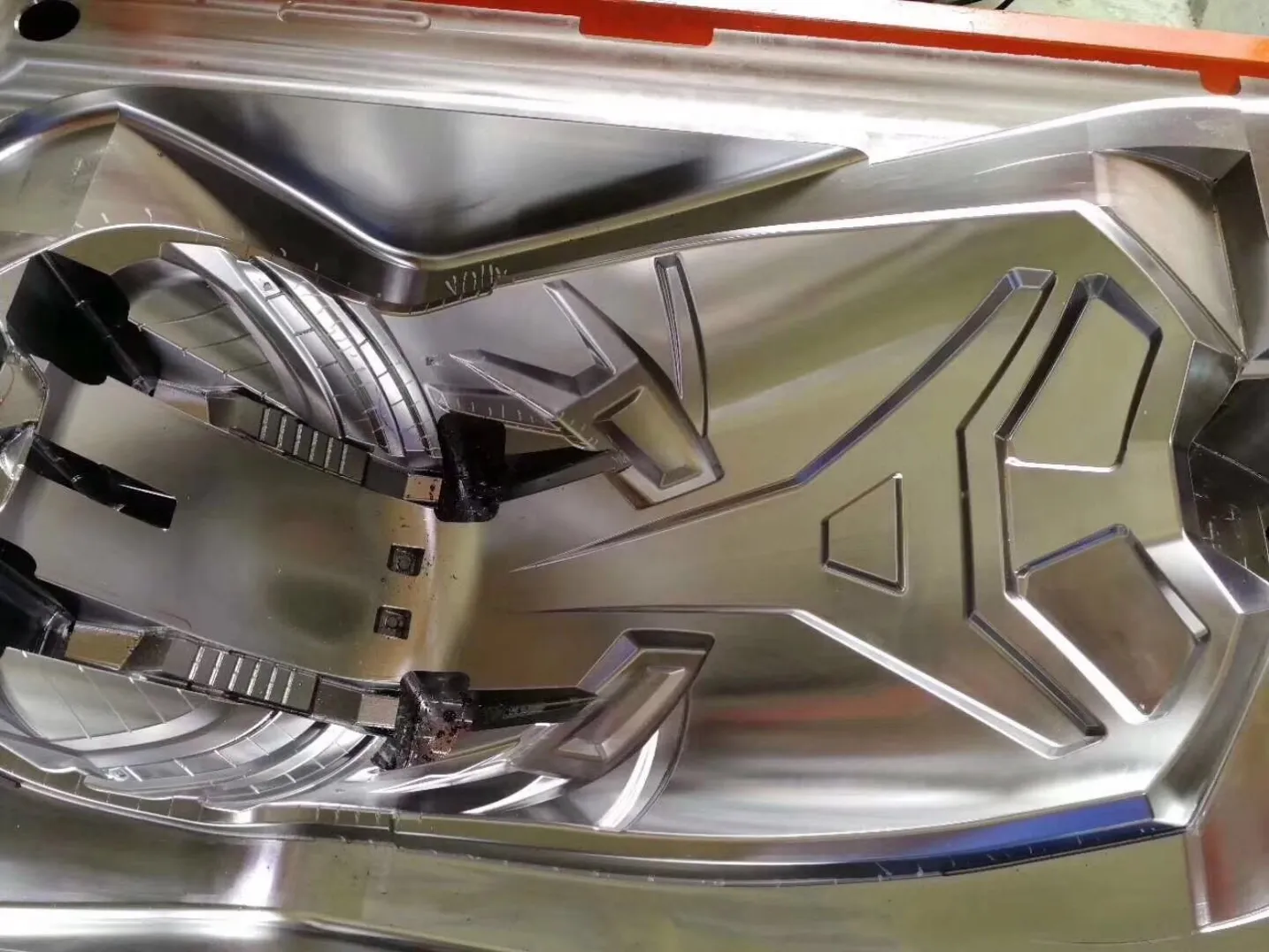
This page covers the four steels we build injection molds with every week — what each one is actually for, what it does to tool life, surface finish, price and lead time, and the three questions that settle which one your part needs.
Browse the full materials library — engineering plastics, stainless steel, aluminum alloys and mold steel.
Every tool on this page is built under our injection molding service, from DFM to production.
A mold cavity does three kinds of work at once. It takes the mechanical beating of clamping and ejection, shot after shot. It takes chemical attack from the resin — some plastics release corrosive gas as they melt.
That is why steel selection is not a materials detail to leave to the toolmaker's habit. It sets four things you care about:
How many shots before the cavity wears, flashes or drifts out of tolerance. A soft steel can lose its edge inside the first 50,000–100,000 shots on glass-filled resin, while a hardened steel holds tolerance for a million shots or more.
The best polish a steel can hold is the best finish your part can have. A mirror finish needs S136 or NAK80; P20 tops out at SPI B-1, so the part's gloss is capped before polishing even starts.
Steel and its heat treatment can be the biggest single cost difference between two quotes. Hardened H13 or S136 can cost 40–70% more than P20 for the same mold, which is why the cheapest quote is not always the cheapest tool.
Pre-hardened steels machine straight from the block; hardened steels add weeks of heat treatment. H13 and S136 need hardening and tempering after machining, typically two to four weeks, while P20 and NAK80 go straight from machining to polishing.
Get it right and the mold is a non-event for years. Get it wrong and you pay twice: once for the wrong steel, and again for the repair, as the sections below show.
Working hardness 28–34 HRC, pre-hardened. Best polish SPI B-1. Corrosion resistance: None. Typical tool life up to ~300,000 shots. Relative steel cost 1.0× (baseline). Best for: unfilled resins under 300,000 shots, where the lowest tool cost matters most.
Working hardness 48–52 HRC, hardened. Best polish SPI A-2. Corrosion resistance: Low. Typical tool life 500,000–1,000,000+ shots. Relative steel cost ~1.4×. Best for: glass-filled resins and long runs, where wear resistance pays for the hardening.
Working hardness 48–52 HRC, hardened. Best polish SPI A-1 mirror. Corrosion resistance: Excellent. Typical tool life 300,000–1,000,000+ shots. Relative steel cost ~1.7×. Best for: mirror, optical and medical parts, and any resin that attacks the steel.
Working hardness 37–43 HRC, pre-hardened. Best polish SPI A-1 mirror. Corrosion resistance: Low. Typical tool life 300,000–500,000 shots. Relative steel cost ~1.6×. Best for: high-gloss appearance parts on a normal schedule, without a hardening wait.
P20 is a pre-hardened chromium-molybdenum steel. It arrives at working hardness, so the cavity is machined directly from the block — no heat treatment, no waiting, no distortion risk.
Its limits are wear and corrosion. It is soft by mold steel standards, so abrasive resins eat it, and it has no chromium protection, so corrosive resins pit it.
Selection rule: under 300,000 shots with an unfilled resin, choose P20. Paying for more steel buys you nothing.
H13 is a hot-work tool steel, hardened after machining to 48–52 HRC. That hardness is what glass fiber runs into. It also holds its hardness at the high mold temperatures of engineering resins, so the cavity keeps its edge through long runs instead of softening mid-job.
The trade-offs are time and money. Hardening and tempering add roughly two to four weeks to the build, and the finished tool typically costs roughly 30–40% more than the same mold in P20.
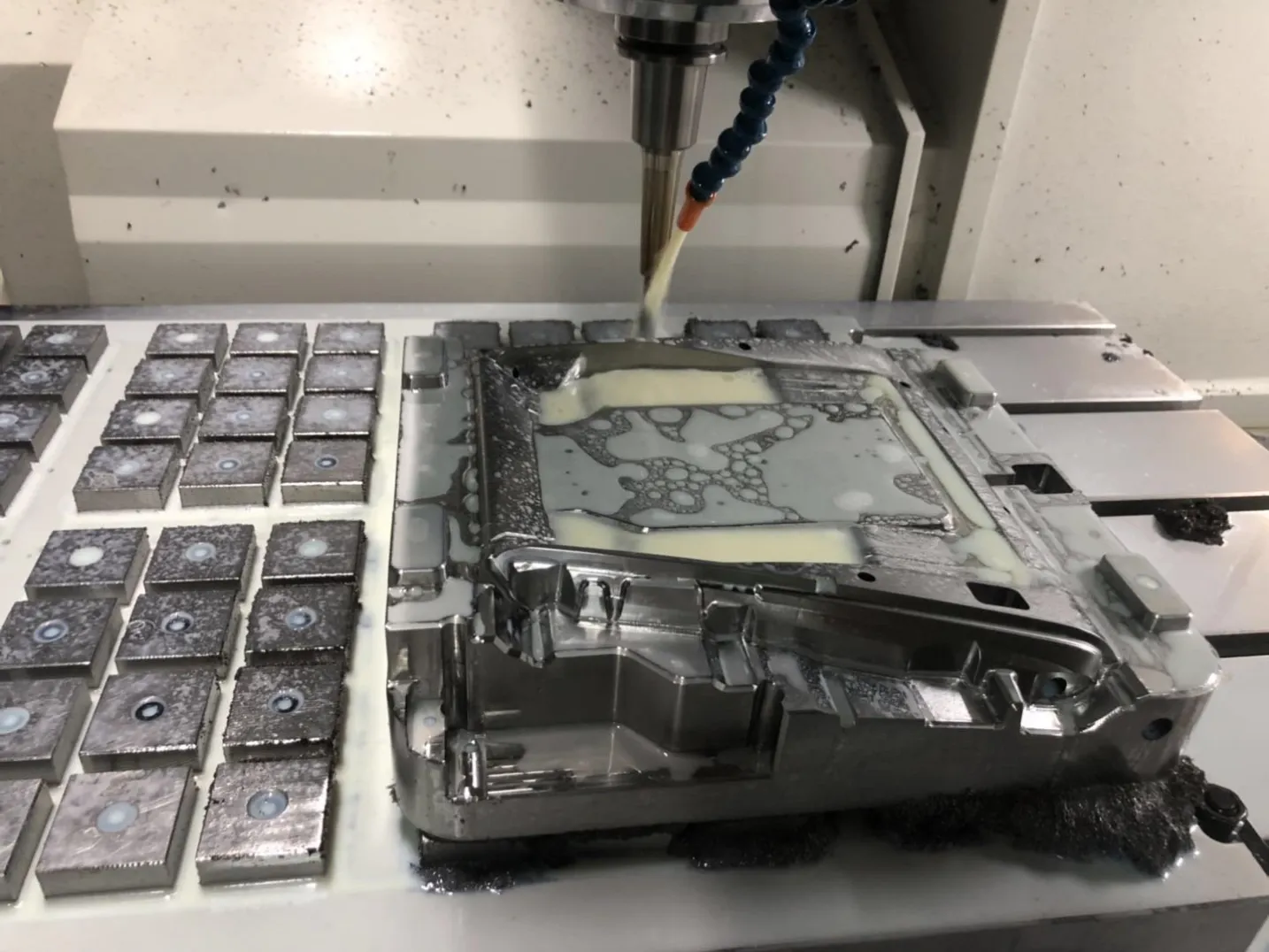
Coolant keeps the cutter and the H13 plate at a steady temperature while the cavity takes shape.
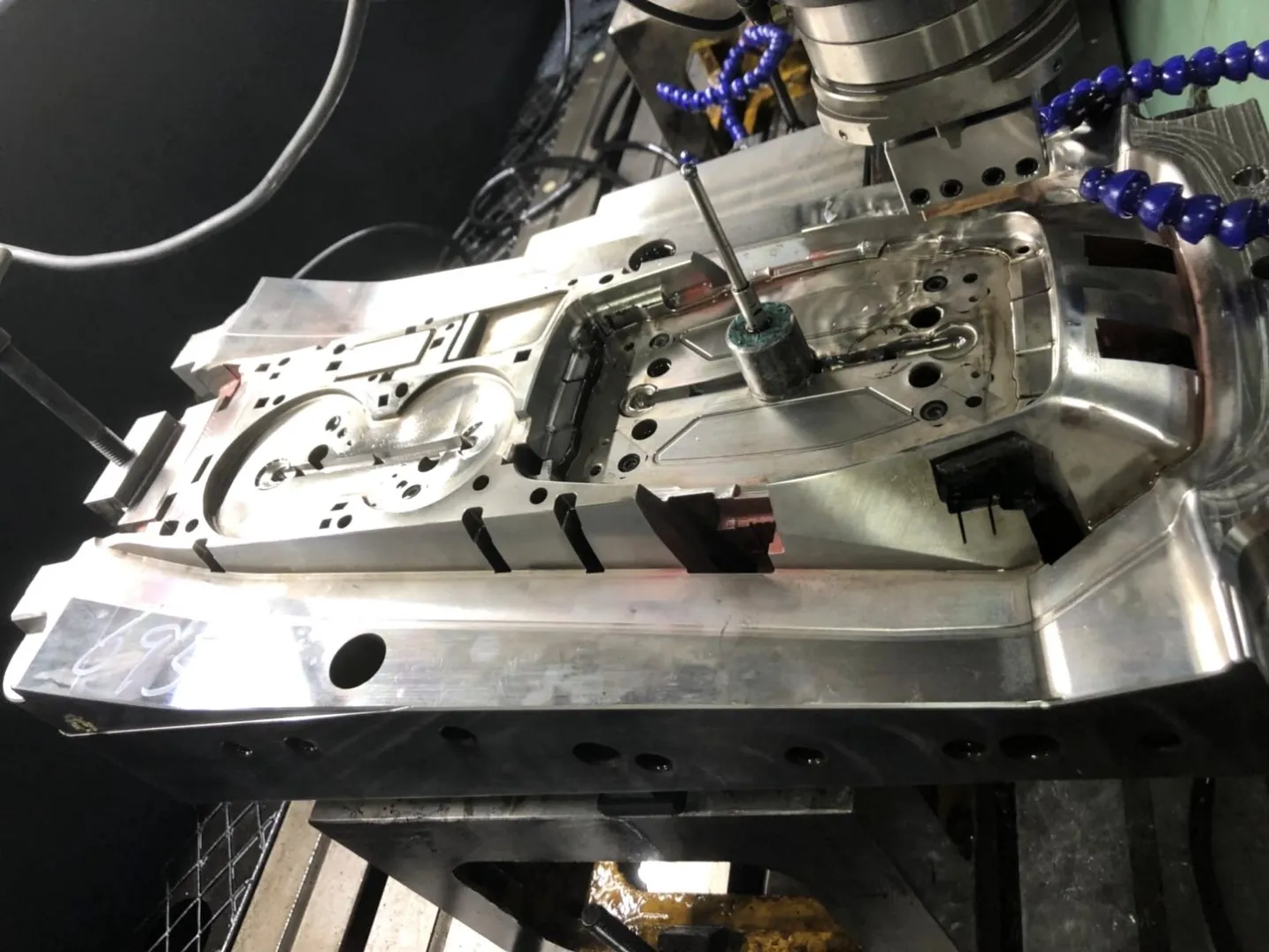
The cavity is cut while the steel is still soft; hardening and tempering come after machining.
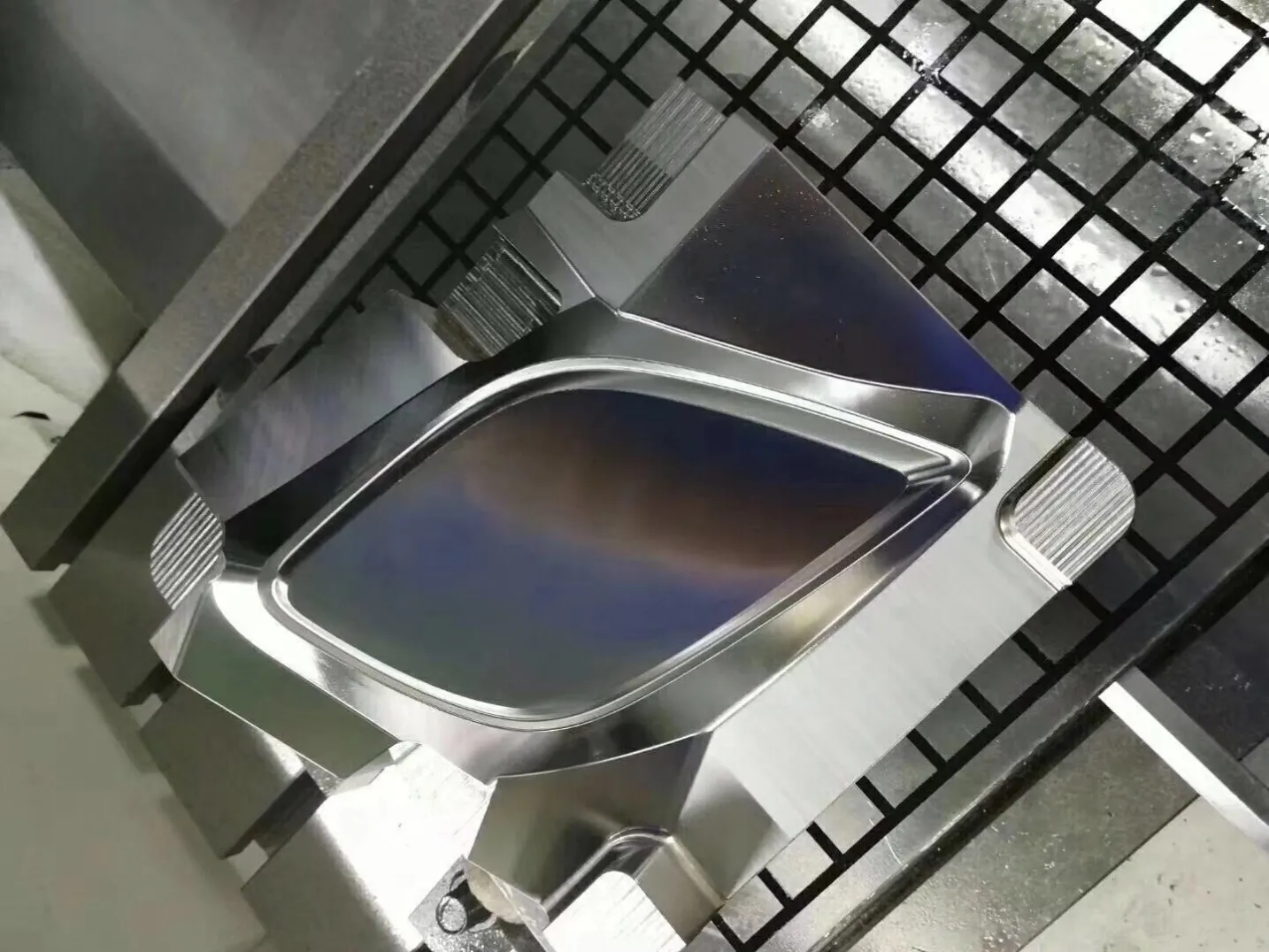
A finished cavity insert, polished and checked on the machine table before it goes into the mold base.
S136 is a stainless mold steel (about 13.6% chromium, supplied in ESR-remelted quality — the class sold by Uddeholm as Stavax ESR).
Choose it when the steel itself is under chemical or cosmetic attack. PVC and halogenated flame-retardant resins release corrosive gas that pits ordinary steels. Transparent PC and PMMA parts show every defect the cavity has.
Selection rule: if the part must be mirror-clear, corrosion-proof or medical-clean, choose S136. No other steel on this page does all three.
NAK80 is an age-hardening steel from Daido, delivered at around 40 HRC — already at working hardness, uniformly, all the way through the block. Because it is already at working hardness, there is no distortion from heat treatment and no furnace slot to wait for.
Its two limits: it is not stainless, so corrosive resins are out, and its working life sits below H13 and S136. It is a cosmetic specialist, not a million-shot production steel.
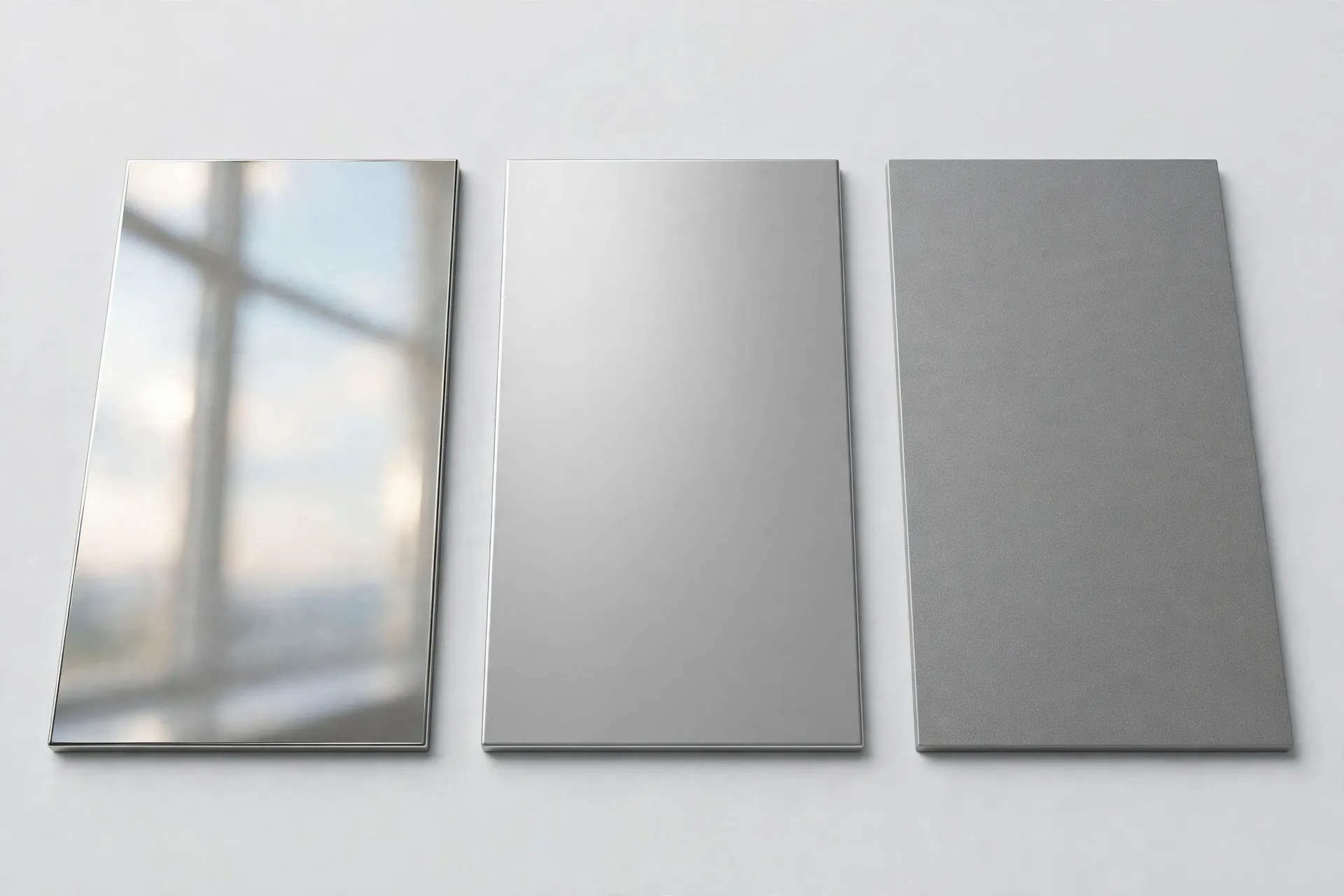
Mirror, high-gloss and matte: the polish grade is set by the steel, not the polishing shop.
NAK80 polishes to the same SPI A-1 mirror as S136 — without a hardening cycle in between.
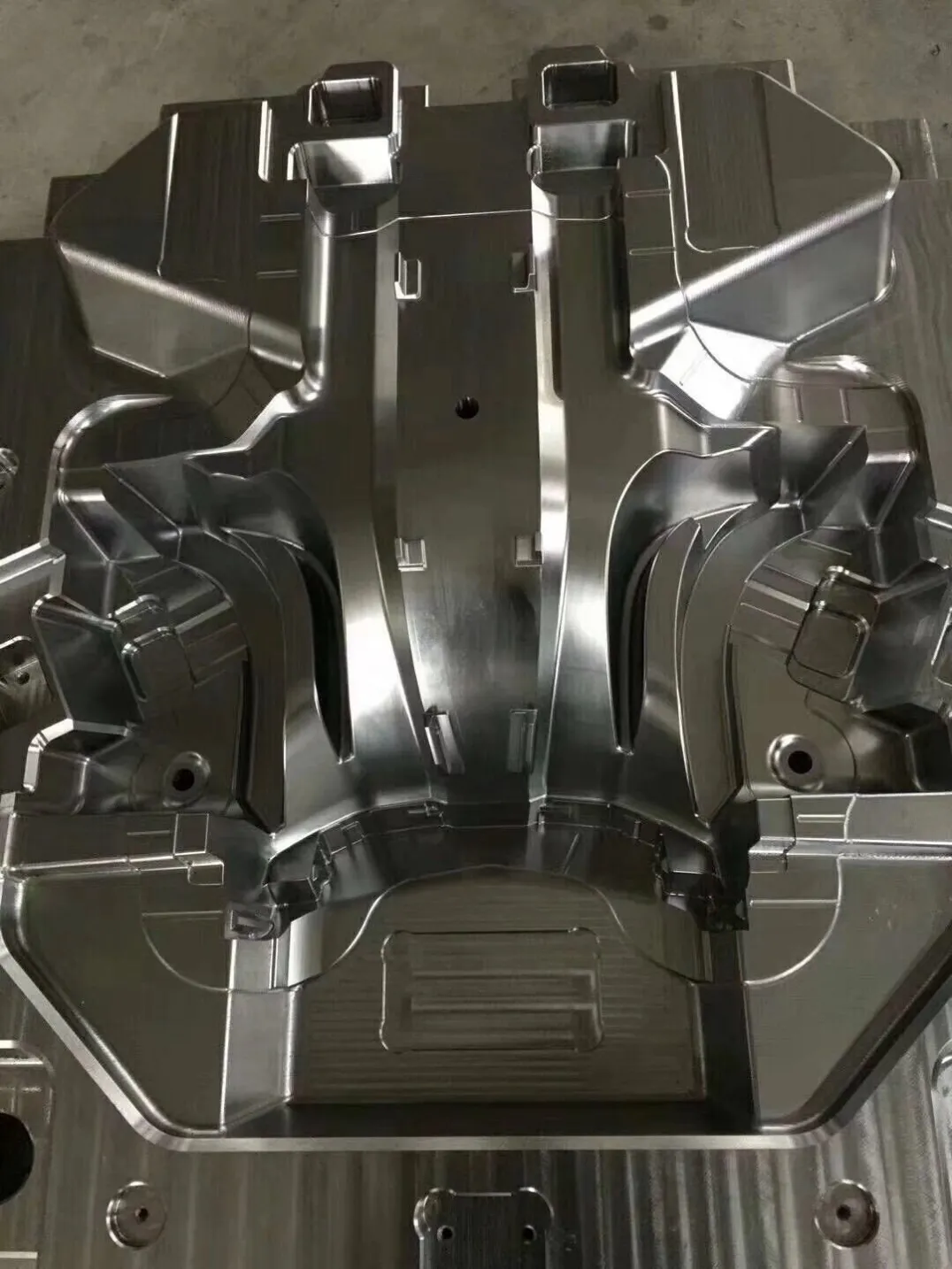
A polished cavity holds its finish through the run; the steel grade decides how good that finish can be.
Steel should be specified against the volume, the resin and the surface requirement — in that order. Ask these three, in this sequence:
Not the first order — the tool's whole expected life, including reorders. Under 300,000 points to P20 or NAK80. Between 300,000 and 500,000 is the judgment zone. Above 500,000, you are in hardened-steel territory.
Unfilled and mild: any steel survives. Filled with glass or mineral: H13 minimum, regardless of what question 1 said — abrasion does not care about your volume. Corrosive (PVC, halogenated flame retardants): S136. Melt temperature above 280 °C: H13.
Texture or matte: P20 is fine. Gloss: NAK80 or S136. Optical mirror or lens-grade clarity: S136, or NAK80 if the resin and volume allow it.
Whatever the answers, the steel grade and its hardness should be written on your quotation — name, grade standard and HRC, not just "mold steel". We state it on every quote, and we verify cavity steel hardness on arrival, as described on our quality page.
How we verify cavity steel hardness on arrival — and everything else we check before a mold ships.
Underspecifying is the expensive direction most buyers recognize too late. A P20 cavity running glass-filled nylon starts losing its edge early: the gate erodes, the surface roughens, flash appears at the parting line and dimensions begin to wander —
Overspecifying wastes money more quietly. An S136 tool for 50,000 shots of unfilled PP costs close to 70% more in steel and spends extra weeks in heat treatment to buy life and corrosion resistance the job will never use.
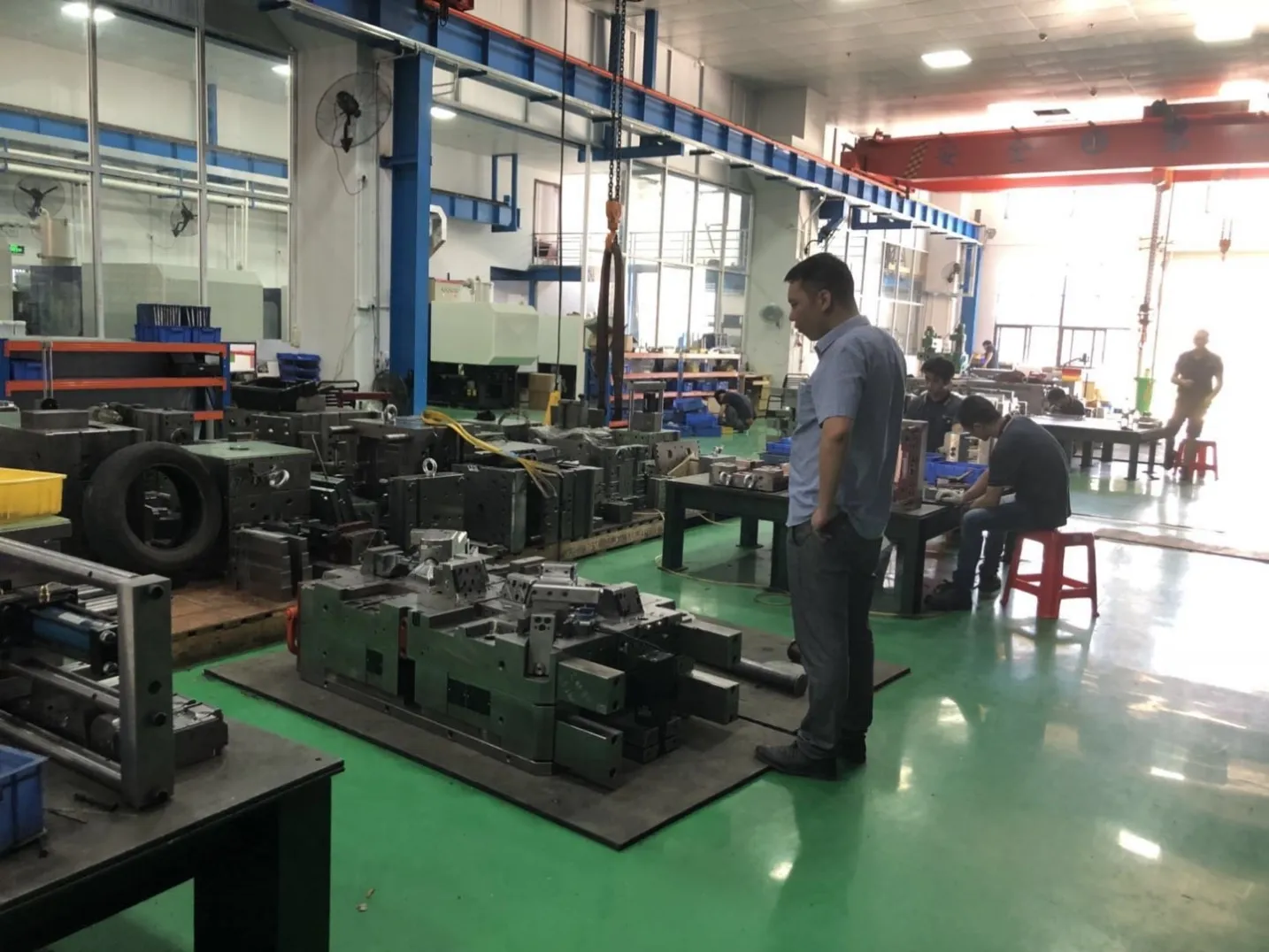
Every tool is assembled and checked in our toolroom before it ships — the wrong steel shows up here first, as rework.
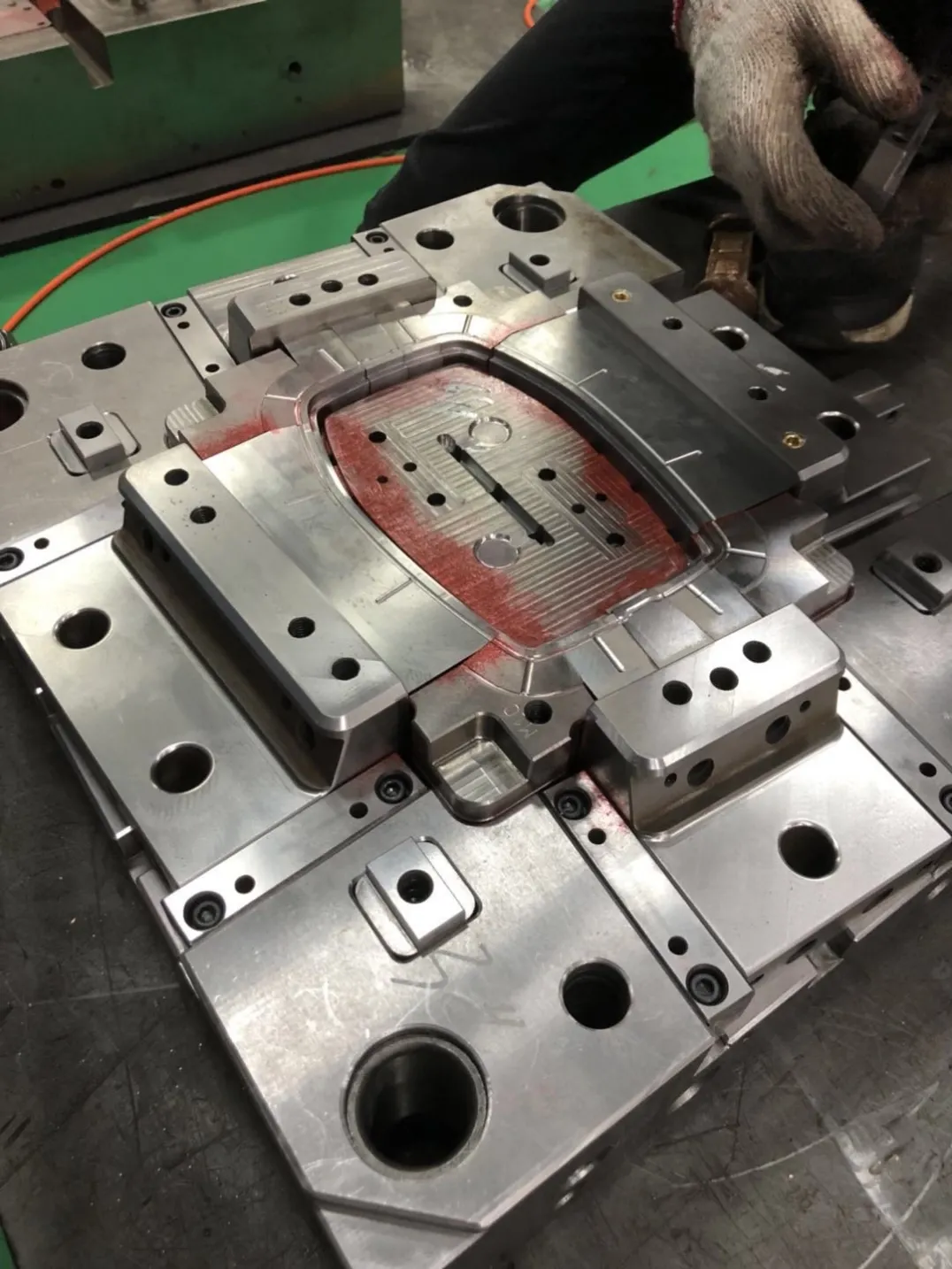
When the wrong steel wears early, the tool comes back here: spotting, fitting and rework the quotation never included.
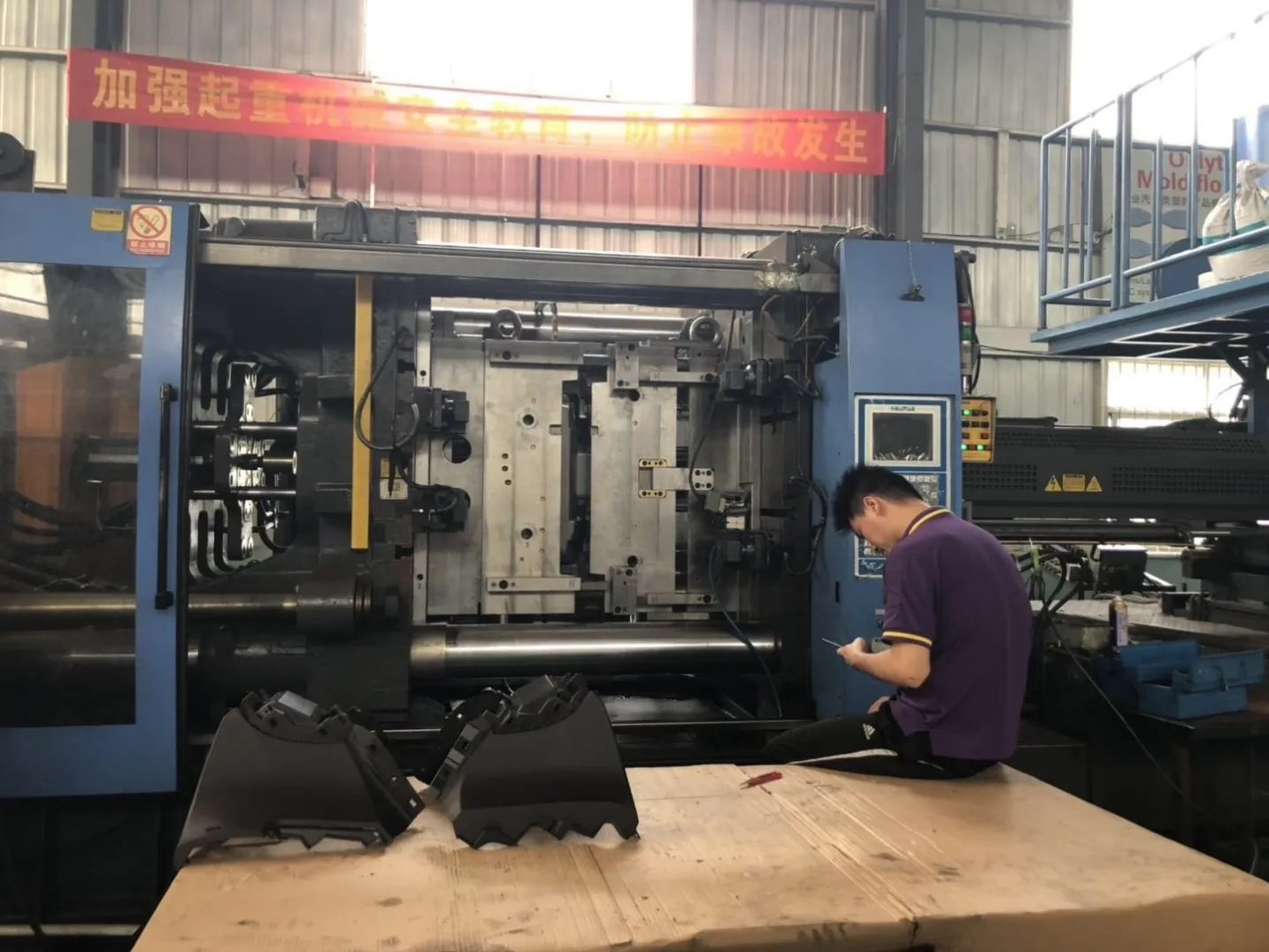
A trial shows the cost of the wrong steel in the parts: flash, wear marks and dimensions drifting out of tolerance.
The cavity and core get the attention, but the rest of the mold has its own steel logic: mold bases and plates in pre-hardened 4140, slides and lifters in shock-resistant or hardened steels matched to the cavity, ejector pins in nitrided H13.
Sanity-check the total before you commit — a quick first estimate for your mold.
Steel names change at every border. The cavity steel your German designer specified as 1.2344 is H13 on an American drawing and SKD61 on a Japanese one. This table translates the four steels above into the major standards, so you can check what a drawing is really asking for:
DIN (W.-Nr.) 1.2311. AISI P20. JIS —. GB (China) 3Cr2Mo.
DIN (W.-Nr.) 1.2344. AISI H13. JIS SKD61. GB (China) 4Cr5MoSiV1.
DIN (W.-Nr.) 1.2083. AISI 420 modified. JIS SUS420J2. GB (China) 4Cr13.
DIN (W.-Nr.) —. AISI P21 modified. JIS —. GB (China) 10Ni3MnCuAl.
NAK80 is a Daido proprietary grade, which is why it has no DIN or JIS number of its own — the dashes are normal, not a gap in the table.
A few more names turn up regularly:
P20 with nickel added, mentioned in the P20 section above. The nickel keeps hardness uniform through thick blocks, so this is the default step-up for large molds, and the grade most "718" callouts on drawings actually mean.
Not a cavity steel at all. It is the medium-carbon plate steel that standard mold bases and backing plates are cut from: flat, strong and inexpensive, for everything that never touches plastic.
A pre-hardened stainless mold steel (an AISI 420 modified type, supplied around 30–34 HRC). It gives real corrosion resistance without the hardening wait, at a lower polish ceiling than S136 — the middle step for humid shops and mildly corrosive resins.
A small sulfur addition makes it noticeably faster to cut, but sulfur works against a perfect mirror, so NAK80 keeps the cosmetic work and NAK55 takes the jobs where machining time matters more than the last grade of polish.
Not a steel, but it belongs in this conversation. With roughly four to six times the thermal conductivity of tool steel, beryllium copper inserts pull heat out of deep ribs, thin cores and other hot spots that cooling channels cannot reach, and often pay for themselves in cycle time.
If your drawing names a grade that is not on this page, send it over anyway. We will confirm the equivalent — or the better-suited steel — before quoting, and the grade we agree on is the grade that goes on the quotation.
The questions buyers ask most often about mold steel grades, hardness and tool life. They cover hardness, corrosion, polish and tool life — the four things that decide whether a steel fits your part, your resin and your volume.
Still need help? Send us a note and we will point you in the right direction. Tell us the part, the resin and your expected volume — a short note is enough for us to name the steel, or to tell you that P20 is all you need.
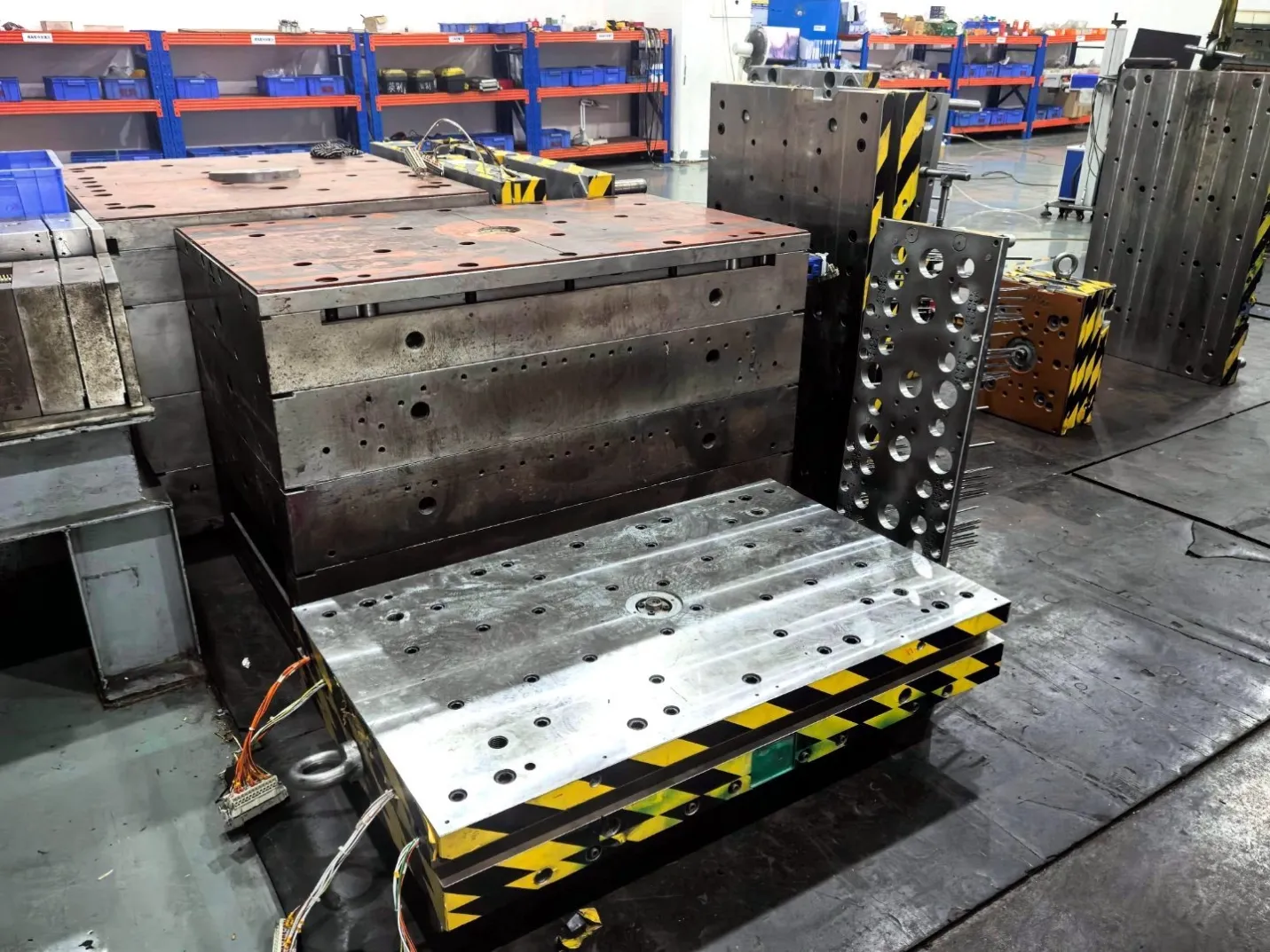
Mold steel blocks ready for machining at our toolroom in China.
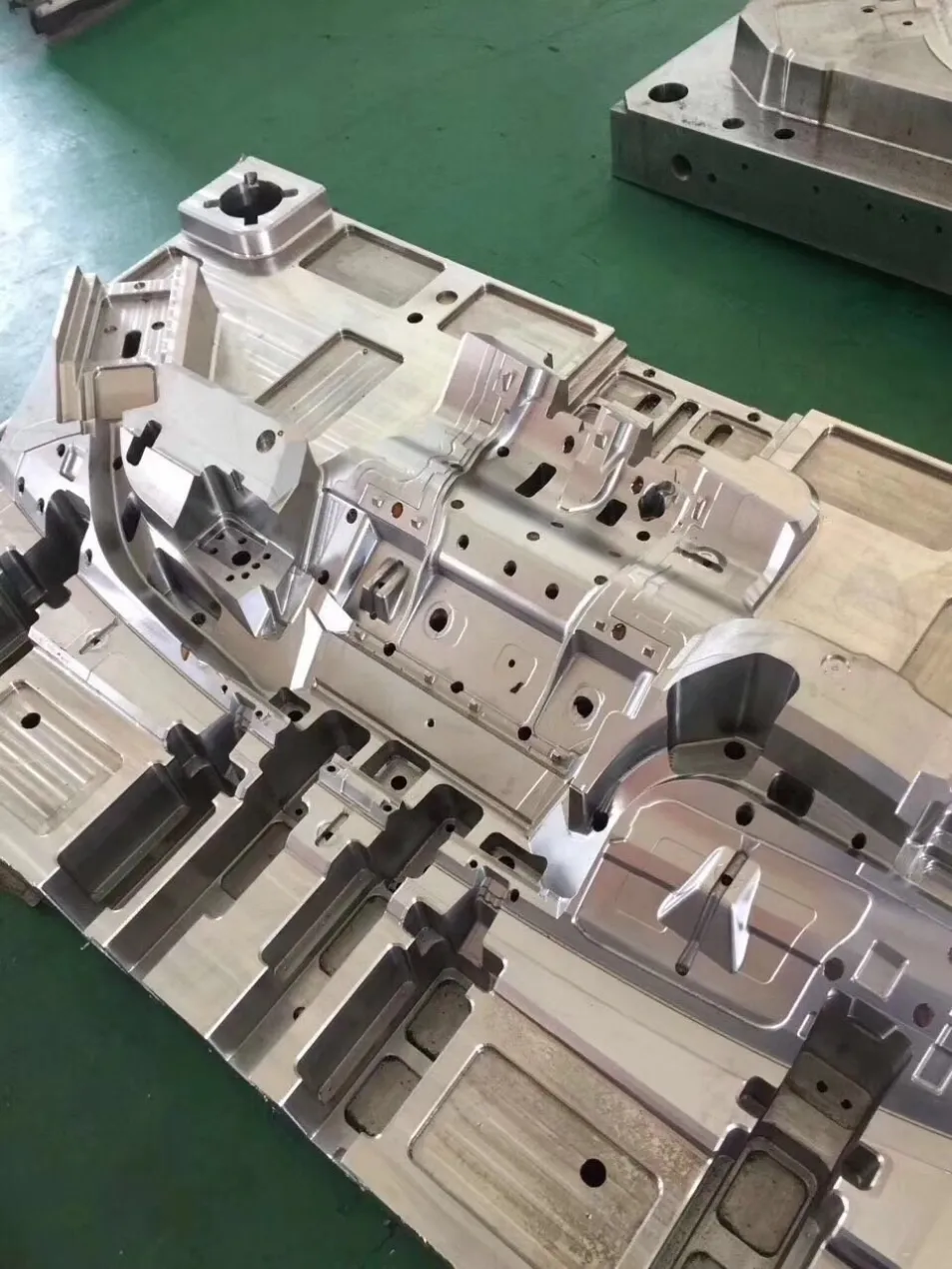
Steel blocks become cavity and core plates here, in our own toolroom — the grade is written on every quotation.
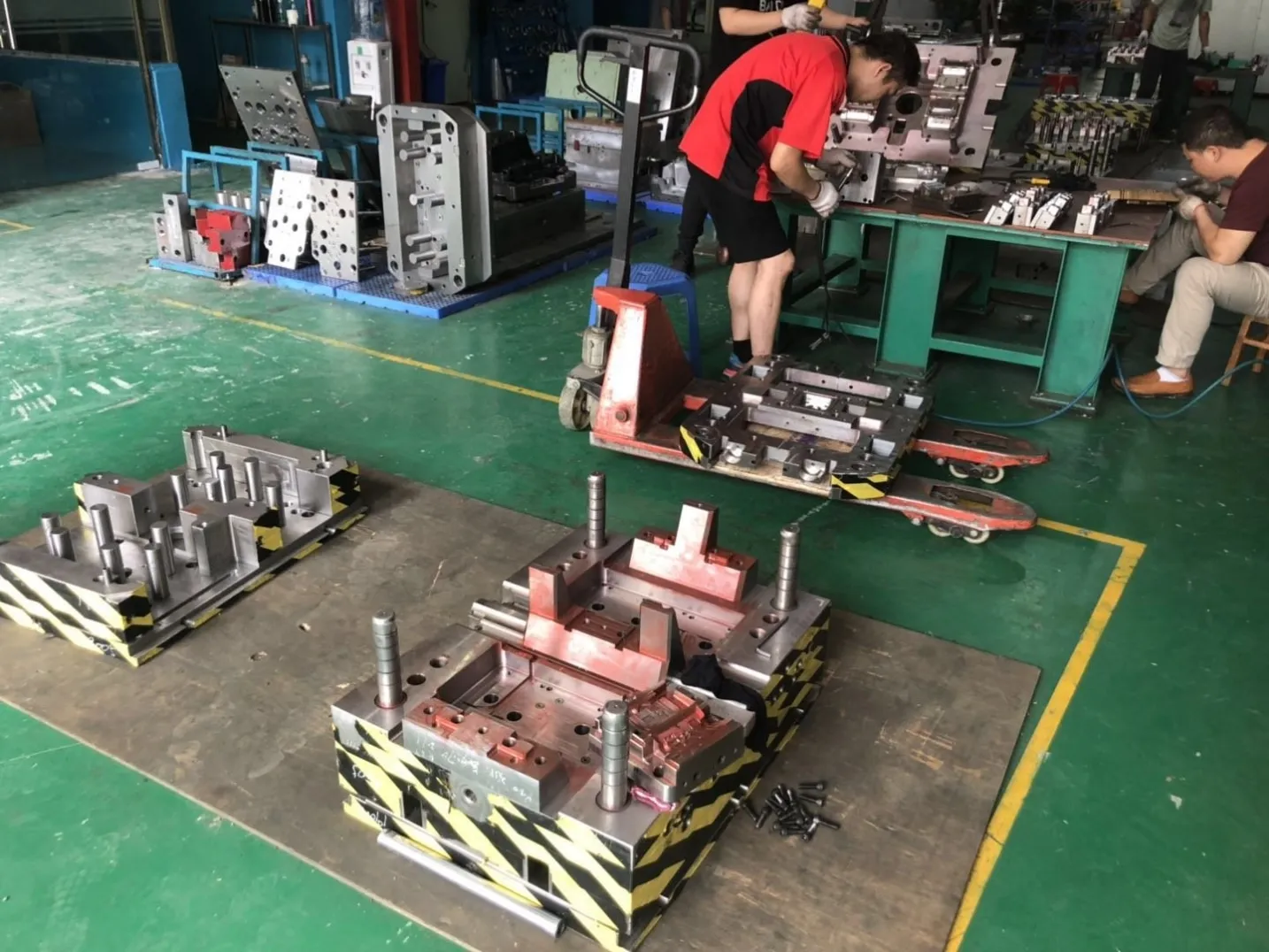
Assembled, spotted and trialled in-house, so the steel choice is proven before the tool ships.
You do not need to settle the steel question before you talk to us. Bring the part, the resin and the volume you actually expect — the steel choice follows from those three, and we will show our working on the quotation.
If a cheaper steel is the right answer for your numbers, that is the one we will recommend.
Send us the drawing or STEP file — the quotation states the steel grade, hardness and expected tool life in writing.
Our cost calculator gives a quick first estimate for your mold — before you commit to a quotation.