Buying Guides
How to Get an Accurate CNC Machining Quote: What to Include in Your RFQ
The Short Answer
An accurate CNC machining quote needs seven things: a 3D CAD file, a 2D drawing with tolerances, the exact material grade, the surface finish, the quantity (including future volumes), your target timing, and where the parts need to go. Send those seven and a factory can price your part properly the first time. Leave some out and one of two things happens: the quote comes back padded to cover the unknowns, or it comes back cheap and grows later when the missing details surface. Neither is in your interest.
Below is that checklist, item by item, with what each one does to your price — written from the quoting desk, not the sales desk. You will also see a weak RFQ next to a strong one, the mistakes that land in our inbox every week, and a template you can copy for your next enquiry. At HAFO Mould every RFQ gets a free DFM (design for manufacturability) review and a quote within 24 hours. How sharp that quote is, though, depends on what you send.
Why Do Some Quotes Come Back Vague, Slow or Surprisingly Expensive?
Because a quote is only ever as good as the information underneath it. When an engineer prices a part, they are answering a chain of questions: What machine does this run on? How many setups? Which material, in what stock form? How long is the cycle? What has to be inspected, and how? Every gap in your RFQ forces an assumption, and professional factories make conservative assumptions — they have been burned by optimistic ones. A missing finish callout becomes "assume cosmetic-grade." A missing tolerance becomes "assume tight." A missing quantity becomes "assume the expensive way of making it."
Sound familiar? Same part, five suppliers, five prices miles apart — and no way to tell which one is right. Usually the drawing is fine. The RFQs were not. Fixing that costs you a few extra minutes per enquiry, nothing else. The checklist below follows the order our engineers work through a part, so go top to bottom and nothing important slips.
Item 1: The 3D CAD File — What Format, and Why It Matters
Send a native solid model whenever you can: STEP (.stp/.step) is the most universally accepted, and IGES, X_T (Parasolid) and STL are also workable. HAFO accepts STEP, STP, IGES, STL, X_T and PDF drawings. A solid model lets the engineer measure every feature, check wall thicknesses, spot undercuts, estimate stock size and program a realistic cycle time. It is the single most valuable file in your RFQ.
PDF only? We can quote it — slower, and softer. The engineer has to rebuild the geometry in his head, and every unclear feature becomes either a question back to you or padding in the price. If all you have is a sample or a hand sketch, say so. That is a legitimate starting point (more on it below). But if a CAD file exists somewhere in your company, dig it out and attach it. One habit saves more time than any other: send the CAD and the drawing as a matched pair, same revision. The classic accident in machining is a Rev C model quoted against a Rev B drawing. When they disagree, we quote the model's geometry and the drawing's tolerances and flag it — and flagging costs you a day. Name files with part number and revision (e.g.
BRK-1042_RevC.stp) and that whole category of delay disappears.Item 2: The 2D Drawing — Tolerances, Threads and Critical Features
The CAD model defines the shape; the drawing defines what "correct" means. Your 2D drawing (PDF is fine) should carry: overall dimensions and any dimension that must be controlled; tolerances on critical features; thread callouts in full (e.g. M6 × 1.0, depth, through or blind); surface roughness requirements if you have them; and any feature you will inspect on arrival. If nothing on the drawing is marked critical, a good factory assumes everything matters equally — which prices your part like a gauge block even if it is a cover plate.
You do not need a fully GD&T-engineered drawing to get a good quote. Flag the five or six dimensions you genuinely care about and that beats forty tight tolerances nobody will ever check. No tolerance callout at all? We machine to ISO 2768-mK by default — just say whether that suits you, or point us at your company standard. How tolerance choices move price, in full: → CNC Machining Tolerances Explained: Standard vs. Precision.
Item 3: The Exact Material Grade — "Aluminum" Is Not a Specification
"Aluminum part" can mean 6061, 7075, 6063 or 6082, and those four differ in price, machining behaviour and finishing options. "Stainless" can mean free-cutting 303 or marine-grade 316, which machine very differently. A quote built on the wrong assumption is wrong in both directions — padded if we guess high, unrealistic if we guess low. Always specify:
- The full grade: 6061-T6, 7075-T6, 304, 316L, POM, PEEK — grade and temper/condition where the material has them.
- Any certification need: if you need a material certificate with the shipment (we supply them on request), say so in the RFQ rather than at dispatch.
- Acceptable equivalents: if a near-equivalent grade is acceptable to you, say which ones. Giving the factory one approved alternative can be the difference between machining this week and waiting on a specific stock size.
Still choosing between grades? Ask. Settle 6061 vs 7075 in the DFM review — there is a dedicated comparison, [→ 6061 vs 7075 Aluminum: How to Choose for CNC Machined Parts], and the hub pages → Aluminum Alloys for CNC Machining and → Stainless Steel for CNC Machining walk through the trade-offs grade by grade. Just do not leave the grade blank and then compare suppliers on price. You would be comparing four different materials wearing the same part number.
Item 4: Surface Finish — Machined, Blasted, Anodized, or Cosmetic?
Finish is the most under-specified item in the average RFQ and one of the largest avoidable cost drivers. State three things: the process (as-machined, bead blasting, anodizing including hardcoat, polishing, brushing, painting, powder coating, nickel/chrome/zinc plating, electroless nickel, black oxide, passivation — all available at HAFO), the appearance standard (a working internal part and a consumer-facing cover are not finished the same way, and should not be priced the same way), and which faces are cosmetic. "Anodized black, cosmetic on the top face only" is a complete instruction; "anodized" alone triggers a clarifying email.
Two traps, quickly. Coloured anodizing shifts subtly between batches and between alloys — if two parts must match exactly, say they are a matched set. And finish interacts with tolerance: coatings add thickness, so mark any dimension that must hold after anodizing. Both are covered properly in the tolerances guide → CNC Machining Tolerances Explained: Standard vs. Precision. For the RFQ the rule is blunt: if it matters to you, it goes in the email.
Item 5: Quantity — Now, and What Comes After
Quote the quantity you actually intend to order first. Then tell us what comes after: one-off prototype, pilot batch, or the first run of a part that repeats monthly? Quantity changes everything — fixturing, whether dedicated tooling pays back, how material is bought, how setup cost spreads. Tell a factory a prototype leads to production and it will engineer the prototype that way. It will also flag, while there is still time, the design tweaks that make the production version cheaper.
Ask for tiered pricing if your volume is uncertain: the same part quoted at prototype, pilot and production quantities tells you where the cost curve bends, and it costs the factory little extra effort once the part is understood. There is a full breakdown of how quantity and the other cost drivers interact in [→ What Does CNC Machining Cost? What Drives the Price of a Machined Part] — this guide deliberately does not repeat it. What belongs here is the habit: never send an RFQ without a number in it. "Quote me some parts" is not a quantity.
Item 6: Target Timing — "Urgent" Is Not a Date
Give a date. Then say whether it is hard — trade show, production line, a customer waiting — or just a preference. Timing changes scheduling, whether expedited handling is needed, sometimes the process itself: a part that ships this week may be machined differently from the same part with a comfortable window. At HAFO, lead time depends on part size, complexity and finish, and is confirmed in the quote, not promised in the abstract. Expedited handling is available. Arrange it the honest way — a real date in the first email, not a phone call after the quote lands. Got milestones, like samples for approval before production? List them. If we can see the whole timeline, we can sequence our work to protect your dates instead of discovering them one at a time.
Item 7: Delivery Terms and Destination — The Last Line of the Price
A machining quote is not a delivered price. The gap between them is freight and duty — and yours to define. State the destination country (city too, if you know it) and the basis you want quoted: we ship on DDP, EXW and FOB terms. Want DDP, duties and delivery handled to your door? Say so, and give the delivery area. Got your own forwarder and prefer EXW or FOB? Say that instead. Our Dongguan factory ships to customers in the US, Germany, France, Portugal, Sweden and Spain, so the routes are routine — but freight is priced per shipment, and a quote built on the wrong basis gets redone. Add the basics while you are there: company name, your name, a reply email you actually read, payment expectations (our standard terms are T/T). Not bureaucracy. It is what turns your RFQ from a research question into an order-in-waiting.
A Weak RFQ vs. a Strong RFQ — Two Illustrative Examples
The two emails below are composites written for this guide — they are not real enquiries and the part described is invented — but every line mirrors messages factories receive weekly.
The weak RFQ:
Subject: Price pleaseHi, please quote the attached part in aluminum. Need 50 pcs ASAP. Thanks.
Attached: one screenshot of a CAD model. No drawing, no grade, no tolerance, no finish, no destination, no company name. Nobody can price that accurately. A careful factory replies with six questions, and the 24-hour clock restarts when your answers arrive. A careless one guesses — 6061, standard finish, tight-ish tolerances, its local freight assumption — and you compare that guess against four other guesses and pick the cheapest. That is how projects get re-quoted at double the "winning" price two weeks later.
The strong RFQ:
Subject: RFQ — Housing BRK-1042 Rev C, 6061-T6, 50 pcs + ongoingHello, please quote the attached housing. Files: BRK-1042_RevC.stp (model) and BRK-1042_RevC.pdf (drawing). Material: aluminum 6061-T6, material certificate required. Tolerances: per drawing; the two bearing bores and the mating face are the critical features — everything else ISO 2768-mK is fine. Finish: bead blast + black anodize, cosmetic on the outer faces. Quantity: 50 pcs now; if the project proceeds we expect repeat orders in the low hundreds — please quote 50 / 200 so we can see both. Timing: samples ideally within a few weeks of order; not a hard deadline. Delivery: DDP to our warehouse in Germany. We can sign an NDA if you need one from us; our files are confidential. Payment by T/T is fine. — [Name, company]
That email gets quoted precisely. Once. No follow-up round. And notice — it is not long. It is just complete. Every sentence answers a question the engineer would otherwise have to ask, or guess at.
What Happens After You Send It? Inside the 24 Hours
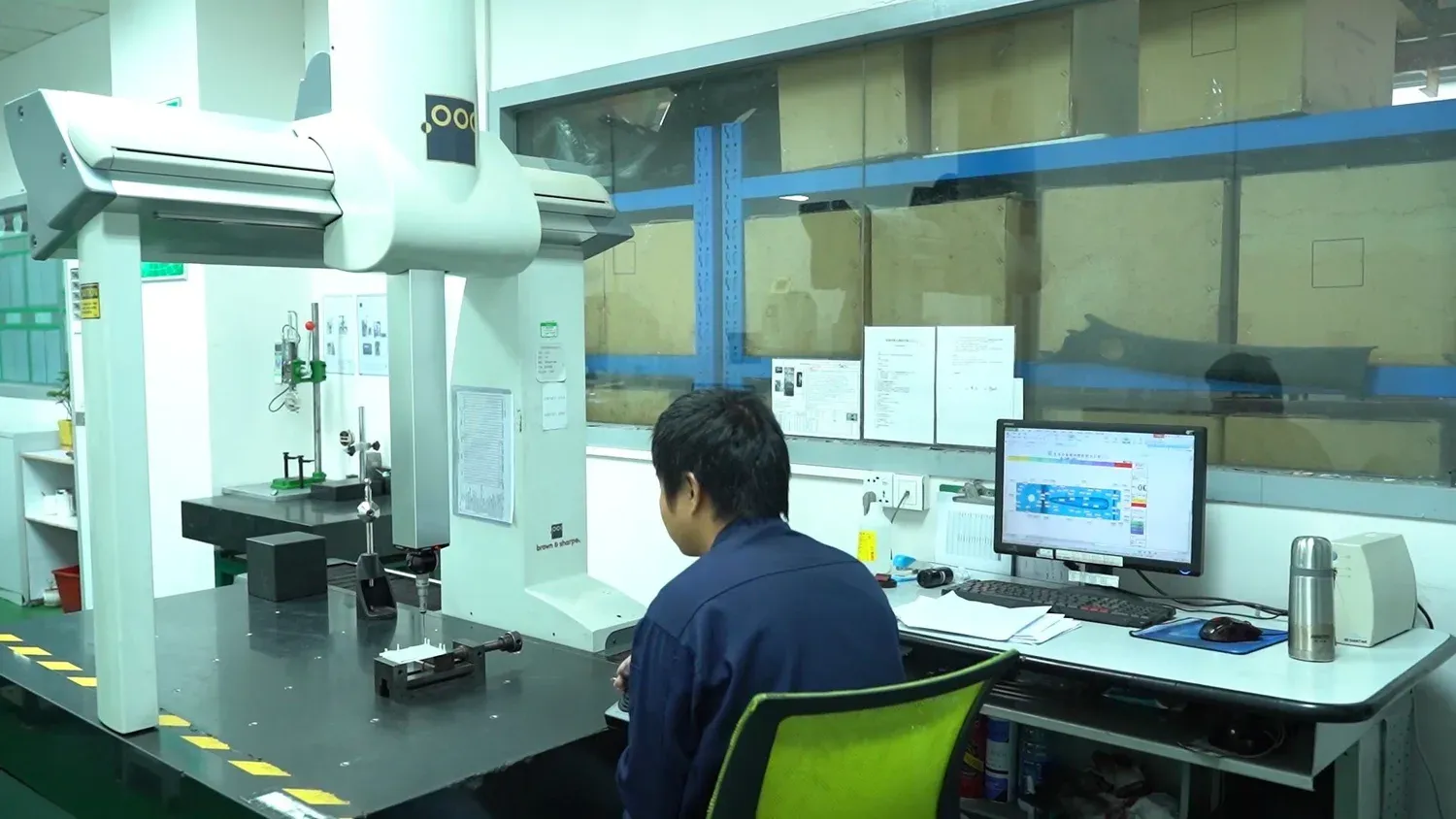
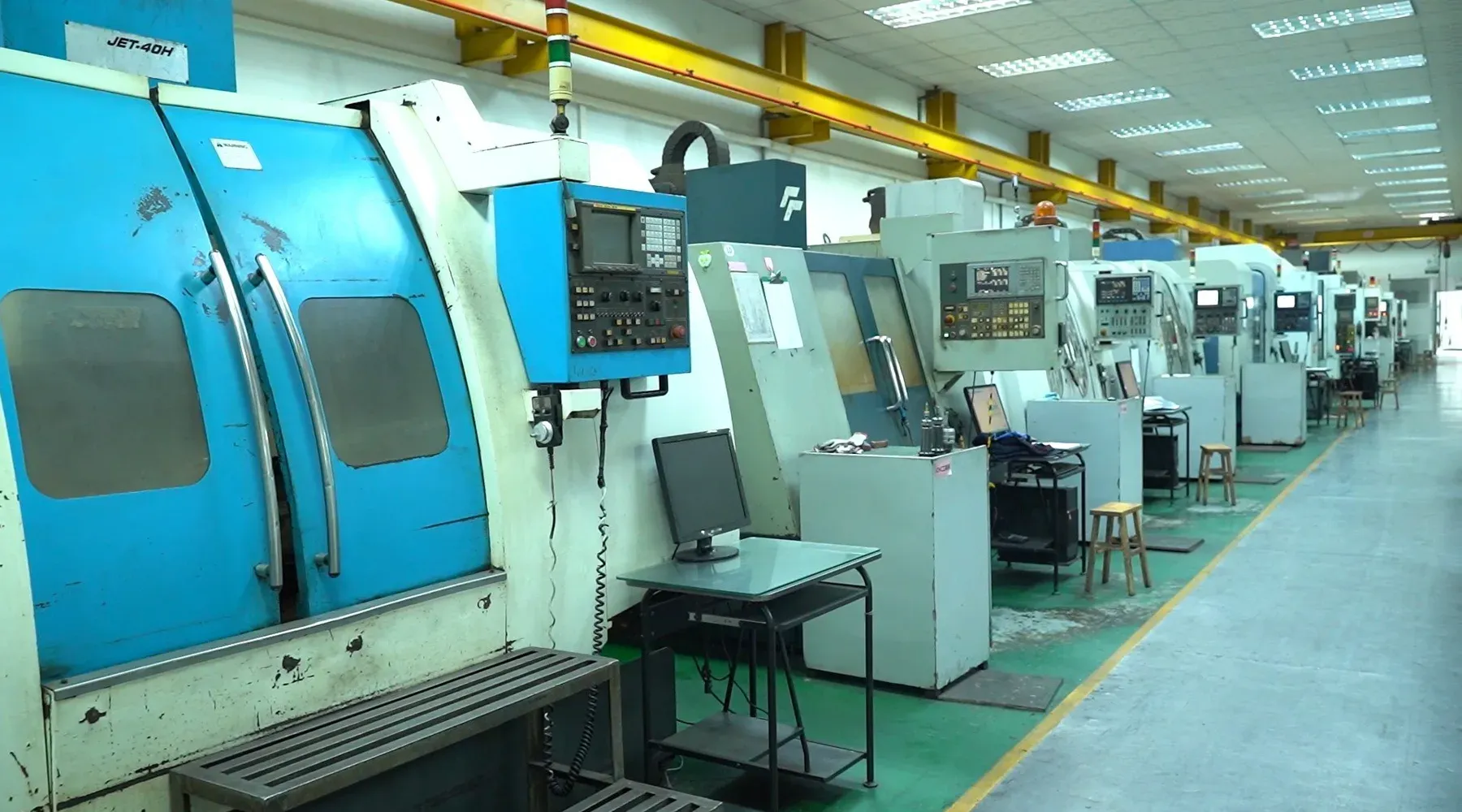
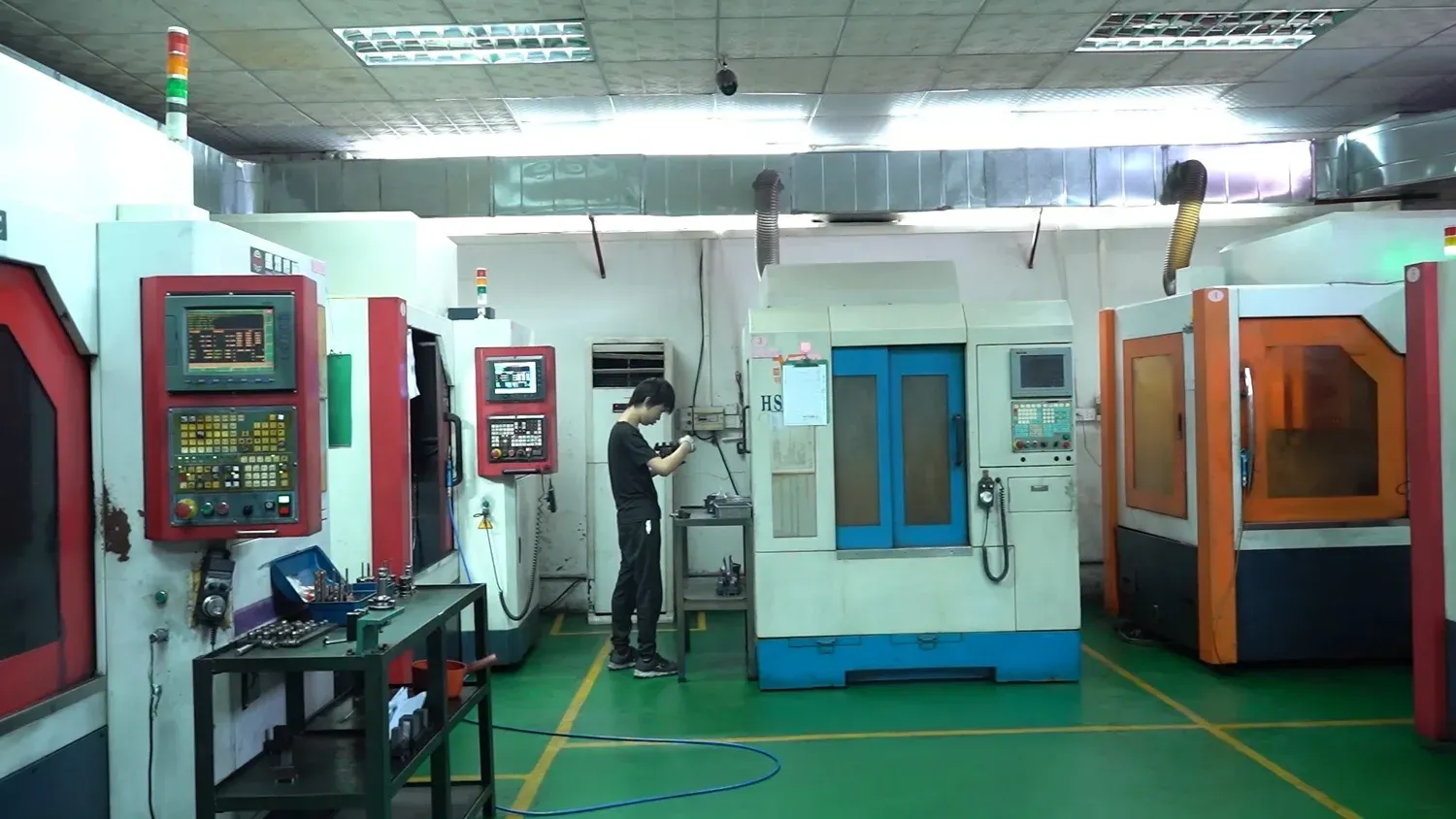
Here is what actually happens on our side. An engineer — not a salesperson — opens your files. First pass is DFM: Is the geometry machinable as drawn? Any features fighting the material, tolerances tighter than the feature needs, a finish that conflicts with a dimension, a wall too thin to hold? If something looks wrong, you hear about it with the quote. Not after payment. Second pass is process planning: which of our machining centres the part belongs on — we run 69 CNC machining centres (38 three-axis, 13 four-axis, 18 five-axis) plus turning, wire EDM and EDM in-house — how many setups, what stock form, what cycle time. Third pass: costing and inspection. What gets measured, and does it need a CMM report, a dimensional report or a first-article inspection from our three fully automatic CMMs?
The quote that comes back within 24 hours therefore rests on a real manufacturing plan, which is why it holds up in production. If your RFQ is missing information, this same process stalls at pass one — the engineer either waits for your answers or prices the uncertainty. That is the entire mechanism behind "send a complete RFQ, get a quote you can trust."
What a Complete Quote Looks Like When It Comes Back
A good RFQ earns you a good quote, and a good quote has a recognisable shape. Expect it to state: the part and revision being priced (so version errors surface immediately); the material grade assumed; the unit price at each quantity you asked for; what is included in that price — machining, the specified finish, standard inspection — and what is not, such as special documentation or non-standard packaging; the inspection reports included or available; the delivery basis you requested (DDP, FOB or EXW) and the destination it was priced to; and the lead-time basis, confirmed against your actual part and finish rather than quoted from a brochure. If the DFM review found anything — an over-tight tolerance, a finish conflict, a feature that will fight the material — it should be named in the reply, not saved for later.
And if a quote arrives as one bare number, no assumptions stated? Treat it as provisional, however attractive it looks. The assumptions exist whether they are written down or not. The only question is whether you see them before you commit — or after.
Comparing Quotes from Several Suppliers: An Apples-to-Apples Checklist
Most buyers send the same RFQ to three to five factories. Sensible — unless the RFQ is sloppy, in which case it quietly sabotages the whole exercise. Each supplier guesses a different grade, a different tolerance reading, a different delivery basis. You are not comparing prices any more. You are comparing guesses, and the cheapest guess is usually the most wrong. Send a complete RFQ and the guesses disappear. Then check these five alignments before you rank anything by price:
- Same revision. Confirm every quote names the same model and drawing revision. Re-quote anyone who priced an older file.
- Same material. Grade and temper, plus whether a material certificate is included — certificates are a real cost line that some quotes carry and others omit.
- Same tolerance reading. If one supplier priced your loose dimensions at ISO 2768-mK and another priced the whole part at your tightest callout, their prices are not describing the same part. Ask the outlier which reading they used.
- Same finish and same cosmetic standard. A quote for "anodized" and a quote for "bead blast, black anodize, cosmetic faces polished free of tool marks" will differ — correctly.
- Same delivery basis. A DDP-to-your-door price and an EXW factory-gate price differ by the entire freight and duty chain. Rank like against like, or convert before you rank.
Two softer signals matter too. Watch how a factory handles the RFQ itself: one sharp question about a genuinely ambiguous feature tells you a lot about its engineering culture, while an instant quote on a complicated part, no questions asked, usually means nobody looked at it. And watch the DFM feedback. A supplier who tells you — before you have paid a cent — that a tolerance is costing you money for no reason is showing you exactly how it will behave during production. Price should decide between comparable offers. This checklist is how you make them comparable.
The Seven Mistakes We See Most Often
- Screenshot instead of a file. An image of a CAD model cannot be measured. Send the model itself.
- "Aluminum" / "stainless" with no grade. Grades differ in price and machining behaviour; see Item 3.
- A drawing with no tolerances — or every tolerance tight. Both extremes cost you: one forces assumptions, the other forces unnecessary precision work.
- No quantity, or only the prototype quantity. Factories plan differently when they can see the production future; tiered quotes are free information.
- Finish mentioned nowhere, requested at the end. Adding anodizing after machining is quoted changes stock, handling and sometimes dimensions. Name the finish up front.
- Files at mismatched revisions. Rev C model, Rev B drawing — the most common avoidable delay in the whole process.
- No destination or delivery basis. A part price is not a delivered price. State the country and whether you want DDP, FOB or EXW.
Copy This: A Ready-Made RFQ Email Template
Subject: RFQ — [Part name / part number, revision] — [Material grade] — [Quantity]Hello,Please quote the following part:
- Files attached: [3D model file name + revision] and [2D drawing file name + revision]
- Part: [name / part number]
- Material: [full grade and temper, e.g. Aluminum 6061-T6]; material certificate: [required / not required]
- Tolerances: per drawing; critical features are [list, or "none beyond ISO 2768-mK"]
- Finish: [process, colour if any, and which faces are cosmetic]
- Quantity: [this order] — expected future volume: [none / approx. …]; please also quote [second quantity] if easy
- Timing: [target date or "flexible"]; deadline is [hard / soft]
- Delivery: [DDP / FOB / EXW] to [country, city]
- Inspection reports needed: [CMM report / dimensional report / FAI / none]
- Confidentiality: our files are confidential; we are happy to work under NDA
- Company: [name]; contact: [your name and email]; payment by T/T accepted
Thank you — a DFM comment on anything you would change is welcome.
Delete the lines that genuinely do not apply rather than leaving them blank; a short complete email beats a long vague one every time.
Special Cases: No CAD, NDA First, and Combined Projects
"We only have a sample / a sketch / an old part." Say so plainly. Reverse-engineering from a sample is a normal starting point, and a dimensioned sketch of a simple part can be enough for a first estimate. The quote will carry more assumptions, and everyone will know it — which is still better than pretending a screenshot is a drawing.
"We need an NDA before we can send files." Entirely normal, and welcome at HAFO: just ask in your first message and sign before attaching anything sensitive. Many buyers send a first, sanitised enquiry — overall size, material family, quantity — to open the conversation, then release full files once the NDA is in place. That sequence works fine.
"We already buy this part elsewhere and want a second source." Send the same package you would send for a new part — plus two things: the drawing revision currently in production (second-sourcing against an obsolete revision is a classic own goal) and anything you have learned about the part in service: the feature that wears, the dimension your current supplier struggles to hold, the finish complaint your customers raised. A second-source quote that only replicates the drawing replicates its problems too; one that knows the part's history can be engineered to fix them.
"The project is a machined prototype now, a mold later." Say that in the RFQ. HAFO builds injection molds in its own toolroom and runs injection molding in the same factory, so a prototype quoted with its production future in view can be designed once, correctly, instead of twice. If you already know the part will be molded at volume, the comparison in [→ CNC Machining vs Injection Molding: Which Is Right for Your Part?] explains how the decision is usually made.
FAQ
What is the minimum I can send and still get a quote?
A 3D model, a material grade and a quantity will get you a real number; adding the drawing tolerances, finish and destination turns it into a number you can order against. Everything on the checklist exists because its absence has changed a price at some point.
Which CAD formats do you accept?
STEP/STP, IGES, STL and X_T solid models, plus PDF 2D drawings. STEP is preferred — it opens identically in almost every CAD and CAM system.
Do I need a 2D drawing if I send a STEP file?
For simple parts with no critical tolerances, a model plus notes can be enough. For anything with threads, tight fits or features you will inspect, yes — the drawing is where tolerances and callouts live. The model says what the part is; the drawing says what "right" means.
How fast will I get the quote?
Within 24 hours of a complete RFQ. Incomplete RFQs usually trigger questions rather than a quote, and the clock effectively runs from your answers — one more reason the checklist pays for itself.
Is the DFM review really free, and what does it include?
Yes — free with every RFQ, before you commit to anything. An engineer checks machinability, flags tolerances that are tighter than the feature needs, points out finish/tolerance conflicts and suggests changes that reduce cost without hurting function. You are free to take the feedback and order elsewhere; most buyers stay.
Can I get pricing at several quantities?
Yes, and we recommend it. Ask for the quantities you are genuinely considering — prototype, pilot, production — and the tiered prices show you where the cost curve bends. The reasoning behind the tiers is explained in [→ What Does CNC Machining Cost?].
What is your minimum order quantity?
For CNC machining, one piece. A single prototype is a normal order here, and it goes through the same DFM and inspection process as a production run.
Will you sign an NDA?
Yes — NDAs are welcome, and you can sign before sending any files. Just say so in your first email and attach nothing sensitive until it is in place.
What inspection documentation can I get with my parts?
CMM reports, dimensional reports, material certificates, finish certificates and first-article inspection (FAI) are all available, plus pre-shipment photos or video. Ask for what you need in the RFQ so it is planned and priced into the job rather than added at dispatch.
What are your payment and shipping terms?
Payment is by T/T. Shipping terms are DDP, EXW or FOB — tell us which basis to quote and the destination, and the quote will be built on it. We ship regularly to the US, Germany, France, Portugal, Sweden and Spain.
Ready When You Are
Got a CAD file? Then you are one complete email away from a quote you can rely on. Send the files, the grade, the finish, the quantity. An engineer reviews the design free of charge and replies within 24 hours. Start at → CNC Machined Parts, or go straight to the contact page and attach your files. Still deciding on material or tolerance? The guides linked above will help you settle it before you ask — but do not let an open question stop you sending the drawing. Settling it is part of the DFM review.