Die Casting Parts
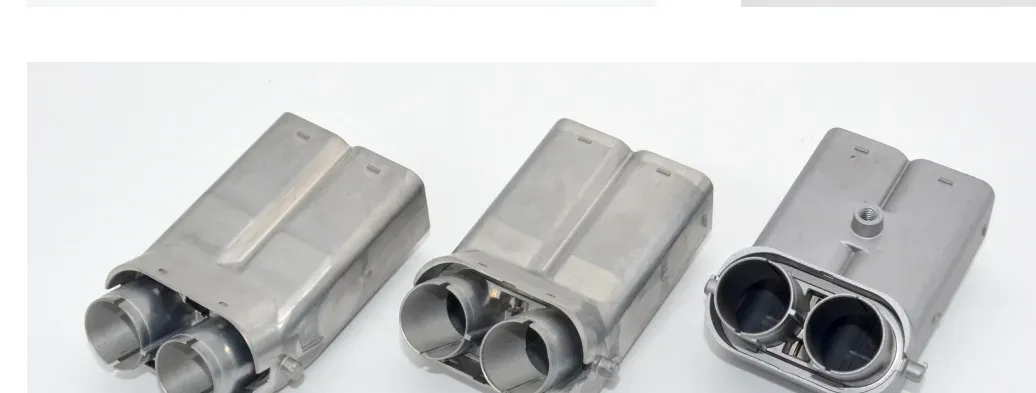
Aluminum Die Casting Parts
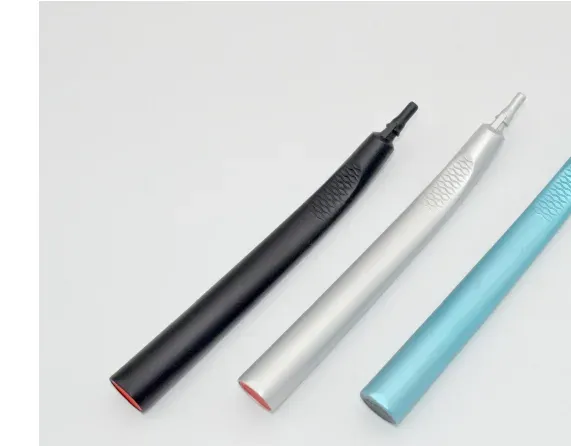
Aluminum die casting parts supplied cast, CNC-finished, inspected and surface-finished by one factory — housings, covers, brackets and heat sinks with machined sealing faces, threads and bores where casting alone cannot hold tolerance. Free DFM and a quote within 24 hours.
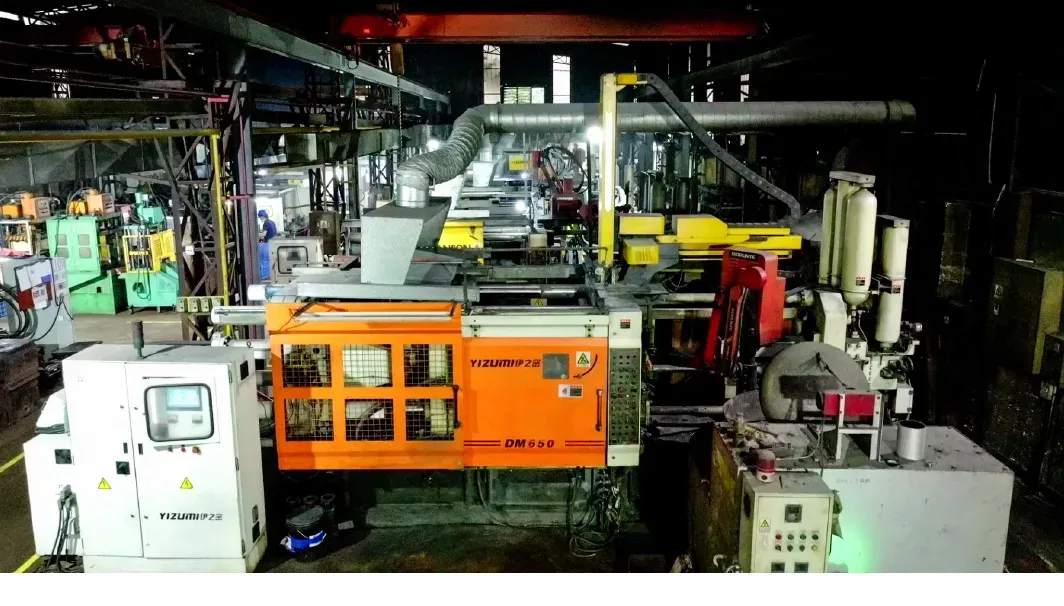
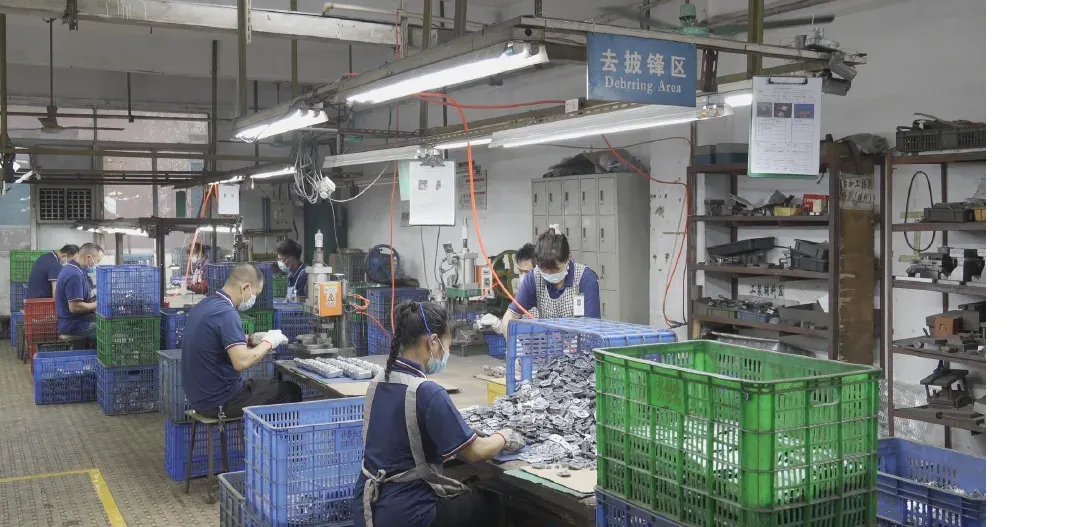
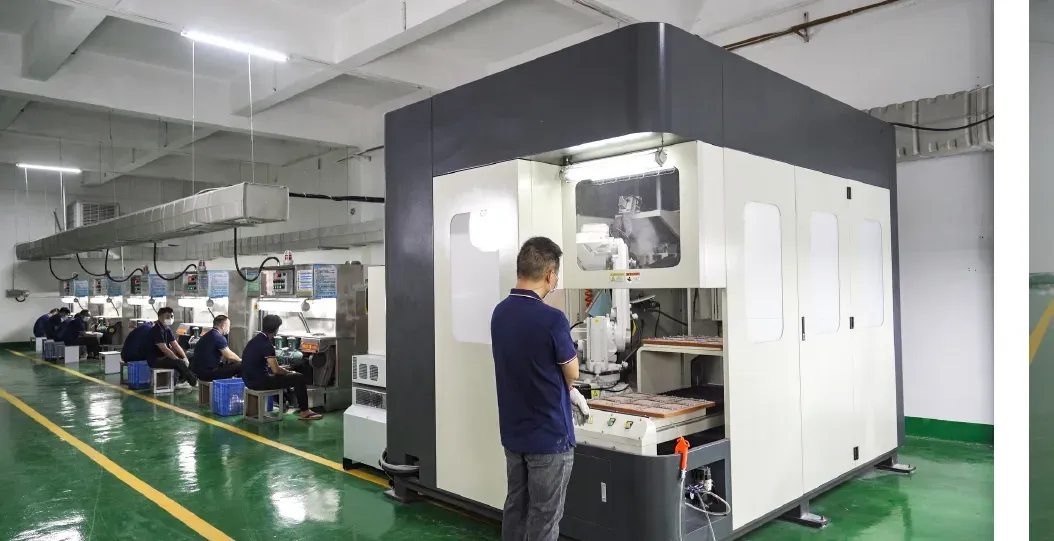
Die casting wins on shape and unit cost; it loses when a buyer treats cast tolerances as finished tolerances. Sealing faces leak, threaded holes drift, and the "cheap" casting becomes expensive rework. The answer is not to avoid die casting — it is to buy castings from a factory that finishes them. HAFO Mould supplies aluminum die cast parts with critical surfaces, bores and threads completed on our own machining centers (69 in the factory, up to 800 mm travel), inspected on fully automatic CMMs, and finished to your specification — one supplier accountable from tool steel to shipped part.
Send Your Drawing — Free DFM Review + Quote Within 24 Hours. STEP, STP, IGES, STL, X_T and 2D PDF accepted. NDAs welcome.
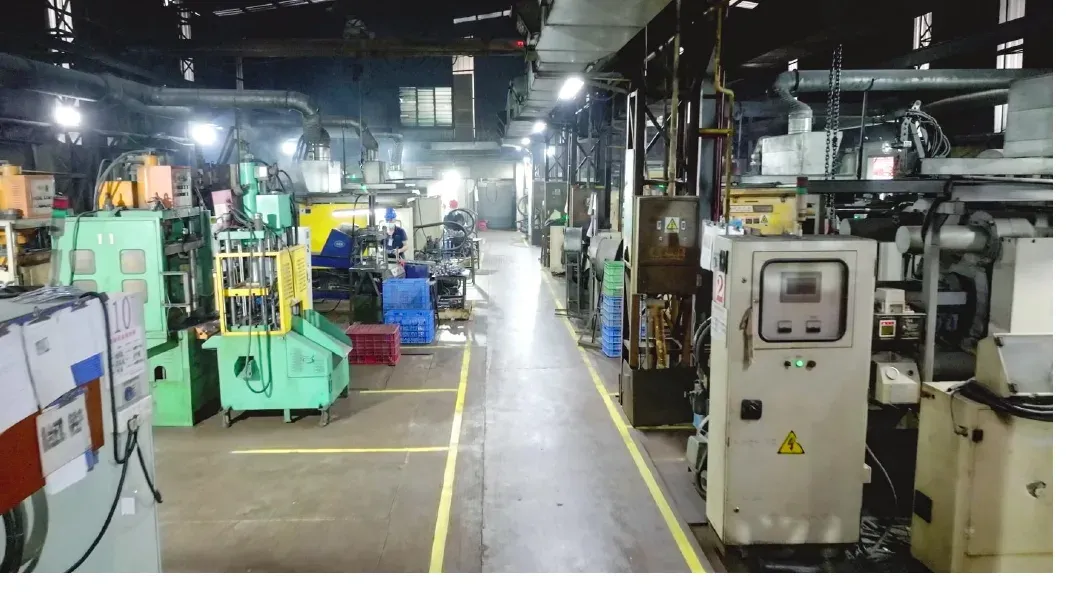
In-house CNC finishing: 69 machining centers (3-axis ×38, 4-axis ×13, 5-axis ×18) · 3 fully automatic CMMs · In-house toolroom for casting tools and machining fixtures · ISO 9001:2015 certified — scope: Manufacturing of Hardware Molds and Parts · Regular exports to the US, Germany, France, Portugal, Sweden and Spain.
Cast the Shape, Machine the Precision
Our DFM review splits your drawing into two groups before we quote:
- As-cast features — walls, ribs, bosses and outer geometry the casting process holds reliably with well-designed tooling
- Machined features — sealing and mating faces, bearing bores, threaded holes and any dimension your assembly cannot compromise on, finished on our CNC centers to machining tolerances Precision Aluminum CNC Machined Parts
This split is where die casting projects are won or lost on cost. Over-specifying machined finishes wastes money; under-specifying them wastes assemblies. You see both groups, and the reasoning, in the free DFM review attached to your quote.
Every die casting project starts in our own toolroom. The mold is designed and built in-house — cavity steel, gate and runner design, cooling — so the tool that produces your parts is specified, trialed and maintained under our control. After casting, precision features are finished on our own CNC machining centers, and every batch is inspected against your drawing before it ships.
Typical Parts
- Housings and covers — gearbox, motor, pump and electronics housings with machined sealing faces
- Brackets and structural parts — load-bearing shapes that would waste material machined from solid
- Heat sinks — finned thermal parts, with mounting faces and holes machined to drawing
- Pump and valve bodies — cast passages with machined ports, faces and threads
- Enclosures for outdoor equipment — cast, machined and powder coated in one order
Finishes for Die Cast Parts
- As-cast — for internal or hidden parts
- Bead blasting — uniform matte surface, the standard preparation before coating
- Powder coating — durable colored finish for housings and outdoor parts
- Painting — liquid paint finishes where specified
- Plating — nickel, chrome or zinc options where the design requires them
- Machined-and-finished combinations — e.g. powder coated body with machined, uncoated sealing faces, masked and finished in the right sequence
Specify the finish on the drawing; the DFM review flags interactions (for example, coating thickness on mating faces) before tooling starts.
Specifications
Item | Value |
|---|---|
Process | Aluminum die casting + in-house CNC finishing (milling, turning, drilling, tapping) |
Machining tolerances (finished features) | Standard ±0.13 mm (±0.005 in); precision ±0.025 mm (±0.001 in) on marked dimensions, ISO 2768-mK |
Casting tolerances | As-cast dimensions per tooling design — reviewed feature-by-feature in the free DFM |
Tooling | Casting tools designed with our in-house toolroom; CNC fixtures built in the same factory |
Inspection | CMM and dimensional reports on finished features; material certificates on request |
Finishes | As-cast, bead blasting, powder coating, painting, plating |
Quantities | Tooling economics reviewed against your volume in the DFM — including an honest CNC comparison |
Lead time | Depends on tooling, quantity and finish — confirmed in your quote |
Terms | Payment by T/T; shipping DDP, EXW or FOB |
Die casting alloys | ADC12, A380, A360 and other aluminum die casting alloys — material sourced to your specification |
Alloy selection is confirmed with you at DFM stage against your strength, corrosion and finishing requirements, and stated in the written quotation.
Quality and Inspection
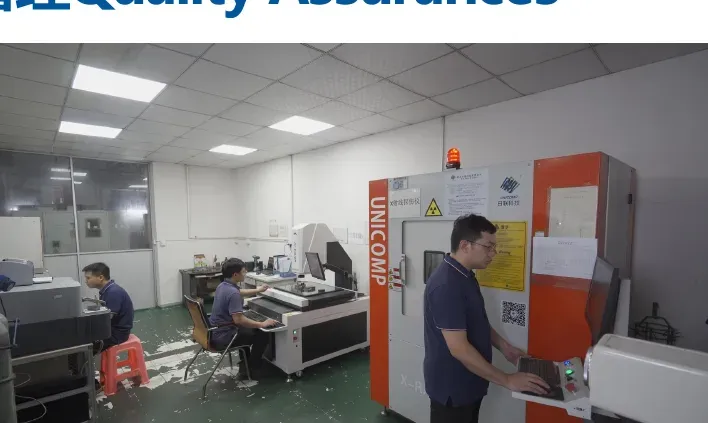
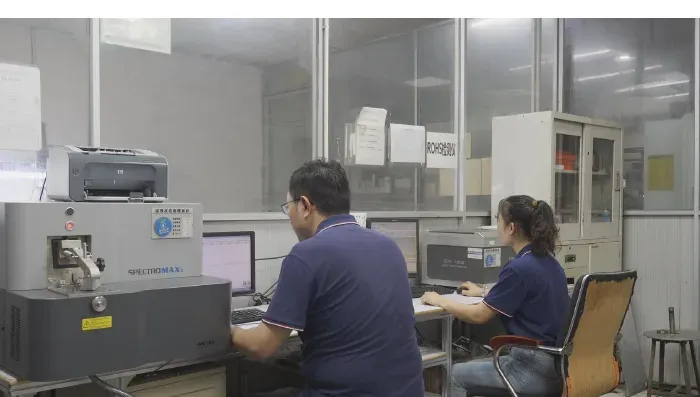
HAFO Mould is ISO 9001:2015 certified (scope: Manufacturing of Hardware Molds and Parts). Cast parts are checked for soundness and surface condition; machined features are verified dimensionally, supported by 3 fully automatic CMMs. Available on request: CMM reports, dimensional reports on finished features, material certificates, finish certificates, and pre-shipment photos or video. Porosity is the known weakness of die casting — where a part is pressure-bearing or a machined face must be pore-free, raise it in your RFQ: design, gating and process choices at tool stage are how porosity is managed, and the DFM review is where that conversation happens.
How Ordering Works
- Send drawings or samples. Note which surfaces seal, mate or carry load. NDAs welcome.
- Free DFM + quote within 24 hours. You receive the cast-vs-machined feature split, alloy recommendation, tooling concept and a written quote.
- Tooling and samples. Casting tool built; first castings finished on our CNC centers; samples shipped for your approval.
- Production. Casting + CNC finishing + surface finish in one coordinated flow.
- Inspection and delivery. Reports supplied as requested; parts shipped DDP, EXW or FOB. Payment by T/T.
Why Die Cast with HAFO
- The finishing is in-house. 69 machining centers and the CMMs sit in the same factory as your project management — machined features are not subcontracted into the unknown.
- One accountable supplier from casting tool to coated, inspected part.
- Honest process economics. If your volumes are too low for casting tooling, the DFM review says so and prices the machined alternative Precision Aluminum CNC Machined Parts instead.
Designing for Die Casting — What the DFM Review Checks
- Uniform walls with gradual transitions. Cast metal freezes as it flows; even walls fill completely and cool without distortion, while abrupt thick-to-thin changes invite porosity and hot spots. Ribs add stiffness without adding problem mass.
- Draft on cast faces. Draft lets the part leave the die cleanly; the review confirms draft direction against the parting line before tooling design starts.
- Fillets everywhere it is free. Radiused internal corners improve metal flow, die life and part strength at zero recurring cost.
- Machining stock where it matters. Faces that will be machined are cast with a controlled stock allowance — enough to clean up to a pore-free, flat surface, not so much that machining time eats the casting's cost advantage. Agreeing this allowance at DFM is one of the highest-value steps in a casting project.
- Cores and slides counted honestly. Every moving core in the die adds tool cost and maintenance. Sometimes a small design change removes one; the review shows the trade-off.
- Datum planning across processes. The casting is located for CNC finishing from datums chosen before the die is cut, so machined features land accurately relative to cast geometry on every part, not just the samples.
Aluminum Casting, Machining or Zinc — Choosing the Route
Machining from solid suits prototypes and low volumes: no tooling, fastest design changes, unit cost falls slowly with quantity. Aluminum die casting suits medium-to-high volumes of medium-to-large parts: tooling cost up front, then low unit cost and near-net shape. Zinc die casting suits small, fine, high-detail parts Zinc Die Casting Parts. The crossover is different for every part — which is precisely why our DFM review will quote the casting route and, where the numbers are close, set the machined route beside it. We machine and finish in the same factory, so the comparison we give you is between two processes we both sell and both profit from equally.
A Closer Look: Heat Sinks and Thermal Parts
Heat sinks are a natural die casting product — fins are expensive to machine and cheap to cast — but they are also where finishing discipline shows. Mounting faces must be flat and pore-free where the component seats; fin roots must fill completely; and if the part is powder coated, the coating changes the thermal picture and the fit of mating parts. Our workflow handles this in sequence: cast with machining stock on the interface faces, machine those faces to drawing on our CNC centers, then coat with interfaces masked where the design requires bare metal. If your thermal design is still fluid, the DFM review is a good place to sanity-check fin geometry against castability before the tool commits you to it.
Finish Selection Notes
Powder coating is the workhorse finish for cast housings — durable, even and available in the colors industrial products expect — but it adds thickness that belongs in the tolerance plan for mating features. Painting gives finer cosmetic control for visible covers. Plating on aluminum castings demands surface preparation discipline and is best specified with its purpose stated (corrosion, conductivity, appearance), so the preparation route matches. All three are sequenced after machining in our flow, and the DFM review confirms the finish against each critical dimension on your drawing.
FAQ
Which aluminum alloy do you cast?
Alloy is selected against your part's strength, corrosion and finishing requirements and confirmed in the written quotation. Tell us the service environment in your RFQ — the DFM review includes the alloy recommendation and its reasoning.
What tolerances can die cast parts hold?
Distinguish two groups: as-cast dimensions follow casting tolerances agreed at tooling design, while features we finish on CNC hold machining tolerances — ±0.13 mm standard and ±0.025 mm on marked precision dimensions (ISO 2768-mK). The DFM review maps your drawing into these two groups before you commit to tooling.
When does die casting beat CNC machining on cost?
When volume amortizes the casting tool and the part's shape wastes a lot of material from solid. There is no universal crossover number — it depends on part size, geometry and quantity. Send the drawing with your expected volumes; the free DFM quotes the casting route and can price the machined route for comparison.
Can you control porosity?
Porosity is inherent to the process and is managed, not eliminated by promises: wall design, gating, venting and process parameters all matter, and machined faces are planned with porosity in mind. If your part is pressure-tight or a sealing face must be pore-free, state it in the RFQ so the tooling design addresses it explicitly.
How long do casting tools last?
Tool life depends on the alloy, part geometry and tool steel and construction choices made at design stage. We discuss expected tool life for your specific project during the DFM review and reflect it in the tooling quotation — we do not publish a generic shot count that your project would then be held to.
What finishes are available?
As-cast, bead blasting, powder coating, painting and plating options. Finishes are applied after machining in the correct sequence, with mating faces masked where required.
Can you machine castings we supply?
Yes — CNC finishing of customer-supplied castings is core work for our machining shop. Send the casting drawing and the finished-part drawing; the DFM review confirms datums, stock allowance and fixturing.
What quantities should I order?
Enough to amortize tooling across your program — the DFM review shows the tooling cost separately from the unit price so you can see the balance at your volumes. For one-offs and very low volumes we will usually recommend machining from solid instead.
What inspection reports are provided?
CMM and dimensional reports covering finished features, material certificates and finish certificates on request, plus pre-shipment photos or video of your parts.
Can you sign an NDA?
Yes. NDAs are welcome and all files are treated as confidential by default.
What are payment and shipping terms?
Payment by T/T; shipping on DDP, EXW or FOB terms, with regular deliveries to the US, Germany, France, Portugal, Sweden and Spain.