Buying Guides
What Does CNC Machining Cost? What Drives the Price of a Machined Part
Two parts that weigh the same can differ in price by a factor of five. This guide explains — without made-up price lists — what actually builds a CNC machining quote: material, machine time, setups,
The Short Answer
There is no honest per-kilo or per-hour price list for CNC machining. Be suspicious of any supplier who publishes one. A machined part's price comes from seven drivers: the material (and how much of it you throw away), the machine time your geometry needs, the number of setups, the tolerances you specify, the surface finish, the quantity, and the inspection and documentation you require. Move any one of them and the quote moves — often more than buyers expect. The same shape with generous tolerances in 6061 aluminum can cost a fraction of the identical shape in 316 stainless with precision tolerances on every face. Both quotes can be perfectly fair.
Below, each driver the way our engineers at HAFO Mould see it when we build a quote — quote within 24 hours, after a free DFM review. Read it and you'll be able to predict your part's price before you ask. Better: you'll know where to cut it without hurting the part.
How a Machining Quote Is Actually Built
Every professional quote — platform or factory — is an estimate of the same equation:
Unit price ≈ (material cost + machine time + setup time) ÷ quantity + finishing + inspection/documentation
Suppliers differ in how efficiently they execute each term. A factory quoting its own machine time, with no platform margin in between, starts from a different cost base than a marketplace adding a percentage on top of a subcontractor's price. But even between two honest quotes, the inputs explain most of the spread: your drawing, your material, your tolerances. Understand each term and you're in control of them.
Driver 1: Material — What You Buy vs. What You Keep
You pay for the stock the part is cut from. Not the finished weight. Three factors matter:
- The grade itself. Common machining aluminum (6061) is the economy benchmark. High-strength 7075 costs meaningfully more as stock; stainless steels cost more than aluminum grades; engineering plastics span a wide range, with high-performance PEEK at the expensive extreme. Titanium and magnesium sit in their own cost category. The grade comparison pages → Aluminum Alloys and → Stainless Steel explain the trade-offs; our article [→ 6061 vs 7075 Aluminum] covers the most common upgrade decision in detail.
- Stock efficiency. Cut a part from a thick block where 80% becomes chips and you pay more — in material, and in roughing time — than the same part nested efficiently in plate or cut from a near-size extrusion. Deep pockets and tall thin walls are, materially, parts you pay to throw away.
- Certification. Need material certificates with traceability? Say so in the RFQ. Certified stock is a real (if modest) cost line, and asking mid-production is worse than asking up front.
Driver 2: Machine Time — Geometry Is Money
Machine time is usually the largest single term. Your geometry sets it:
- Volume to remove. Deep pockets, thick sections milled down to thin shells, large parts — they all take longer. A part designed close to its stock shape machines fast.
- Feature count and type. Every hole, thread, pocket and contour adds toolpaths. Threads run slower than clearance holes. Deep small-diameter holes run slower than shallow ones. And sharp internal corners force smaller tools and extra passes (or a wire-EDM operation), because a rotating cutter cannot cut a perfectly square inside corner.
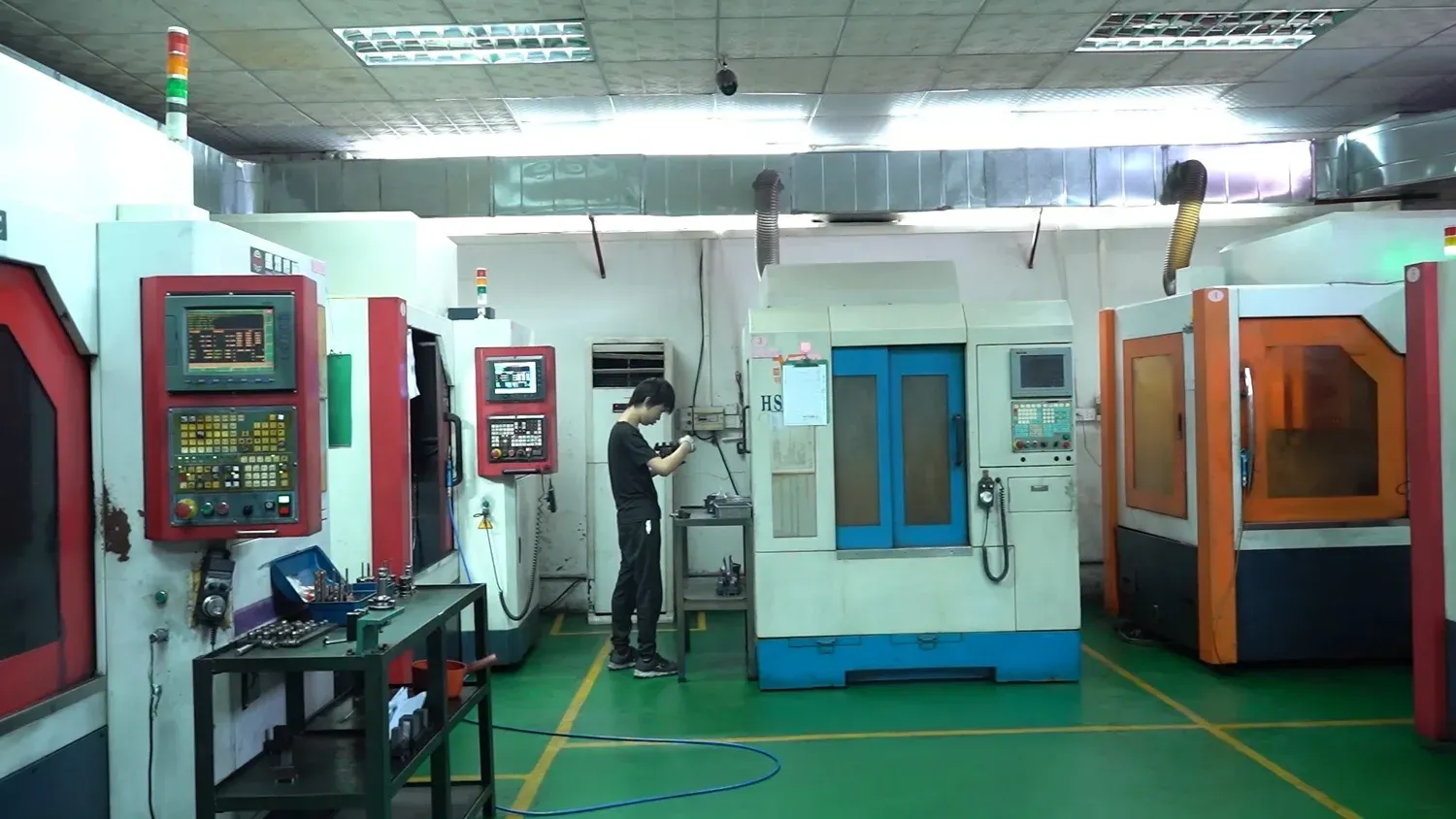
- Part size vs. machine. Bigger parts run on bigger machines. Our centers go up to 800 mm (31.5 in) of travel; a part that fits a standard 3-axis center costs less than one that needs the largest machine in the shop.
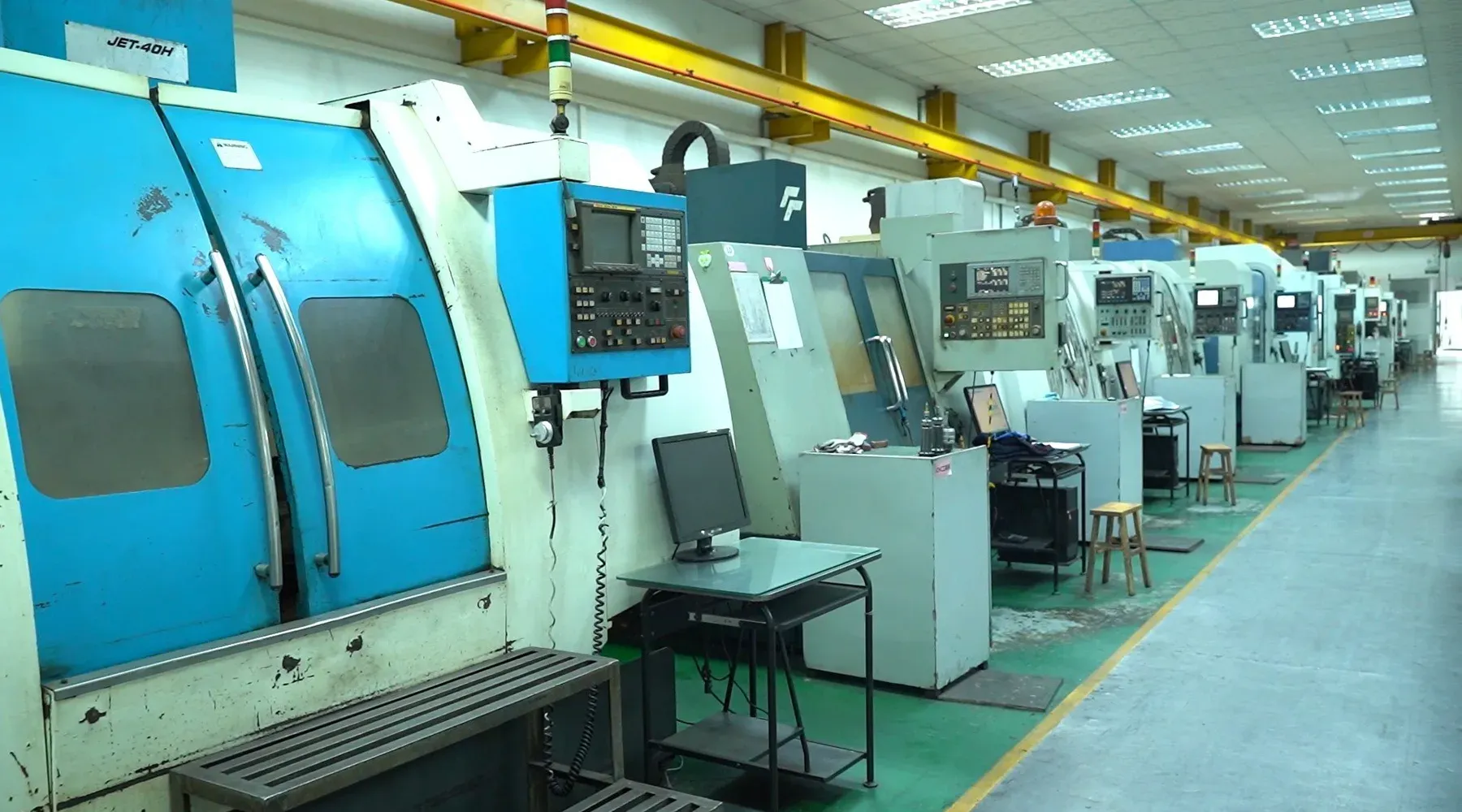
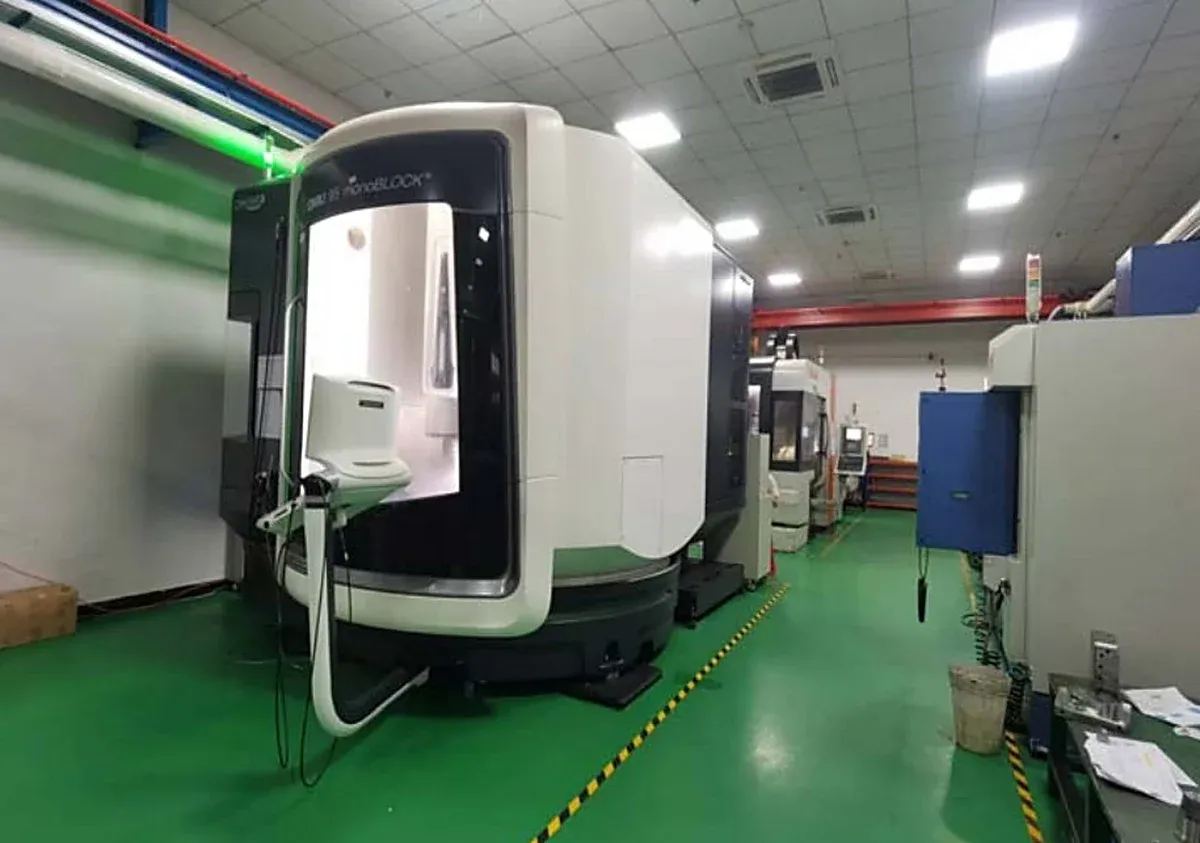
- 3-axis vs. 5-axis. Features on one or two faces? That's cheap 3-axis work. Angled, curved or multi-face geometry needs 4 or 5-axis — our shop runs 38 three-axis, 13 four-axis and 18 five-axis centers, and the DFM review assigns the simplest machine that can make your part correctly. 5-axis often saves money on genuinely complex parts by finishing them in one setup (see Driver 3). On a 3-axis part, it buys nothing.
Driver 3: Setups — The Hidden Multiplier
A setup is every time the part gets unclamped, repositioned and re-indicated. Each one costs operator time and fixture attention — and hands you a fresh opportunity for error. A part machined complete in one setup is cheaper and more accurate than the same part in three. Which is why:
- Features scattered across many faces cost more than features on few.
- Tight tolerances between features on different faces cost the most of all. They have to survive repositioning.
- Good DFM often comes down to one question: can this feature move to the same face as the others?
Driver 4: Tolerances — Precision Is Bought by the Dimension
Holding a tolerance costs time. Slower finishing passes. In-process measurement. Sometimes a separate precision operation. Always more inspection. Under ISO 2768-mK we quote two levels — standard (±0.13 mm / ±0.005 in on metal) and precision (±0.025 mm / ±0.001 in) — and the gap between "precision where it matters" and "precision everywhere" is one of the largest levers in any quote.
We see the waste pattern weekly: a blanket precision tolerance in the title block, applied to clearance faces, cosmetic surfaces and non-mating dimensions that would function identically at standard. Our DFM review marks which dimensions genuinely need the tight callout — bearing seats, press fits, sealing and mating faces — and which can relax. Buyers are often surprised how much of their quote is tolerance they never needed. Full background in → CNC Machining Tolerances Explained.
Driver 5: Surface Finish — Every Step After Machining Adds a Step
As-machined is the baseline. Every finish after that is a process — handling, time, yield risk:
- Bead blasting — light cost, big cosmetic improvement; the standard pre-treatment before anodizing or coating.
- Anodizing / hardcoat — a real process chain (cleaning, racking, bath time, sealing), priced by batch as much as by part.
- Polishing and brushing — hand-influenced work. The smoother you spec it, the slower it goes. A mirror finish on a hidden face is pure waste.
- Painting and powder coating — masking threads and precision faces adds labor on top of the coating itself.
- Plating (nickel, chrome, zinc, electroless nickel), black oxide, passivation — each a separate line in the quote: cheap insurance on steel and stainless, unnecessary ornament if the environment doesn't call for it.
Same rule as tolerances: finish the faces the world sees and the function needs. Leave the rest as-machined.
Driver 6: Quantity — Setup Amortization Is Real
Machining carries real fixed costs per order: programming, fixturing, first-article inspection, the setup itself. Spread over one piece, those fixed costs are the price. Over ten pieces they're a tenth as much per part. Over a hundred, cycle time dominates and unit prices fall toward material + machine time. Our CNC MOQ of one piece is a service we're glad to offer — prototypes are how projects start — but let's be honest: a one-off will never carry the unit price of a batch.
Two traps. Ordering production quantities of an unproven design — the saving is real money spent on the wrong part. And re-ordering prototypes one at a time after the design has frozen: you pay the setup every single time.
Driver 7: Inspection and Documentation
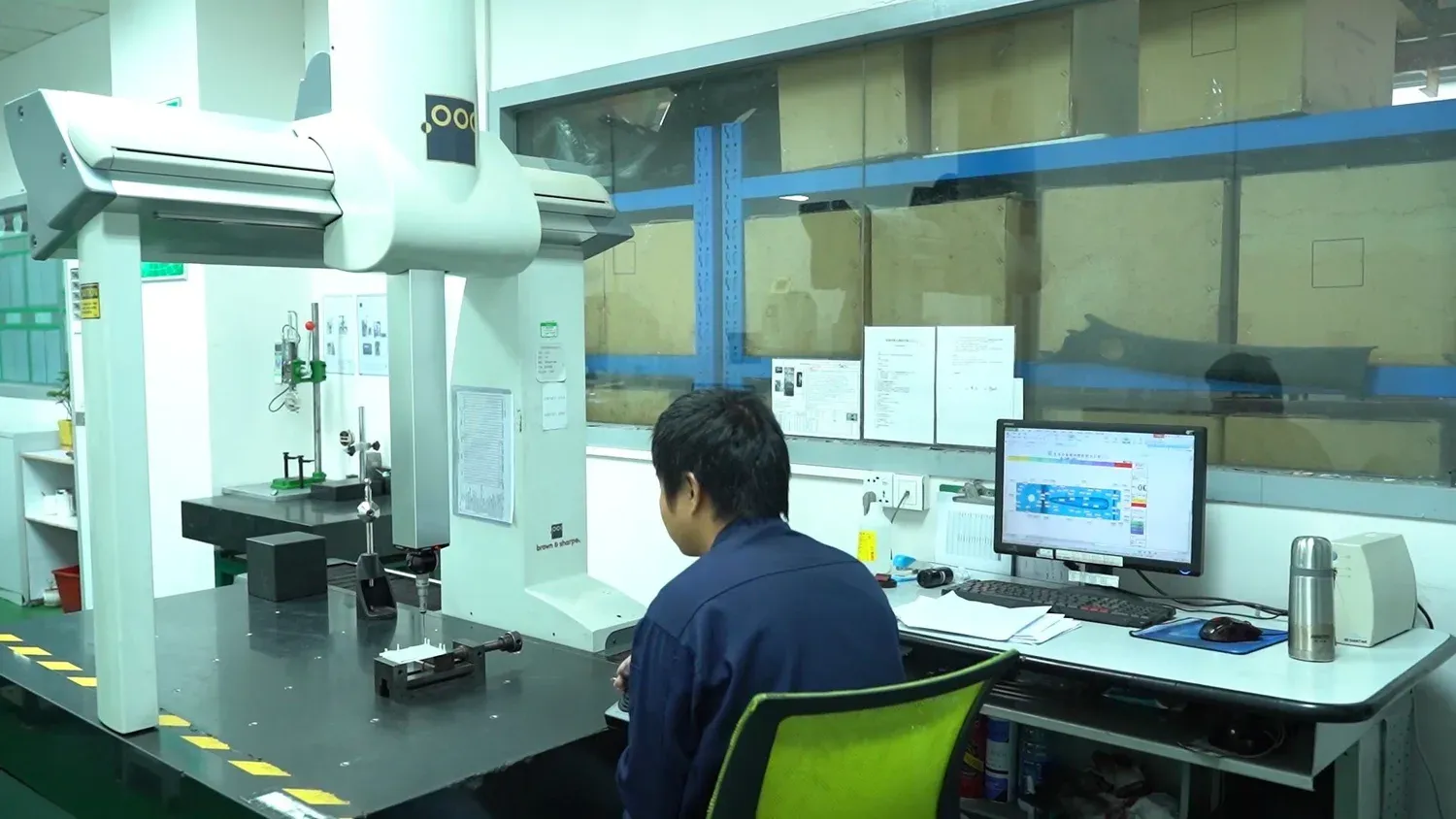
Standard inspection is included in any professional quote. What adds cost is the level of evidence: CMM reports on defined dimensions, full dimensional reports, first-article inspection (FAI) packages, material and finish certificates, pre-shipment photo and video confirmation. We can supply all of them — inspection runs on three fully automatic CMMs under our ISO 9001:2015 system (scope: Manufacturing of Hardware Molds and Parts) — and they're cheap next to a rejected shipment. The expensive version? Discovering at delivery that your customer's incoming inspection needed a document nobody produced. Ask for the documentation in the RFQ, where it costs a line item. Not in a dispute, where it costs a relationship.
What Does NOT Lower Cost (Four Persistent Myths)
- "Quote it as 3-axis even though it needs 5." Force a part onto the wrong machine and it doesn't get cheaper. It gets extra setups, worse accuracy and a longer total cycle. The cheapest route is the simplest sufficient route.
- "Remove the finish, add it locally later." Sometimes sensible. Usually, though, splitting processes between suppliers costs more in freight, handling and finger-pointing than the finish line you removed. It makes sense mainly when the local finisher is already your qualified vendor.
- "Just use the cheaper grade — it's a similar metal." Occasionally true (316 specified out of habit, 7075 inherited from a template), and our DFM review will say so when it is. But swapping into a grade that machines worse, or fails in service, is a false economy billed per part, forever.
- "Skip the inspection documents." The documents are a small line. A shipment rejected by your customer for missing paperwork is not. Buy the evidence your downstream process actually requires — no more, but no less.
A Worked Comparison — Same Shape, Different Quotes
Same bracket, quoted four ways. No prices here — deliberately, because any number we invented would mislead you — but the direction and rough weight of each factor is exactly what a real quote would show:
Version | Specification | What dominates the price |
|---|---|---|
A | 6061 aluminum, standard tolerances, as-machined, batch of 100 | Mostly machine time; the economy benchmark for this shape |
B | Same part, 7075 aluminum | A plus higher stock cost and somewhat slower machining |
C | Same part, 304 stainless, standard tolerances | A multiplied by slower cutting, more tool wear, longer cycle |
D | Same part, 6061, but precision tolerance on every dimension + polished + anodized | The tolerance blanket and the finish chain rival the machining itself |
Version D surprises buyers most. It's "only aluminum" — yet finishes and tolerances can push it past a plainly specified stainless part. The drawing, not the metal, is usually the price.
How to Lower the Cost of Your Part (Without Hurting It)
- Relax tolerances that do not touch function. Keep precision callouts on mating, bearing and sealing features; let the rest ride at ISO 2768 standard.
- Avoid sharp internal corners. A small radius that matches a standard end mill removes extra passes or an EDM operation.
- Keep features on as few faces as possible. One setup is the cheapest setup.
- Use standard hole and thread sizes. Non-standard threads mean special tooling and slower cycles.
- Question the material upgrade. 7075, 316 and PEEK are excellent — where they are needed. Where they are not, they are a tax. Our materials pages → Engineering Plastics help you check.
- Specify finish by zone, not by blanket. Cosmetic faces get the cosmetic finish; hidden faces stay as-machined.
- Batch sensibly. Prove the design at prototype quantity, then order in batches that amortize setup. If volume is heading toward the thousands, read [→ CNC Machining vs Injection Molding] before ordering more machined parts.
- Ask for the DFM review. That's what a free engineering review is for: finding items 1–7 in your drawing, before they're priced in. Ours comes back with the quote, within 24 hours.
What a Quote from HAFO Includes
So you can compare like with like, our quote states the material grade and form, the process route (including which axis count we plan to use), tolerances as we propose to hold them after DFM, finish steps, the inspection/documentation level included, and shipping terms (DDP, EXW or FOB — payment by T/T). If a feature will be expensive, we say which one, why, and what design change would remove the cost. That's the practical difference between a factory quoting its own work and a middleman forwarding a number.
FAQ
Why did two suppliers quote such different prices for the same drawing?
Usually one of three reasons: they read the tolerances differently (blanket-precision vs. precision-where-marked), they plan different process routes (more setups, or a bigger machine than needed), or one of them is not a factory and carries a margin. Ask each supplier which dimensions they are holding tight and on what machine — the answers explain the gap.
Can you give me a rough price from just a photo or a description?
A rough range of drivers, yes; a reliable number, no. Price lives in tolerances, material and features that photos do not show. Send a STEP file or a dimensioned drawing and we return a real quote within 24 hours, free, after a DFM review.
Does 5-axis machining always cost more?
No. On a genuinely multi-face part, one 5-axis setup can be cheaper than three 3-axis setups — and more accurate. On a simple part, 5-axis buys nothing. The right question is which route your geometry needs; our DFM review assigns the simplest sufficient process.
Why is my one prototype so expensive compared with the batch price?
Because programming, fixturing, setup and first-article inspection are fixed per order. On one piece you pay all of them; on a hundred, they are spread thin. This is arithmetic, not margin.
How much do tolerances really add?
Enough that it is the first thing our engineers check. A blanket precision tolerance can rival the entire machining cost of a loosely specified part, because every dimension gets slower passes and more measurement. Precision where it matters is affordable; precision everywhere rarely is.
Is it cheaper if I supply my own material?
Occasionally, and we can work that way — but usually not: we buy common stock at factory volumes, and supplied material still needs inspection and carries a yield question if it machines badly. Ask in the RFQ and we will compare honestly.
What file format gives the most accurate quote?
A 3D model (STEP is ideal) plus a dimensioned 2D drawing with tolerance and finish callouts. The 3D file gives geometry; the drawing gives intent. Either alone leaves the quoter guessing — and guessing is priced.
Can you help redesign a part that quoted too high?
Yes — that is what the free DFM review is for. We will identify the specific features driving your price and propose changes, and you decide which ones your function allows.
Related Reading
- [→ 6061 vs 7075 Aluminum: How to Choose for CNC Machined Parts]
- [→ CNC Machining vs Injection Molding: Which Is Right for Your Part?]
- [→ CNC Machining] — services, materials and specifications
CTA: Want the real number for your part, not a guess? Upload your drawing — free DFM review, quote within 24 hours, with the cost drivers in your part pointed out, not hidden. Files are confidential; NDAs are welcome.